
US-Iran Breakthrough Nears: Trump Hints at Historic Agreement
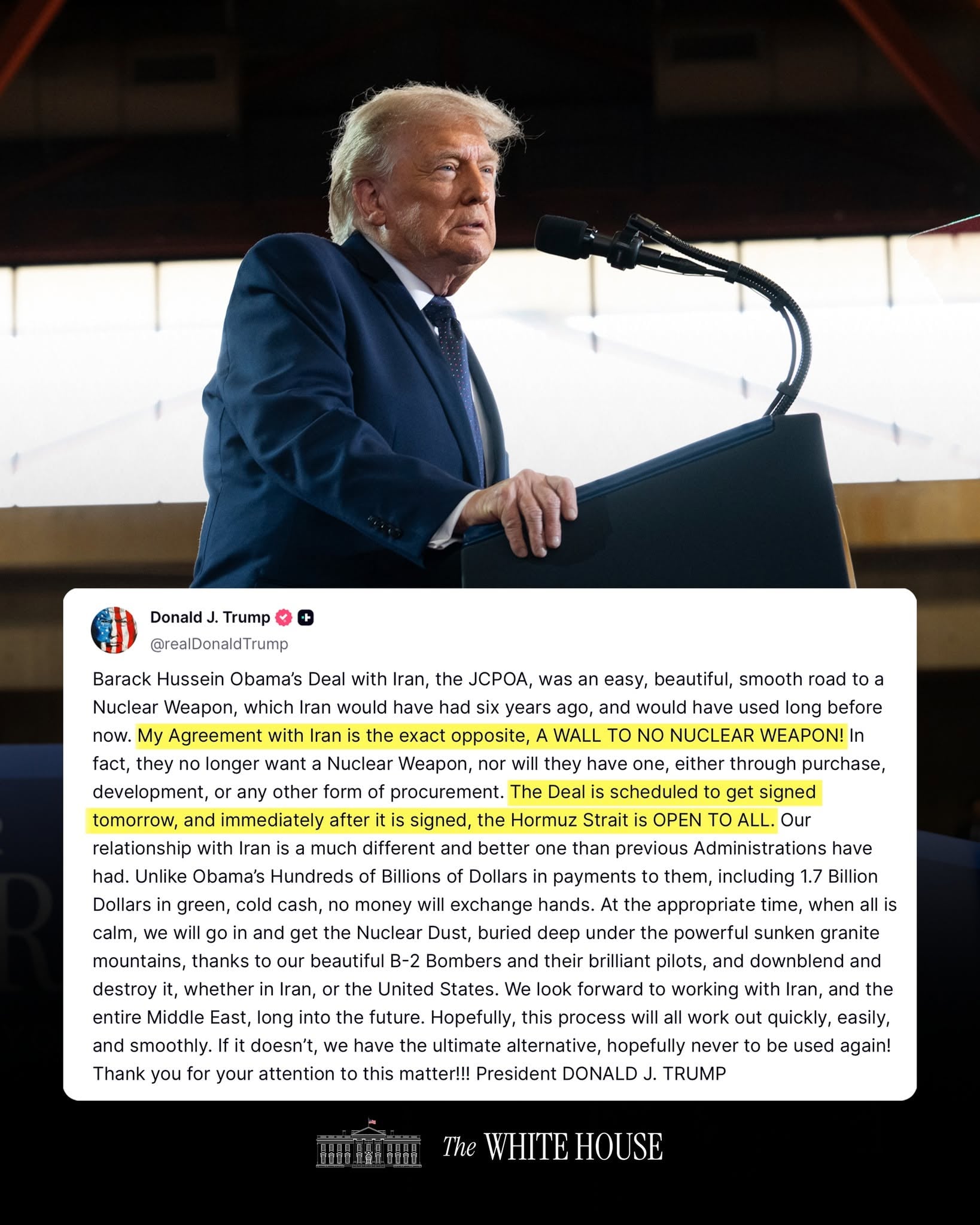
After months of military escalation, economic uncertainty, and behind-the-scenes diplomacy, a breakthrough in US-Iran relations appears closer than at any point in recent years. President Donald Trump has indicated that a peace agreement is nearing completion, describing the framework as “largely negotiated” and suggesting that final details could soon be resolved.
???????????????????????? ????. ???????????????????? ???????????????????? ???????????????????????? ???????????????? – ????????:???????? ???????? ???????????? ????????.????????.????????
Barack Hussein Obama’s Deal with Iran, the JCPOA, was an easy, beautiful, smooth road to a Nuclear Weapon, which Iran would have had six years ago, and would have used long before… pic.twitter.com/CYTkuCC0Fs
— Commentary Donald J. Trump Posts From Truth Social (@TrumpDailyPosts) June 13, 2026
Pakistani Prime Minister Shehbaz Sharif announced negotiators had reached a “final, agreed-upon text.” The core framework demands verifiable Iranian commitments on its nuclear program in exchange for phased sanctions relief and the reopening of the Strait of Hormuz — performance-based: benefits flow only after concrete action. This represents a potential turning point for regional stability, global energy markets, and America’s strategic position in the Middle East.
We are closer to a peace deal than ever before. With finalisation likely expected in the next 24 hours, Pakistan is preparing for the electronic signing of the peace deal immediately after, followed by technical level talks next week.
We would like to thank United States of…
— Shehbaz Sharif (@CMShehbaz) June 13, 2026
“We’re not there yet, but we’re very close and we’re going to keep on working at it.” Vance noted constructive engagement and good faith from the Iranian negotiating team on remaining language points. Vice President JD Vance · United States
????JUST IN: Trump confirms Iran deal is SIGNING TOMORROW!
Trump's hard conditions:
No cash handed over, Strait reopens immediately and Nuclear dust coming back to US.
The markets are already reacting big time????????????
HT @nicksortor pic.twitter.com/kN7zsI8NQ0
— Commentary Donald J. Trump Posts From Truth Social (@TrumpDailyPosts) June 13, 2026
President Trump’s decision to lean towards negotiations instead of pursuing more military action is being celebrated by various factions worldwide. According to reports, planned strikes have been shelved as diplomatic discussions gain traction, reflecting an increasing belief among important stakeholders that a negotiated settlement is attainable. Even though significant differences remain and Iranian officials are urging caution regarding timelines, the prevailing sentiment suggests that diplomacy is currently in the driver’s seat.
However, as optimism grows around the prospect of a US-Iran breakthrough, caution remains both necessary and justified. The United States is not approaching these negotiations with skepticism for its own sake; it is doing so because history offers hard lessons. Successive administrations have grappled with Iran’s nuclear ambitions, regional interventions, and inconsistent compliance with international obligations. Any agreement that emerges from the current talks must therefore be judged not by its promises, but by its ability to deliver verifiable results. Durable peace requires accountability, transparency, and mechanisms strong enough to withstand political shifts and regional tensions.
President Trump’s insistence on a performance-based agreement reflects this reality. American policymakers understand that sanctions relief, economic incentives, and diplomatic normalization must be tied directly to measurable actions by Tehran. The goal is not merely to secure signatures on a document, but to ensure that any agreement genuinely reduces the risk of nuclear proliferation, strengthens regional stability, and protects the interests of America’s allies. In that respect, Washington’s reservations should be viewed not as barriers to peace but as safeguards designed to make peace sustainable.
As the world tunes in to the final stages of these negotiations, there’s a glimmer of cautious optimism. Pakistan’s diplomatic efforts, led by Field Marshal and Shehbaz Sharif, have opened doors that seemed firmly shut just a few months ago. Meanwhile, both Washington and Tehran seem to be waking up to the heavy toll of ongoing conflict. If a historic agreement comes to fruition, it won’t be because tough questions were swept under the rug, but rather because they were faced head-on.
The real challenge lies ahead: turning this diplomatic momentum into a solid framework that can replace decades of distrust with a more stable and secure future for both the region and the world.