
Middle East Analyst
US Support for Israel: The Full Story
By author (AI)
The debate over American support for Israel is often reduced to one number: approximately $3.8 billion in annual military assistance. That figure is substantial, but it captures only part of a much broader relationship involving supplemental wartime appropriations, missile-defense cooperation, weapons transfers, intelligence sharing, joint technology development, emergency resupply, and American military operations across the Middle East.
Understanding the full relationship requires distinguishing between money appropriated specifically for Israel, US military expenditures that also advance Israeli security objectives, and the wider costs of American operations in the region. These categories overlap, but they are not interchangeable. Nor does identifying the cost of an operation, by itself, answer whether it served American national interests.
That distinction is especially important following Operation Epic Fury, the US-Israeli military campaign against Iran, and President Donald Trump’s announcement that the United States intends to end its annual military assistance to Israel after 2026. With Democrats having won control of both chambers of Congress in the November midterms, the financial and strategic relationship is likely to face greater scrutiny. The debate is no longer simply about foreign aid. It is about the total American commitment, the strategic return, and the future shape of the partnership.
The annual commitment: $3.8 billion
The foundation of the current assistance arrangement is a 10-year memorandum of understanding signed in 2016 and covering fiscal years 2019 through 2028. Under its terms, the United States committed $38 billion: $33 billion in Foreign Military Financing and $5 billion for joint missile-defense programs.
That amounts to approximately $3.3 billion annually in military financing and $500 million for missile defense. The financing helps Israel purchase American military equipment and services, while the missile-defense funding supports systems designed to protect Israel against rockets, missiles, and other aerial threats.
This is not simply an unrestricted cash transfer. Much of the financing is tied to purchases from American defense contractors, supporting US manufacturing and employment as well as Israeli military capabilities. That economic return is relevant, but it does not change the basic accounting: the funding is appropriated by the United States to support Israel’s defense.
Trump’s November 3 announcement that annual assistance would end after 2026 raises questions about the existing agreement. The memorandum runs through 2028, and the precise legal and budgetary mechanism for ending or modifying the commitment has not been fully explained. The announcement should therefore be understood as a policy intention, not as confirmation that the existing arrangement has already been formally terminated. Trump also said the United States would continue helping Israel if necessary, leaving open the possibility of support through other channels.
Supplemental funding: beyond the annual aid package
The $3.8 billion annual figure does not include additional assistance authorized by Congress during periods of heightened conflict.
In April 2024, Congress approved approximately $8.7 billion in additional funding for Israel. That included $3.5 billion in Foreign Military Financing, $4 billion for missile-defense programs, and $1.2 billion for development of the Iron Beam laser-defense system.
These appropriations were separate from the annual memorandum of understanding. They demonstrate why the annual figure alone provides an incomplete picture of American support. Supplemental legislation can substantially increase the commitment when Congress determines that additional assistance is necessary.
It is also important to distinguish appropriations from actual expenditures. An appropriation authorizes the government to use funds for a specified purpose; it does not mean that the entire amount is immediately disbursed or that all equipment has already been delivered. A credible accounting must distinguish money authorized, money spent, and the value of equipment transferred.
Missile defense and the cost of protecting Israel
Missile defense is among the most consequential elements of the relationship because protecting Israel can require the United States to commit expensive interceptors and other military assets.
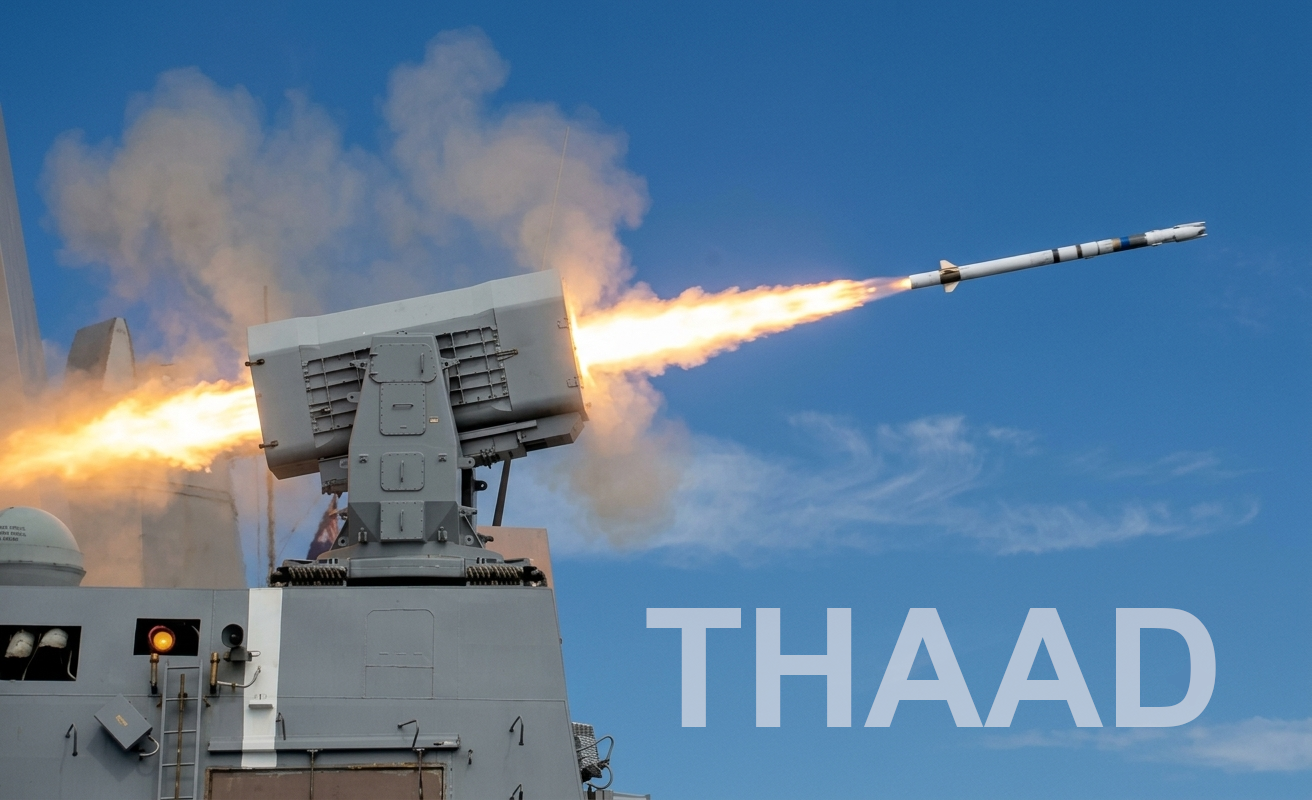
Operation Midnight Hammer, the June 2025 US strike against Iranian nuclear facilities, illustrates the scale of those costs. An estimate by Brown University’s Costs of War project placed the American expenditure associated with the operation at approximately $2.04 billion to $2.26 billion. Most of that estimate was not attributable to the offensive strike. Approximately $1.8 billion to $1.95 billion represented THAAD interceptors used in Israel’s defense.
The estimate also included B-2 bomber operating and depreciation costs, GBU-57 bunker-buster bombs, Tomahawk missiles, other aircraft and munitions, and deployment and support activities. But the largest component was the expenditure on missile interceptors.
Those interceptors were used to protect an American ally, but they were also part of a US military operation in a region where American forces and interests were directly exposed. It would be inaccurate to classify the entire operation as aid to Israel. It would be equally misleading to omit the substantial cost of defending Israel simply because the expenditure appeared in US military accounts rather than an Israeli assistance program.
There is another consideration: readiness. Advanced interceptors are expensive, take time to manufacture, and are not available in unlimited quantities. When large numbers are used in one theater, the United States must consider replacement costs and the effect on its ability to respond to other contingencies. That opportunity cost is difficult to express in dollars, but it belongs in the strategic accounting.
Operation Epic Fury: the much larger bill
The largest recent addition to the regional cost is Operation Epic Fury, the US-Israeli campaign against Iran that began February 28, 2026.
By October 16, the Pentagon’s reported estimate of the cost to the United States had reached approximately $47.1 billion. That included roughly $29 billion to replace expended munitions, $6.1 billion to replace lost military equipment, and $11.9 billion in operational and other war-related costs.
The figure dwarfs the annual assistance package, but it should not be described as $47.1 billion in aid to Israel. Epic Fury was a US military operation conducted in coordination with Israel. American forces carried out strikes, defended US bases and regional partners, protected American personnel, and pursued objectives the administration described as essential to US security.
Some of those activities directly supported Israeli security. Others served American objectives independent of Israel. Still others advanced both countries’ interests simultaneously.
The appropriate accounting question is therefore not whether the entire war bill should be assigned to Israel. It should not. The question is how much represented direct support for Israel, how much was attributable to American operations that also benefited Israeli security, and how much reflected the independent cost of pursuing US objectives.
Nor is $47.1 billion necessarily the final bill. The Pentagon figure does not capture every future expense, including all costs associated with repairing damaged American military infrastructure. Other estimates have used different periods and accounting categories. The Congressional Budget Office and independent analysts have also raised concerns about depleted munitions, equipment losses, and the effect on military readiness.
These estimates should not simply be added together. Different reporting periods and overlapping categories can produce double counting. Replacing an expended missile is a direct cost; repairing a damaged base is a future liability. The cost of training, maintenance, or other activities deferred to accommodate the war may be harder to quantify, but those trade-offs can affect readiness for years.
The wider regional commitment
American military costs extend beyond direct assistance to Israel and the operations of Epic Fury.
Brown University’s Costs of War project estimated that between October 2023 and September 2025, US military aid and arms transfers to Israel amounted to approximately $21.7 billion. A separate estimate placed American military operations in Yemen, Iran, and the wider Middle East during the same period at approximately $9.65 billion to $12.07 billion.
These estimates illustrate the scale of the broader regional commitment, but they should not be treated as a single transfer of money to Israel. Military aid and arms transfers are one category; American military operations are another. Some operations protected Israel or advanced Israeli objectives. Others addressed threats to US forces, commercial shipping, regional partners, and American interests.
The distinction matters. An operation that benefits Israel does not automatically become an Israeli aid expenditure. Conversely, an operation serving American interests can also provide significant benefits to Israeli security. Both dimensions should be visible in the accounting.
Intelligence, technology, and less visible commitments
The relationship extends beyond appropriations and weapons purchases.
The United States and Israel maintain extensive intelligence and security cooperation, sharing information on regional threats, missile activity, terrorist organizations, and adversary military capabilities. They also cooperate in research, development, testing, and evaluation of defense technologies. These activities benefit both countries, but their full costs are not separately identified in a way that permits a reliable public dollar total.
Diplomatic support is another part of the relationship. US efforts at the United Nations, engagement with regional governments, and the use of American influence to protect Israeli interests have strategic and political value. Assigning a dollar figure to those activities would be speculative. They belong in a comprehensive description of the relationship, not in an invented financial total.
The proposed US-Israel Defense Technology Cooperation Initiative in the FY2027 National Defense Authorization Act illustrates the potential for deeper institutional integration. The House version included expanded cooperation in missile defense, counter-drone systems, artificial intelligence, autonomous systems, cyber capabilities, electronic warfare, and directed-energy technologies. The Senate considered a related provision, but the legislation had not been enacted as of November 2026.
If adopted, the initiative could deepen cooperation between the two defense establishments, encourage joint development and testing, and create additional links between their defense industries. Those connections could outlast any annual assistance agreement. They would not make future policy changes impossible or guarantee future appropriations, but they could make the relationship more deeply integrated and more complicated to change.
Ending one funding stream would not, by itself, end the broader security relationship.
The strategic question: did the war serve American interests?
The financial accounting is separate from the question of whether Operation Epic Fury served the national security interests of the United States.
The administration’s argument is that Iran’s nuclear ambitions, ballistic-missile capabilities, support for armed proxy organizations, and history of attacks and threats against US forces presented a serious danger. From that perspective, military action was not simply an effort to advance Israeli security. It was intended to reduce a threat Washington considered directly relevant to American national security.
Critics dispute the administration’s assessment of the threat, the urgency of military action, the campaign’s objectives, and the assumptions behind the decision to go to war. Some argue that the operation increasingly reflected Israel’s long-standing objective of weakening or removing the Iranian regime. Others question whether the military gains justified the financial cost, depletion of American munitions, disruption of regional stability, and economic consequences. These are genuine strategic disagreements, not merely disagreements about Israel.
Public opinion makes the political dimension impossible to ignore. A Pew Research Center survey conducted September 28 through October 4 found that only 34 percent of Americans considered the initial decision to use military force against Iran the right decision, while 65 percent disapproved of Trump’s handling of the conflict. A separate Chicago Council survey found that 68 percent believed the war was not worth fighting, including 76 percent of independents. Majorities also believed the conflict had harmed America’s relationships with allies, its international reputation, and its national security.
The November 3 midterm elections demonstrated the political consequences. Democrats won control of both the House and Senate. The Iran war, rising living costs, and broader dissatisfaction with the administration contributed to the Republican losses. Vice President JD Vance, who had expressed reservations about a war with Iran before the conflict, subsequently defended the operation. After the election, however, he identified the war as a major factor in the Republican losses and said his earlier advice to end the conflict had been sound.
A Democratic-controlled Congress is likely to scrutinize the war’s costs, the administration’s objectives, weapons transfers, and broader security commitments to Israel. It is also likely to include many members who question whether the campaign served American interests. The election results do not establish the strategic judgment of every incoming legislator, but they do signal a substantially different political environment in Washington beginning in January.
Still, public opposition does not, by itself, prove that Trump was wrong to believe military action served American national interests. Public opinion is a political reality, not a substitute for strategic analysis. A decision can be unpopular and still be justified by circumstances that are not fully understood by the public. Conversely, the administration’s assertion that the war served American security interests does not establish that the decision was sound, that its objectives were achievable, or that the costs were proportionate to the benefits.
Those questions must be assessed on their own merits. They should not be decided in advance by either support for Israel or opposition to the war.
What the full accounting tells us
There is no single public figure that captures the complete financial value of the US-Israel security relationship. The annual $3.8 billion commitment is a clearly identifiable baseline. Supplemental appropriations add to it. Weapons transfers, missile-defense expenditures, emergency resupply, joint research, and intelligence cooperation expand the relationship further. American military operations in the region can also protect Israel and advance shared objectives, but they cannot all be classified as aid to Israel.
The $47.1 billion Epic Fury estimate makes the distinction especially important. It measures reported US war-related expenditure, not assistance delivered to Israel. Some spending directly supported Israeli defense; some supported independent American military objectives; some did both. A more precise attribution would require a detailed public accounting of missions, weapons expended, defensive deployments, equipment losses, and the purposes those activities served. No single comprehensive public accounting currently provides that breakdown.
Other costs cannot responsibly be converted into dollars without better data: the opportunity cost of using scarce interceptors and precision munitions, the effect on readiness for other contingencies, the long-term implications of joint technology programs, and the diplomatic consequences of American policy. They should be identified, not assigned speculative values.
The debate over US support for Israel is often reduced to whether Washington should continue providing approximately $4 billion annually in military assistance. That is an incomplete description of the relationship. The more consequential questions concern the total American commitment, the degree to which U.S. and Israeli security interests overlap, the resources committed to shared objectives, and the strategic return the United States receives.
Those questions do not produce an automatic argument for ending assistance, nor do they establish that current arrangements should continue unchanged. They require an honest accounting of costs, benefits, risks, and obligations.
The objective is not to argue that the United States should provide more support to Israel or less. It is to make the full scope of the relationship visible, distinguish direct assistance from broader American military expenditures, and allow the public to judge whether those commitments are consistent with US national interests. That discussion is too important to be reduced to a single annual aid figure—or to the assumption that every American military action benefiting Israel was undertaken solely for Israel.
Related Topics