US Visa Refusal to IRF Summit: When Peace Advocacy Raises Red Flags
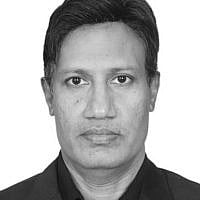
For more than two decades, I have worked as a journalist in Pakistan, arguing for progressive ideas that are often unpopular, sometimes risky, but always necessary: religious freedom, interfaith coexistence, democratic values, and dialogue over conflict. I have advocated engagement with the United States during moments when anti-Americanism in Pakistan was at its most intense—after the killing of Osama bin Laden, during the Raymond Davis controversy, amid drone strike debates, Memogate, and the Shakil Afridi episode. I did so publicly, consistently, and often against the prevailing mood.
That is why my recent experience at the US embassy in Islamabad—where I was grilled and refused a visa to attend the International Religious Freedom (IRF) Summit in Washington—left me unsettled, not merely disappointed.
The refusal itself is not the heart of the matter. Visa decisions are sovereign and discretionary. What deserves scrutiny is the line of questioning that led there—and what it suggests about how advocacy for the Abraham Accords, diplomatic ties with Israel, and religious freedom is perceived, even within spaces that are meant to promote those very ideals.
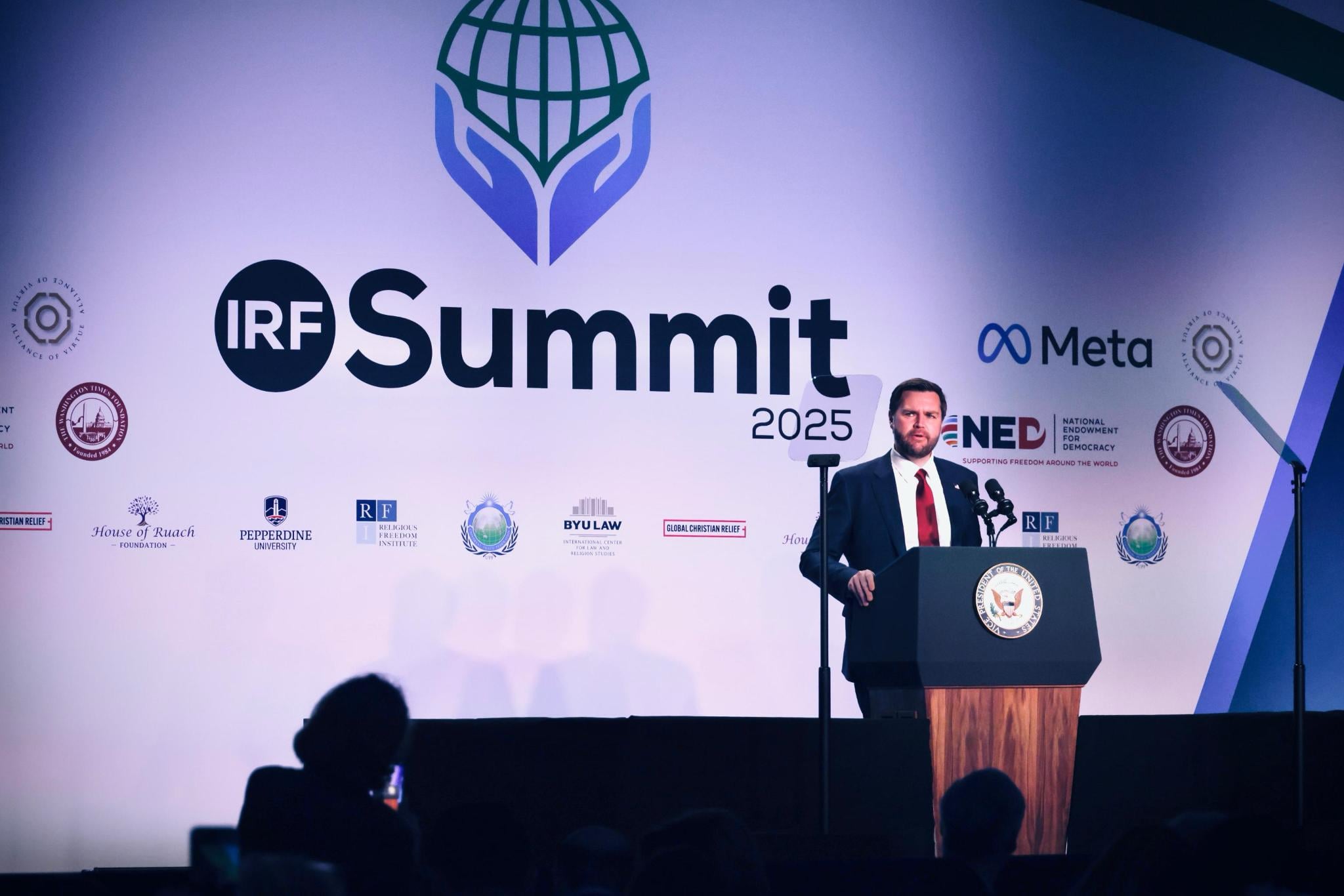
I was invited to attend the IRF Summit 2026 by the American Muslim & Multifaith Women’s Empowerment Council (AMMWEC) and the IRF Roundtable. The summit brings together policymakers, activists, and faith leaders to defend freedom of belief worldwide. As a journalist who writes on peace, religious freedom and interfaith harmony—and as a contributor to The Times of Israel—my participation was professionally relevant and intellectually aligned.
My visa interview unfolded in multiple stages, each increasingly disconcerting.
The first round of my interview took place at a common interview window with a foreign lady consular officer. The exchange was routine and professional. I was asked about the purpose of my travel, my professional background, and my publications. I explained that I write for The Times of Israel, Daily Times, and The Province, and identified my sponsors. I submitted all required documentation, including official sponsorship letters from AMMWEC and the IRF Roundtable. At that stage, nothing appeared unusual or concerning.
The second round, however, marked a noticeable shift.
I was called into a separate interview room and questioned by a local visa officer in Urdu. The discussion quickly moved away from my participation in the IRF Summit and focused instead on the Abraham Accords and my views on Pakistan–Israel relations. I responded analytically rather than ideologically. I explained that the Abraham Accords differ from earlier peace initiatives in that they emphasize people-to-people engagement—cultural exchange, educational cooperation, economic connectivity, knowledge sharing and pragmatic normalization—rather than the continuation of hostility as a political default.
When asked whether Pakistan should consider diplomatic relations with Israel, I noted that Pakistan maintains relations with countries with which it has fought wars and has no territorial or border disputes with Israel. I pointed out that Muslim-majority countries bordering Israel—such as Egypt and Jordan—already maintain diplomatic ties, and that regional dynamics continue to evolve. My answers reflected widely debated policy perspectives, not radical positions.
I was then questioned about religious freedom. I cited Article 18 of the Universal Declaration of Human Rights, affirming the right of every individual to freedom of thought, conscience, and religion, including the right to practice or change one’s faith.
At this point, the interview took a puzzling turn. I was asked about the funding sources of my U.S.-based sponsor organization and whether it receives support from the U.S. government. I explained that I had no knowledge of the organization’s internal finances, noting only that governments routinely support peace-building and humanitarian initiatives, and that such support—when directed toward dialogue and coexistence—strengthens societies and democratic institutions.
I was also asked whether I intended to visit Israel from the United States, despite the fact that I had applied solely for a U.S. visa to attend a conference in Washington, D.C. The relevance of a hypothetical future visit to Israel to my U.S. visa application was unclear. I was seeking entry to the United States for a specific, time-bound professional purpose, yet the questioning appeared to extend well beyond that scope.
The challenge with this line of questioning was heightened by the reality that my professional life is fully transparent. My social media accounts are public, my columns are accessible to all, and my opinions on the Abraham Accords, Israel, interfaith harmony, and regional diplomacy are straightforward. If my views are consistent with American policy—if the U.S. itself advocates for normalization, dialogue, and religious freedom—then why did sharing them seem to raise concerns about my eligibility?
Equally perplexing was the scrutiny directed at the funding of an American organization operating fully under US law. Why was a Pakistani journalist expected to explain the financial structure of a US-based nonprofit? Such organizations are required to file tax returns, disclose donors, and comply with stringent regulatory and transparency standards. Their records are readily accessible to American authorities. I am neither an auditor nor a board member, nor do I hold any financial or managerial role within the organization. Yet I was pressed on matters well beyond my authority or knowledge.
The US government already possesses extensive investigative, vetting, and compliance mechanisms—including access to tax filings, donor disclosures, and regulatory records—that far exceed the reach of any visa applicant. Placing the burden of financial explanation on an invited participant attending a religious freedom seminar was therefore difficult to justify. The implicit message seemed less about due diligence and more about suspicion—directed at those associated with pro–Abraham Accords discourse and with organizations willing to confront antisemitism openly.
The questioning took an even stranger turn, delving into personal matters: they asked about the salary and children of the IRF Roundtable coordinator in Pakistan. At that point, the interview had completely strayed from any reasonable evaluation of my visa application. It’s hard to see how personal information about someone else—information I don’t have and shouldn’t have—could possibly relate to my participation in a religious freedom summit.
By the end of this round, the interaction no longer felt like a standard visa interview. It felt closer to an ideological examination, coupled with scrutiny of the internal funding of an American organization—matters that seemed unrelated to my eligibility to attend a religious freedom conference in the United States.
The focus did not feel incidental. It felt directional.
When advocacy for normalization with Israel, or association with those combating antisemitism, becomes a source of suspicion, something deeper is at play. In such moments, individuals like me—working in societies where antisemitism is deeply ingrained—are placed in an impossible position. We argue for coexistence at home, only to find that abroad, those same views raise eyebrows.
This is how antisemitism often operates today: not always overtly, but embedded in assumptions, discomfort, and disproportionate scrutiny. When people committed to the Abrahamic vision—Muslims, Jews, and Christians working toward shared futures—are treated as liabilities rather than partners, it undermines the very movements designed to counter extremism.
The Abraham Accords were never meant to be merely symbolic documents. They were intended to change mentalities—to normalize peace and make hatred costly. That project requires moral clarity and institutional consistency.
I continue to respect American institutions and believe in their capacity for reflection and correction. My purpose in writing this is not accusation, but concern. If support for the Abraham Accords can raise red flags at a US embassy, it sends the wrong signal—not just to me, but to countless voices across the Muslim world who are trying, often quietly and at personal risk, to move the conversation forward.
In my earlier piece on radicalization and migration, I argued that many democracies—driven by humanitarian urgency or bureaucratic convenience—have too often prioritized speed, wealth, or volume over serious evaluation of ideological alignment. The result has been a paradox: individuals with extremist sympathies or authoritarian worldviews sometimes pass through weakened vetting mechanisms, while secular reformers, journalists, and pro-peace voices face disproportionate hurdles. Western societies have paid a price for their misplaced immigration policies, as evidenced by documented cases in which failures of screening allowed radicalized individuals to exploit humanitarian pathways meant to protect the vulnerable.
What makes my visa experience so troubling is that it seemed to invert this logic entirely. Rather than being scrutinized for extremist views—which I unequivocally oppose—I appeared to be questioned for holding positions aligned with pluralism, normalization, and interfaith dialogue. If Western democracies rightly acknowledge the need to distinguish between those fleeing oppression and those seeking to import intolerant ideologies, then consistency matters. Ideological vetting should protect liberal values, not penalize those who defend them. When a journalist advocating religious freedom and coexistence is subjected to ideological suspicion, while history shows that genuine extremists have slipped through weakened systems, it raises an uncomfortable question: are the standards being applied in the right direction?
Silencing or sidelining those voices does not protect religious freedom. It weakens it.