
Radicalization Crisis: How Western Democracies Imported Extremism
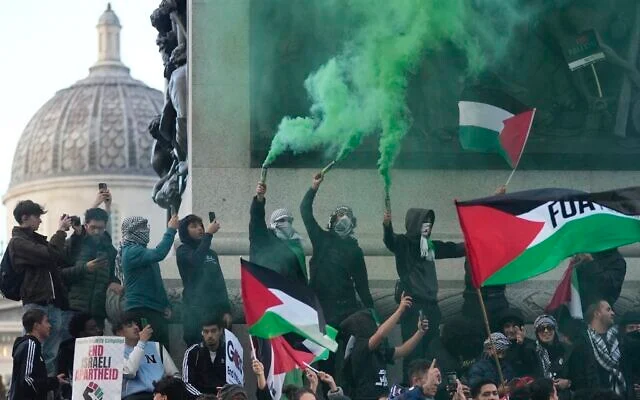
The Founder and Executive Director of the UK-based Islamic Theology of Counter Terrorism (ITCT), Noor Dahri, has issued a stark warning about rising extremism in Western societies, arguing that radicalization in the UK has surpassed levels seen in Pakistan. Speaking in an interview with The Jewish Chronicle, Dahri said that British pro-Hamas demonstrators are not simply misinformed—but are choosing to embrace radical ideology despite access to free information and democratic freedoms.
“People here [UK] are more radicalized than in Pakistan because there they don’t have options [to see the truth for themselves], here they have options – they have a British passport, they can travel to Israel, they can see a democratic life where Jews and Muslims are living side by side. [They can see] everyone there executing their rights without persecution.
“But [British pro-Palestine protesters] don’t want to know. They are [further along in being] radicalized because they are able to know something and still [chose not to] and deny it.
He added that many Western protesters “don’t want to know” the full picture. “They are further along in being radicalized because they are able to know something and still choose not to—and deny it.”
“Western Muslims have more value to [Hamas] than those in the Middle East. They want to use them on the front line to generate pressure on Western governments.”
A Surge of Extremism Since October 7
Since the Hamas attack on October 7, 2023, Western developed countries have witnessed an unprecedented wave of pro-Hamas activities. Mass demonstrations, online propaganda, and spikes in antisemitic incidents have swept across the United States, Canada, the UK, Australia, and Europe.
JUST IN: These pro-Hamas rallies in our streets are a DIRECT result of weak immigration policies!
When we let enemies walk freely among us, this is what happens.
We need law enforcement to crack down on these terror supporters NOW!
— AwakeToTruth (@awaketotruth_) April 20, 2025
Key incidents include:
- Hamburg, Germany – Pro-Hamas demonstrations described by observers as signaling “dark times ahead.”
- Montreal, Canada – Violent pro-Palestine protests, with city leaders accused of downplaying the extremism involved.
- US college campuses – The arrest and subsequent visa revocation of foreign students, such as Turkish national Rumeysa Ozturk, who helped organize anti-Israel demonstrations.
In the United States, pro-Hamas activism has triggered a federal crackdown, including the revocation of visas for foreign nationals advocating violence. In the UK, riot police have repeatedly clashed with Islamist-led protest groups chanting jihad slogans, many of which are linked to migrant-led networks. Similar patterns have emerged across Europe and Canada.
Analysts warn that social media further fuels resentment, with viral posts claiming that “open borders are tearing the West apart” by allowing “imported jihadism” to flourish. In Australia, controversy has grown around attempts to import Palestinians displaced by the Gaza conflict, amid revelations that some admitted individuals had praised Hamas online.
A pro-Hamas demonstrator at Columbia University slated to be deported fled to Canada.
Canada needs to tighten up their immigration policies before it looks Europe! @POTUS ????????
— Dave (@dave1249) March 16, 2025
Immigration Policies Under Fire
A growing chorus of policy experts, security officials, and commentators argue that Western immigration systems have inadvertently allowed extremist sympathizers to settle in democratic societies.
Proponents of this view point to:
- Inadequate pre-entry screening
- Mass humanitarian admissions with minimal vetting
- Family-chain migration from conflict zones with strong extremist influence
- Political reluctance to scrutinize ideological backgrounds
In the UK, Labour’s 2025 Gaza visa initiative faced criticism for “importing a fan base for a proscribed terrorist organization.” In the US, Trump administration directives implemented in 2025 have linked pro-Hamas activity to immediate visa review, suspension, or deportation.
Migration scholars caution that while most immigrants do not radicalize, individuals arriving from regions where antisemitism is institutionalized or where extremist groups hold influence are statistically more susceptible when integration fails.
A Murder That Shook America—and Reinforced Concerns
The debate intensified following the murder of US National Guard Army Specialist Sarah Beckstrom in Washington, DC, allegedly committed by Afghan refugee Rahmanullah Lakanwal. The killing shocked the nation and exposed systemic failures and wrong immigration policies in the US refugee processing pipeline.
Lakanwal had entered the US through Operation Allies Welcome, a mass evacuation program launched after the Biden administration’s chaotic 2021 withdrawal from Afghanistan. Subsequent investigations revealed deficiencies in his vetting process—gaps that officials now admit were widespread.
Trump Orders Flags at Half-Staff in Honor of National Guardswoman Sarah Beckstromhttps://t.co/dfd97ogIi6
— Karoline Leavitt (@PressSec) December 4, 2025
Attorney General Pam Bondi and Homeland Security Secretary Kristi Noem have accused the Biden-era program of prioritizing speed over security. Biometric screening was skipped for thousands; social media histories were ignored; and even individuals with combat backgrounds or suspected extremist ties received pathway approvals.
“Fully vetted,” critics argue, meant little more than “processed quickly.”
Beckstrom’s grieving father called her murder “a horrible tragedy.” President Donald Trump described her as “magnificent” and “outstanding in every way,” using the case to highlight the failures of Western humanitarian admissions that lack ideological vetting.
According to an analysis, a total of 219 foreign-born terrorists were responsible for 3,046 murders on US soil from 1975 through the end of 2022. In the US, policies under administrations prior to 2025 allowed significant inflows from Middle Eastern and North African countries, with over 1 million immigrants from Muslim-majority nations between 2010 and 2023. The UK and Europe have seen similar trends, with the EU’s open-border approaches and the UK’s post-Brexit visa schemes facilitating rapid population growth from conflict zones like Syria, Afghanistan, and Gaza.
A Global System Rewarding Wealth Over Democratic Values
Security experts point to a deeper structural problem: modern immigration systems routinely privilege financial capital over democratic alignment.
Investor visas, startup visas, and wealth-based immigration pathways allow wealthy applicants—including those with authoritarian or extremist sympathies—to enter with relative ease. Meanwhile, democracy activists, journalists, secular reformers, and women’s rights advocates from conflict zones struggle with prohibitive requirements and years-long application processes.
“The people most aligned with Western ideals are often the ones least able to access Western countries,” one migration analyst noted. “Meanwhile, dangerous actors often have the money to get in.”
This imbalance is visible worldwide. Even Pakistan has recently moved to expel Afghan refugees after multiple terror attacks, with Interior Minister Mohsin Naqvi stating flatly:
“We cannot afford more explosions.”
European countries have deported individuals for extremist ties, and Australia continues to grapple with security lapses in refugee admissions.
The Trump Doctrine and the Growing Debate Over Immigration
President Trump’s 2025 Thanksgiving message announced a sweeping new proposal: a permanent ban on immigration from all “Third World countries.” The statement electrified supporters but triggered fierce debate across the political spectrum.
Critics call the proposal unworkable, warning that it punishes millions who share Western values while failing to address systemic failures within current immigration frameworks.
Experts argue that America’s real challenge is not the origin of immigrants but the criteria used to assess them.
“America doesn’t have a ‘Third World migration problem,’” a policy analyst noted. “It has a priorities problem.”
What Real Reform Would Look Like
Security specialists, migration scholars, and integration experts widely agree on what reforms are necessary:
1. Prioritize democratic values over wealth
Admit those who support human rights, gender equality, pluralism, and secular governance.
2. Conduct robust pre-entry ideological screening
Vetting must occur before individuals enter a country—not afterwards.
3. Create dedicated pathways for reformers
Fast-track secular activists, pro-democracy dissidents, journalists, and minority community leaders.
4. Strengthen fraud detection systems
Fraud is a governance issue, not an immigration issue; it must be addressed through audits, enforcement, and modernized systems.
5. Support local integration infrastructure
Communities overwhelmed by sudden population growth require federal support for schools, healthcare, and housing.
A Warning—and an Opportunity
The rising tide of pro-radicalized activism, coupled with violent incidents such as Beckstrom’s murder, has forced Western governments to confront the consequences of years of poorly aligned immigration policies.
Dahri’s warning underscores the stakes: radicalzsation is growing not because Western societies lack freedom, but because they have failed to defend it.
The challenge for the West is now twofold:
- Stop dangerous individuals from exploiting humanitarian pathways.
- Ensure those who genuinely share democratic values are no longer shut out.
Whether governments seize this moment for evidence-based reform—or allow the current crisis to deepen—may determine the trajectory of Western security and social cohesion for decades to come.