
The perilous fantasy of US withdrawal from the Mideast
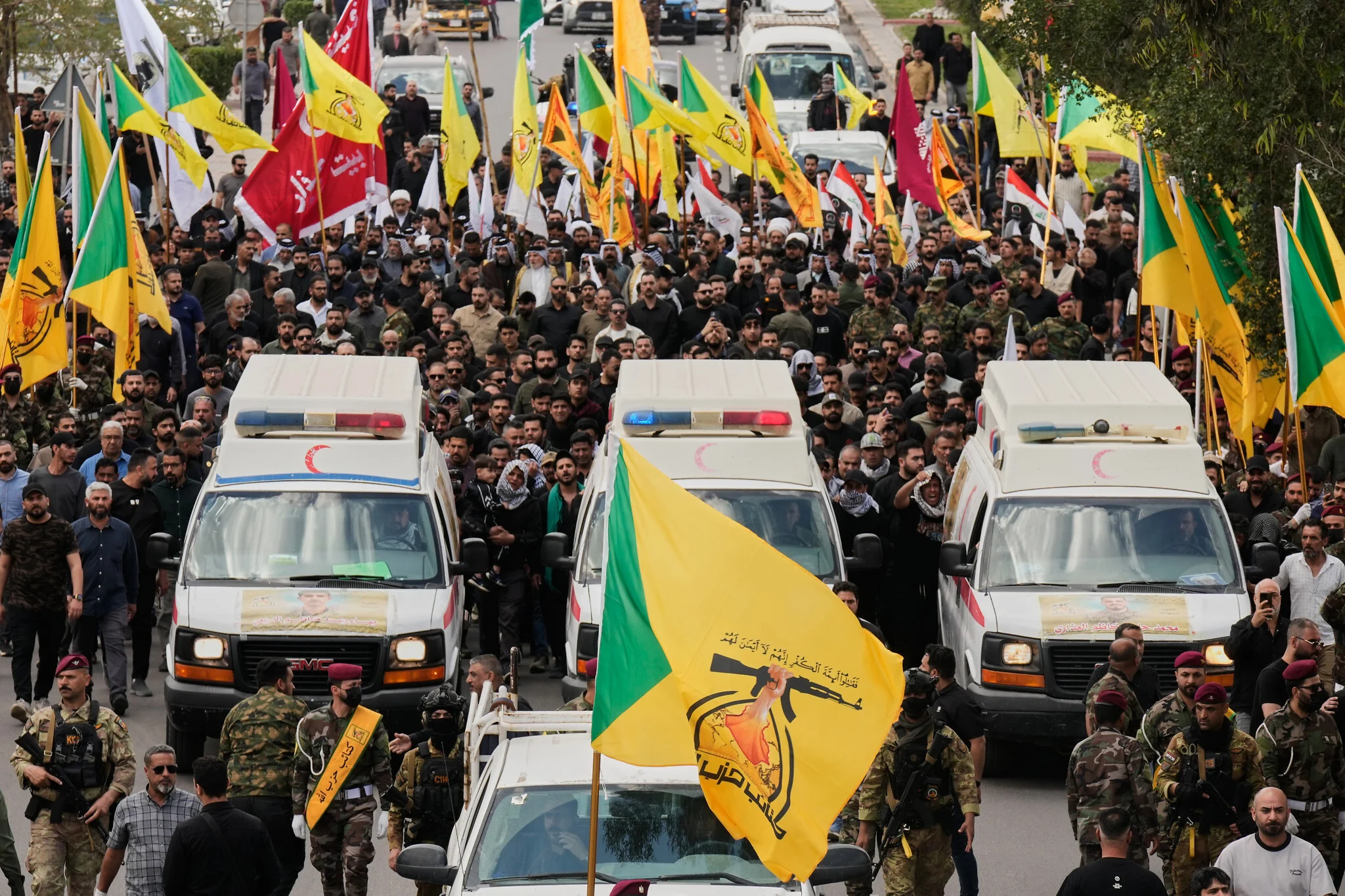
There exists in certain quarters of the West a touching faith that should America ever weary of the Middle East, the Middle East would, in turn, grow weary of itself. One is astonished by the durability of this childish delusion. Power vacuums, as even the most casual student of history knows, are filled by the first group of armed zealots to notice that no one is minding the store. They arrive bearing missiles, militias, martyrdom posters, and an almost supernatural sensitivity to the scent of weakness.
The Americans may decide to pack up and leave, and the Europeans may issue their customary declarations of concern. Israel cannot withdraw from Israel. Geography continues to have the final say.
Observe the disposition of forces: to the north, Hezbollah, that charming Lebanese “political movement” which just happens to possess one of the most formidable arsenals in the region. To the east, the Islamic Republic of Iran, which has constructed an entire network of proxy armies while piously declaiming its devotion to something called “resistance.” From the south, the Houthis have demonstrated that a gang of fanatical tribesmen can become a strategic player if it is sufficiently ideological and sufficiently useful to Tehran. Add Gaza, add Syria, add the sea lanes, add the missiles, add the drones, and one begins to appreciate the full architectural genius of the encirclement.
Yet Israel is incessantly lectured about the virtues of “restraint.” Restraint is not always unwise, but the word has become a kind of moral sedative, dispensed by those who never trouble themselves to explain how a small state is meant to behave when its enemies regard restraint as proof of fear, and when every concession is recorded as evidence that violence works.
The enthusiasts for American withdrawal might condescend to answer one straightforward question: What do they imagine occurs the morning after? Does Hezbollah suddenly transform itself into a book club? Does the Iranian regime conclude that its revolutionary mission has gone quite far enough, thank you? Do the Houthis return to their traditional occupation of starving quietly in Yemen? Or is it rather more likely that every jihadist franchise from Beirut to Sana’a will conclude that the policeman has left the neighborhood and that the Jews are now ripe for a proper pogrom?
There is something both grotesque and absurd in the way Israel’s critics speak of Israeli power. They denounce it as monstrous, yet simultaneously demand that it absorb unlimited punishment. Its intelligence services are assumed to be infallible, its army invincible, its society infinitely resilient. This is flattery disguised as accusation.
As for Israel’s nuclear capacity, it maintains a policy of deliberate ambiguity. The purpose of this is not to indulge adolescent fantasies of nuclear war. The purpose is to ensure that those who dream of Israel’s annihilation must always factor in one final, terrible uncertainty.
And this is where the danger becomes acute, because should Israel ever be driven into a genuine existential corner, should its conventional defenses be exhausted, and should its enemies come to believe that the Jewish state can finally be broken, then the moralists who urged restraint will discover, too late, that they helped bring about the horror they claimed to fear.
The prevention of catastrophe does not begin at the eleventh hour. It begins with the recognition that American power, whatever its sins, has often forestalled worse evils than it has committed. It begins by refusing the obscene double standard that lectures the besieged while flattering the besieger.
Those who wish to avoid the unthinkable should stop making it so eminently thinkable. And Israel must not be pushed to the edge of the abyss and then scolded for noticing it is there. History has taught the Jewish people what happens when they rely upon the conscience of the world. Nations that smell extinction on the wind do not respond in the measured tones of diplomats.