Published author, Jewish educator and scholar
Vayechi and Accountability: Jacob’s Final Lesson for Our Time
Canva
Parashat Vayechi opens with a striking image. Jacob is 147 years old, gravely ill, nearly blind, and approaching the end of his life. Yet unlike his father Isaac—whose blindness in old age clouded his judgment—Jacob’s physical decline is accompanied by extraordinary moral clarity. In his final moments, Jacob sees with a sharpness born not of eyesight, but of wisdom.
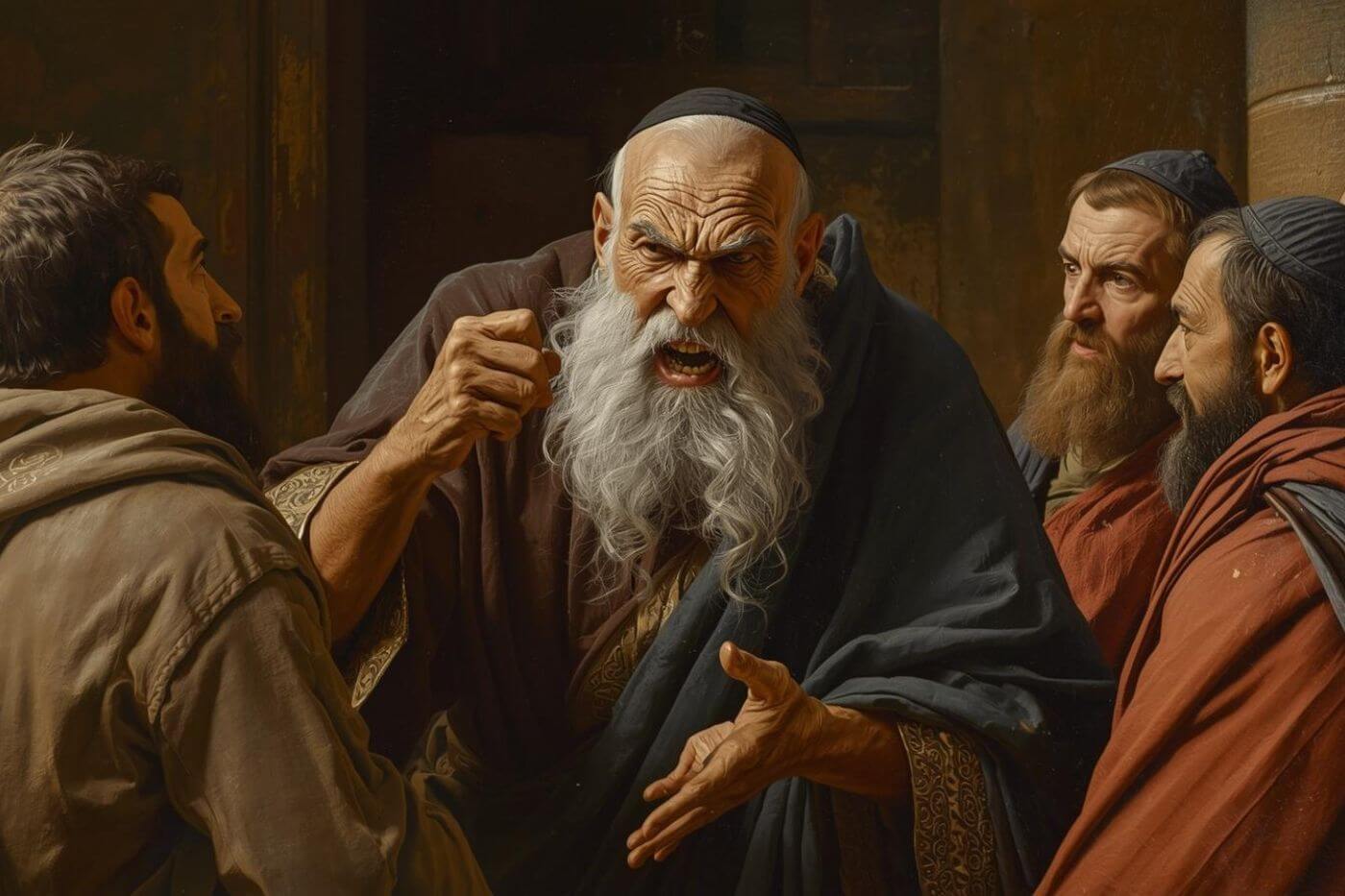
After securing Joseph’s promise to bury him in the Land of Israel, and after blessing Ephraim and Manasseh, Jacob gathers his sons for a final reckoning. One might expect tender words of comfort, encouragement, and affection—a father’s last embrace. And indeed, many of his sons receive blessings that reflect their unique qualities and future roles. But his words to his first three sons—Reuben, Simeon, and Levi—are not blessings at all, but stern rebukes and calls to accountability.
Reuben, the firstborn, possessed both status and the natural mantle of leadership. Yet his impulsiveness and sexual misconduct disqualified him from that role. Jacob makes clear that birthright and position confer no immunity from ethical responsibility. Leadership, he teaches, is earned through character, not inherited through privilege.
Simeon and Levi are chastised for their brutal massacre in Shechem. Their outrage over the rape of their sister Dinah was understandable; their violent, reckless response was not. Their actions endangered the entire family and corrupted the very values they claimed to defend. As a consequence, Jacob decrees that they will be scattered among the tribes, denied the power to act collectively again.
What is most striking is not merely the content of Jacob’s rebuke, but its timing. These are his sons. Decades have passed since their crimes. He is on his deathbed. And yet Jacob refuses to “forgive and forget” when the moral stakes are so high. Instead, he holds his sons fully accountable, stripping them of power and ensuring they will never again occupy positions where they could cause similar harm.
That lesson echoes with painful urgency today.
When people entrusted with power and influence cause profound and lasting harm—or enable it through negligence or cowardice—they must be held accountable and prevented from repeating their failures. Moral reckoning is not optional, and it cannot be deferred indefinitely.
The horrific Hamas attack on Israel on October 7, 2023, and the wave of antisemitic violence that followed around the world, did not emerge in a vacuum. Terror and hatred have long histories. But their dramatic eruption in recent years has been fueled, in part, by failures of leadership—by those who looked away, hesitated, or actively enabled dangerous forces to grow.
Consider the recent murder of fifteen Jews at a Hanukkah celebration on Sydney’s Bondi Beach. Jewish community leaders expressed horror—but not surprise. Antisemitism, they warned, had been normalized and allowed to metastasize across universities, cultural institutions, workplaces, and even the health sector. Despite repeated warnings, the government failed to act decisively—particularly in areas of community security, hate-speech enforcement, and coordinated anti-hate strategies. In the aftermath, families of victims and communal leaders called for a federal royal commission to investigate how such an atrocity could occur. The Prime Minister’s refusal to do so—opting instead for a closed-door review led by a former intelligence chief—has been widely perceived as an attempt to avoid public accountability.
A similar failure can be seen in the realm of media responsibility. The New York Times’ high-profile front-page story about a severely malnourished child in Gaza strongly implied that Israeli policy was the direct cause. It later emerged that the child suffered from serious pre-existing medical conditions. While an editor’s note was added, critics rightly argued that the correction was insufficient and failed to match the prominence and impact of the original report. In an age where headlines shape global perceptions in minutes, such failures carry lasting consequences.
Time and again, major news outlets publish unverified allegations against Israel and the IDF, employ biased framing, and then issue muted or delayed corrections when those claims unravel. The damage, however, remains. Jewish and Israeli leaders insist—correctly—that those who wield such influence must be held to account for the narratives they amplify and the harm they cause.
Within Israel itself, accountability has taken tangible form. The catastrophic failure that enabled Hamas to carry out the October 7 massacre has already led to resignations and removals: the head of Military Intelligence, the IDF Chief of Staff, the Southern Command chief, senior Gaza-sector commanders, and the head of the Shin Bet have all accepted responsibility for their roles.
Yet one figure has not.
Israel’s Prime Minister has neither resigned nor acknowledged personal responsibility, a reality that most Israelis find deeply disturbing. After all, it was he who championed the transfer of Qatari funds to Hamas under the belief that the money would serve civilian needs rather than terror infrastructure. He insisted Hamas was deterred and posed no serious threat, even as it built the largest underground terror network in the world. He dismissed repeated warnings—from intelligence, military, and diplomatic sources—that the internal divisions created by his government’s judicial overhaul were projecting weakness and emboldening Israel’s enemies. And after serving as Prime Minister for fifteen of the past seventeen years—priding himself on being Israel’s ultimate guardian—October 7 occurred on his watch.
For these reasons, Israelis overwhelmingly demand what history and morality require: a state commission of inquiry, as was established after every other national catastrophe.
Accountability, as Jacob teaches, cannot stop at convenience or power. On his deathbed, Jacob held three of the twelve tribes of Israel accountable for their moral and political failures, despite the personal pain it caused him. His example stands as a timeless charge to the Jewish people:
In every generation, those entrusted with power must be judged not by their titles or intentions, but by their actions and their consequences. And when they are in the wrong and cause irreparable harm they must be held accountable.
Shabbat Shalom.
For an abridged video version of these parasha thoughts: https://youtu.be/Pe5a5WLm5kQ
______________________________________
For more articles on the parasha and current events, or to sign up for my newsletter, visit my website: https://davidharbater.com/
Follow me on Facebook: https://www.facebook.com/Rabbi.Dr.David.Harbater
Visit my YouTube channel: https://www.youtube.com/@rabbidrdavidharbater
To invite me to speak at your synagogue or community: davidharbater.com/contact
Related Topics
Related Posts