
Vayera: From Abraham’s Tent to King Solomon’s Golden Cat — A Journey of Chesed from Jerusalem to Brooklyn and Athens
How the Royal House of Kanaani, a Brooklyn Borough President’s Citation, and an upcoming exhibition in Athens reflect Abraham’s enduring legacy of kindness.
What if one of the most meaningful encounters of our lives comes through someone — or something — we never expected to become a messenger of God?
This question lies at the heart of Vayera (Genesis 18:1–22:24), where Abraham, sitting at the entrance to his tent in the heat of the day, notices three travelers. Without asking who they are or what they might offer him in return, he rushes to welcome them with water, food, and rest. Only later does their extraordinary identity become clear: they are angels.
Abraham did not need to recognize angels before practicing chesed. His kindness came first. And perhaps this is one of the Torah’s most enduring lessons: we do not need to know who stands before us to recognize our responsibility toward them.
As a rabbi, Animal Chaplain, and Royal Custodian of the rare Kanaani cat breed, I often reflect on this teaching. When I look into the eyes of the cats entrusted to my care, I sometimes wonder whether they, too, might be messengers of God — not necessarily angels in the literal theological sense, but living creatures through whom we are invited to discover compassion, patience, responsibility, and love.
Perhaps we believe we are saving an animal, while caring for it quietly heals something within ourselves. Perhaps we think we are its guardians, while it is teaching us how to become better human beings.
Generations after Abraham, King Solomon carried forward another dimension of this spiritual legacy: wisdom expressed through an understanding of creation. The Tanakh tells us that Solomon spoke of trees, animals, birds, creeping things, and fish (I Kings 4:33). His wisdom extended beyond human affairs into the natural world.
A remarkable image appears in Targum Sheni to the Book of Esther, where Solomon’s magnificent throne is described as adorned with golden animals, including a cat positioned opposite a rooster. Although this belongs to later Jewish literary tradition rather than documented royal history, the symbolism is striking. Even a small creature could find a place within the imagery of royal wisdom.
Abraham teaches us to open our doors. Solomon teaches us to open our eyes to the wonders of creation.
Today, these two teachings find an unexpected connection in the Kanaani, an exceptionally rare cat breed developed in Jerusalem in the late twentieth century by Doris Pollatschek, drawing inspiration from the native cats and natural environment of the Land of Israel.
The breed’s preservation is now the mission of the Royal House of Kanaani and The World Kanaani Organization, operating under the umbrella of the Salita Foundation. For me, this work represents more than feline preservation. It is an expression of cultural heritage, animal welfare, spiritual responsibility, and what I understand as Jewish Animal Chaplaincy.
As Royal Custodian, I do not regard guardianship as a claim to power or ownership over a royal legacy. Rather, it is a commitment to protect something precious and ensure that it survives for future generations.
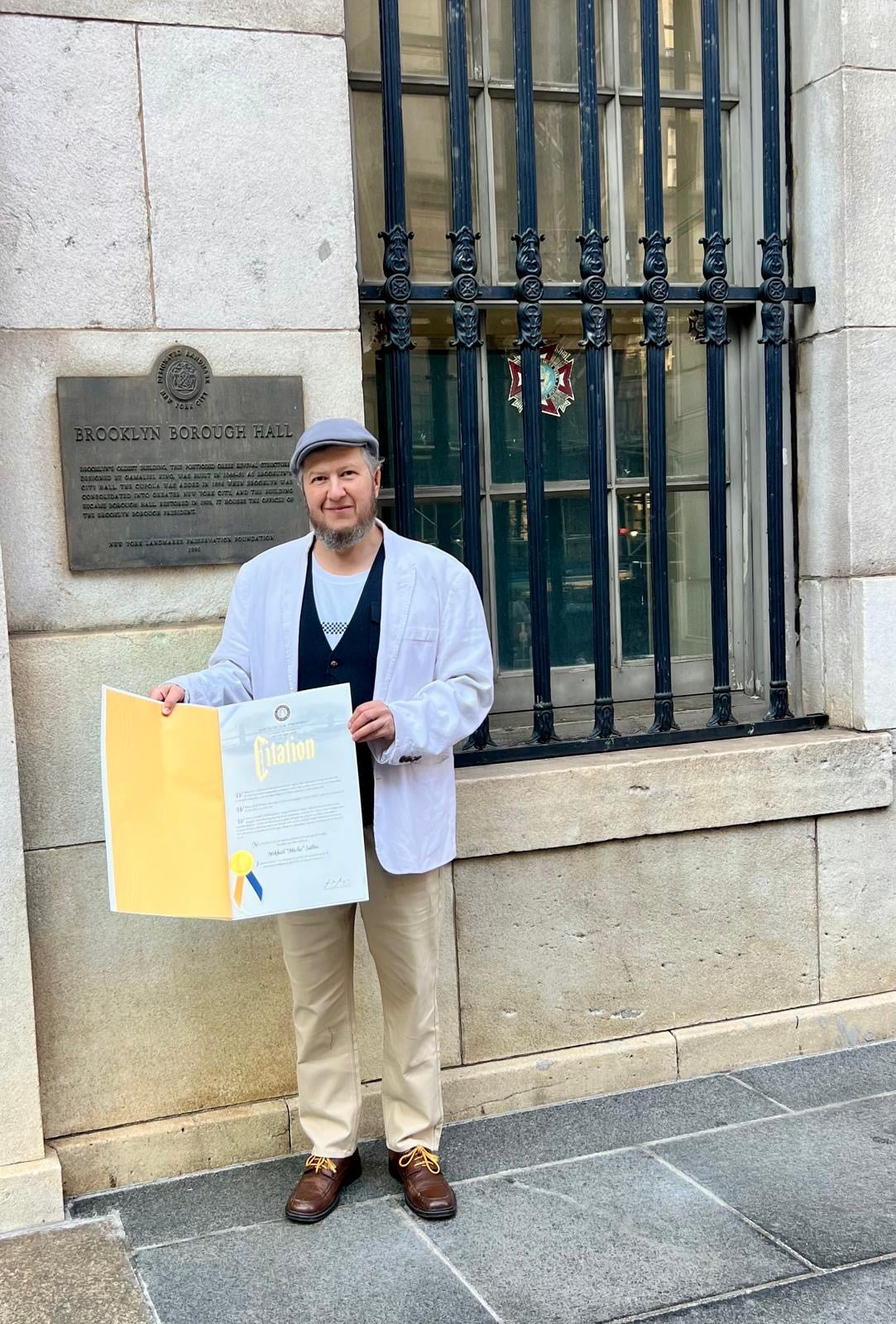
On October 29, 2026, National Cat Day, I received an official Citation from Brooklyn Borough President Antonio Reynoso in recognition of my service to the Brooklyn community. This recognition carried special meaning because my work, including the preservation of a rare breed originating in Jerusalem, had become part of a broader community mission acknowledged in New York City.
It also reminded me of something deeply connected to Abraham’s example: chesed is not confined to one nation, religion, or community.
Who is responsible for preserving the heritage of the Jewish people? Certainly, we bear a special responsibility for our own history and traditions. Yet sometimes those outside our community are among the first to recognize their value and extend a helping hand.
In applied behavior analysis, there is a concept known as positive reinforcement. Recognition can encourage meaningful work to continue and grow. Spiritually, however, such recognition represents something even greater: goodness awakening further goodness.
Another chapter of this journey is approaching. On November 28–29, 2026, Kanaani cats are expected to participate in the international Felina Greece exhibition in Athens, whose organizers have already expressed particular interest and respect for their participation.
The symbolism is difficult to overlook. Jerusalem and Athens, two great centers of ancient civilization, have been connected through centuries of intellectual and cultural exchange. The Septuagint, the ancient Greek translation of the Torah, became one of the most significant bridges between Jewish and Greek-speaking worlds.
Now, in a far more modest but meaningful way, another bridge is being built — not through the translation of sacred texts, but through the shared human appreciation of animals.
This is cultural diplomacy in its most personal form. It begins not with political agreements, but with respect, curiosity, kindness, and the willingness to recognize value in another culture.
Jewish tradition has long acknowledged righteousness beyond the boundaries of the Jewish people. The Talmud discusses the righteous among the nations in Sanhedrin 105a. In modern history, Yad Vashem established the distinct designation Righteous Among the Nations to honor non-Jews who rescued Jews during the Holocaust.
That historic title has specific criteria and must be respected as such. Yet the broader moral principle remains: compassion and righteousness are not restricted by ancestry.
When I consider the recognition from Brooklyn and the welcome extended by the organizers in Athens, I feel gratitude toward people who have shown respect for a mission connected to Jerusalem, regardless of whether they share my religious or cultural background.
Sometimes God reminds us of the value of our own heritage through the kindness of others.
And this brings us back to Abraham.
He did not know that the travelers approaching his tent were angels. Yet he knew what he had to do. He offered water, food, and hospitality. His act of kindness preceded any revelation of their identity.
Perhaps the animals entrusted to our care are also messengers in a spiritual sense. They do not speak our languages, recognize national borders, or seek honors. Yet through them, people meet, doors open, friendships develop, and acts of kindness become possible.
From Abraham’s tent to King Solomon’s throne. From the golden cat of Jewish literary tradition to the living Kanaani cats of Jerusalem’s heritage. From Jerusalem to Brooklyn, and now toward Athens.
This is not a claim of an unbroken biological lineage. It is a continuity of spiritual values: Abraham’s compassion, Solomon’s wisdom, and our responsibility to preserve and protect living creation.
The true meaning of Royal Custodianship is not authority over another creature, but responsibility for its well-being. And the true meaning of chesed is not waiting for someone to prove their worthiness before offering kindness.
Perhaps the next messenger of God will appear as a stranger at our door, a person from another culture extending a helping hand, or a small cat looking at us with trusting eyes.
We may never know.
But Abraham teaches us that we do not need to know.
For Abraham became an example of chesed not when he discovered that his visitors were angels, but when he opened his tent to them.
Do not wait to discover who stands before you to perform an act of kindness. Do good — and perhaps one day you will understand why that encounter was sent into your life.
Shavua Tov!