Vincent Descombes Interview | Alexandre Gilbert #334
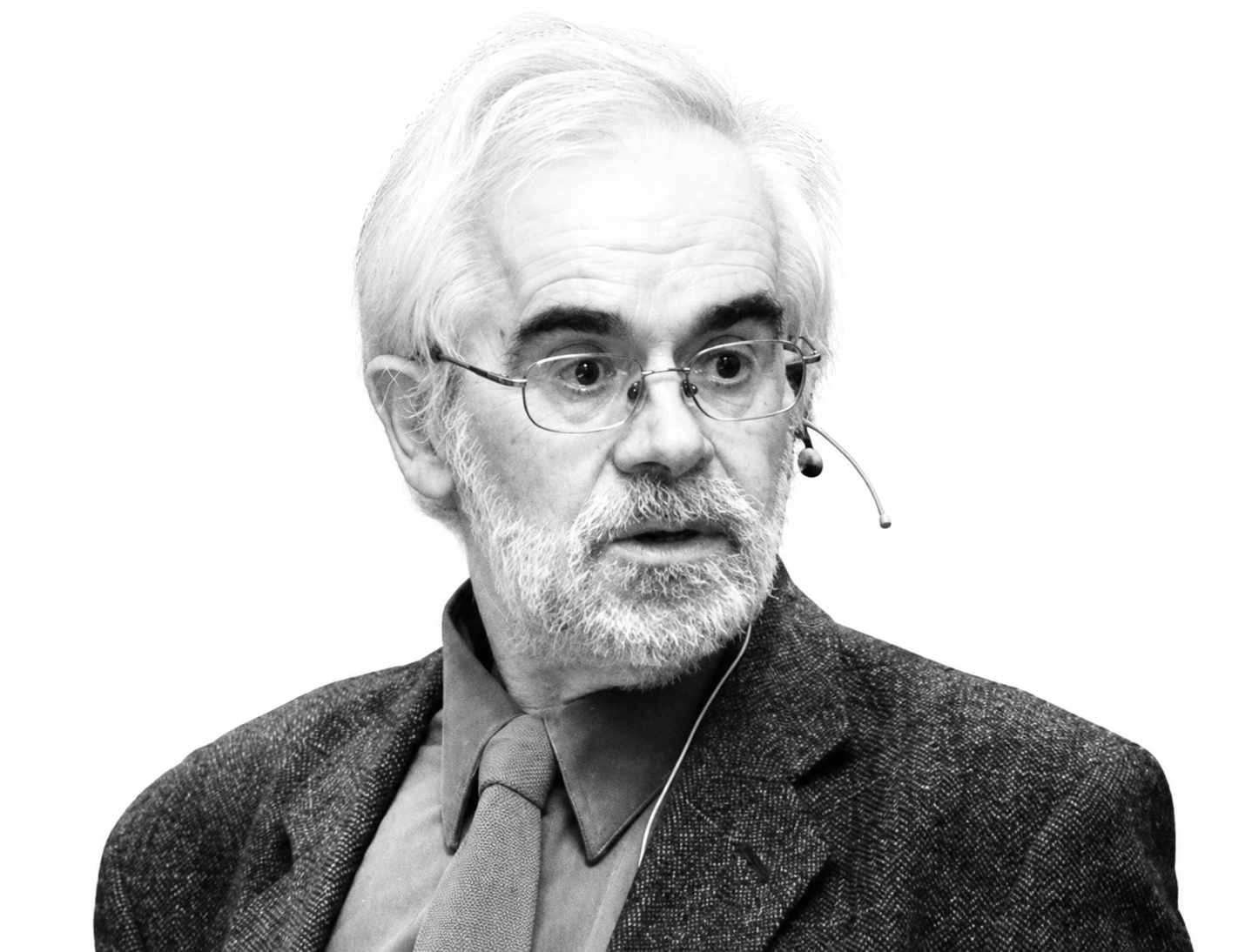
Vincent Descombes is one of the major figures of contemporary French philosophy, known for his work at the intersection of analytic philosophy, social philosophy, and the philosophy of language. A former director of studies at the École des hautes études en sciences sociales, he developed a distinctive critique of modern individualism through close engagements with Ludwig Wittgenstein, Émile Durkheim, Marcel Mauss, and Alexis de Tocqueville. His philosophy explores how meaning, action, and personal identity depend on shared social institutions rather than purely subjective consciousness. He first gained international recognition with Modern French Philosophy, a landmark interpretation of postwar French thought.
If meaning depends on institutions, what becomes of social critique when these institutions themselves are weakened or contested?
VD: I assume your question is what becomes of the social critique of institutions when these latter are no longer self-evident, but are called into question. Which institutions are we speaking about here? Often, this term refers to large organizations: School, the Hospital, the Family, etc. For my part, as I have explained in my writings, faithful in this to the usage of Durkheim, Merleau-Ponty, or Castoriadis, I take this word “institution” in its most general sense: there is institution as soon as a way of thinking or acting is received by people as having been established before them. An institution is what is received and transmitted as an institution, in other words a usage carrying authority. And for me (as for Durkheim), the paradigm of an institution is language.
So I return the question to you: I can clearly see what a critique of a language might be (of a way of speaking, of a particular usage of the common language), but what would a social critique of language as such be? Or a contestation of language as such?
Can one still defend a stable conception of the “common world” in societies marked by forms of radical individualism?
VD: First of all, there is something incongruous in speaking of societies marked by forms of radical individualism, at least if one takes this term “individualism” in its full philosophical meaning, namely the conception according to which I am myself and exist authentically only insofar as I manage to emancipate myself from the constraints of social life. If radical individualism is understood in this way, that means accepting the possibility of societies whose members succeed in living in an asocial manner.
Unless one simply means: societies whose dominant ideology (the shared ideals) is individualistic are individualistic societies. But they are no less societies, which means that they cannot fail to contradict in their functioning the ideals they profess.
In philosophy, it seems to me that the problem of knowing whether we live in the same world and whether we speak about the same things can only arise if one adopts, in one form or another, the point of view of perspectivism. It is then that the classic problem arises: how does one pass from the monad to monadology?
In what way has reading Wittgenstein transformed the way you think about language and action?
VD: It seems to me that what I learned above all from Wittgenstein was how to pay attention to what he calls the grammar of concepts. Not all words are nouns, not all nouns are proper nouns, not all proper nouns are names of substances, not all verbs are action verbs, nor are they all state verbs, not everything mental is an experience of consciousness, etc., etc. I was very struck by the image he gives (in his Lectures on Aesthetics) of what a philosophy book could be. This book would be organized the way a grammar book is organized, divided into chapters each dealing with a “part of speech,” in the grammatical sense of the expression (noun, verb, adjective, article, etc.). But it would be a philosophy book (and not a linguistics book) because it would contain far more chapters than an ordinary grammar. Indeed, the purpose of these chapters would be to show the logical differences between expressions, and how failing to recognize these differences leads to confusion. There would, for example, be a chapter on verbs of experience, to which many philosophers reduce the whole psychological vocabulary (as if “to want,” “to think,” or “to be accustomed to…” were experiences of consciousness). And also a chapter on personal pronouns (“me,” “I,” “you,” “we,” etc.).
Has contemporary social philosophy overestimated the role of communication, particularly in the tradition of Jurgen Habermas?
VD: Contemporary social philosophy includes several disparate currents, among them indeed the theories of “communicative action.” These theories have great merit. They invite us to consider first and foremost the form of relations between human beings, whereas orthodox Marxism subordinated the relation of man to man to the relation of man to the thing. Nevertheless, the question must be asked whether the notion of communication can fulfill all the functions assigned to it in the school of Habermas. It is supposed to provide us with a pragmatist theory of knowledge (consensus theory of truth), a “communicative” ethics, a doctrine of democracy. It is true that all human conduct can be presented (or redescribed) as a way of communicating with others. But that means the concept of communication has become empty.
Do current political disagreements surrounding the war in Iran reflect a crisis of institutions of meaning or simply a normal pluralization of forms of life?
VD: It is in the nature of things that there should be (among us, here, in France) political disagreements about a war that concerns us through its effects on us (economic, geopolitical, etc.), even though, up to this day at least, we are not directly actors in it. Calling these disagreements political means that they are not disagreements between opinions that readers of a newspaper or viewers of a television program on the day’s news may form. If they are political, they are disagreements about what our policy should be (the one for which we are responsible, that of our country) relative to this event. But for such political disagreements to exist, it is necessary that we agree on many points: on the fact that there is a war (agreement on the facts), on the fact that it concerns us (agreement on who is included in this “us”), on the fact that our “us” has a political dimension, in other words the fact that there are decisions to be made in the interest of our country, etc.
How far can one go in criticizing individualism without falling back into an overly holistic vision of society, characteristic of French Theory and the question of the death of the subject?
VD: French Theory and postmodernism have no idea what a society is. They are exacerbated versions of modern individualism, as can be seen in the interpretation they gave of Nietzsche.
But what matters to me is not criticizing individualism, but understanding it at once in what constitutes its greatness and in what it has that is impracticable and utopian. And to do this, it is more useful to read Tocqueville than Foucault’s History of Sexuality.
Do contemporary societies still produce common frameworks solid enough to make actions intelligible, and what are these frameworks?
VD: If one takes the word “institution” in the broad sense used by sociologists (thus by Durkheim or Mauss), everything social is instituted, which means that there could not be societies devoid of institutions.
If language is “always already” embedded in social rules, what does that change for the notion of individual freedom?
VD: The language I speak (when I speak in my mother tongue or, more awkwardly, in another) is indeed “always already” established before I begin to speak. In other words, when I speak in a language, I am not the first speaker of this language, nor am I the inventor of an idiom that I would have succeeded in imposing around me.
But the fact that a language is already spoken and transmitted when I come into the world (so that I had to learn it in order to emerge from my initial infantia) does not mean that the sentences I produce are “always already” formed and imposed on me by society (with the exception of particular situations, for example certain ceremonies, where I must limit myself to reciting an already constructed role and which therefore does not come from me).
Question: what would my freedom to direct myself be if I could not, in a situation where various contingent futures are conceivable, formulate to myself the possibilities available to me? How could I do so if I did not have an articulated language with which to do it?
See also: