
Middle East Analyst
Was Zionism Colonialism?
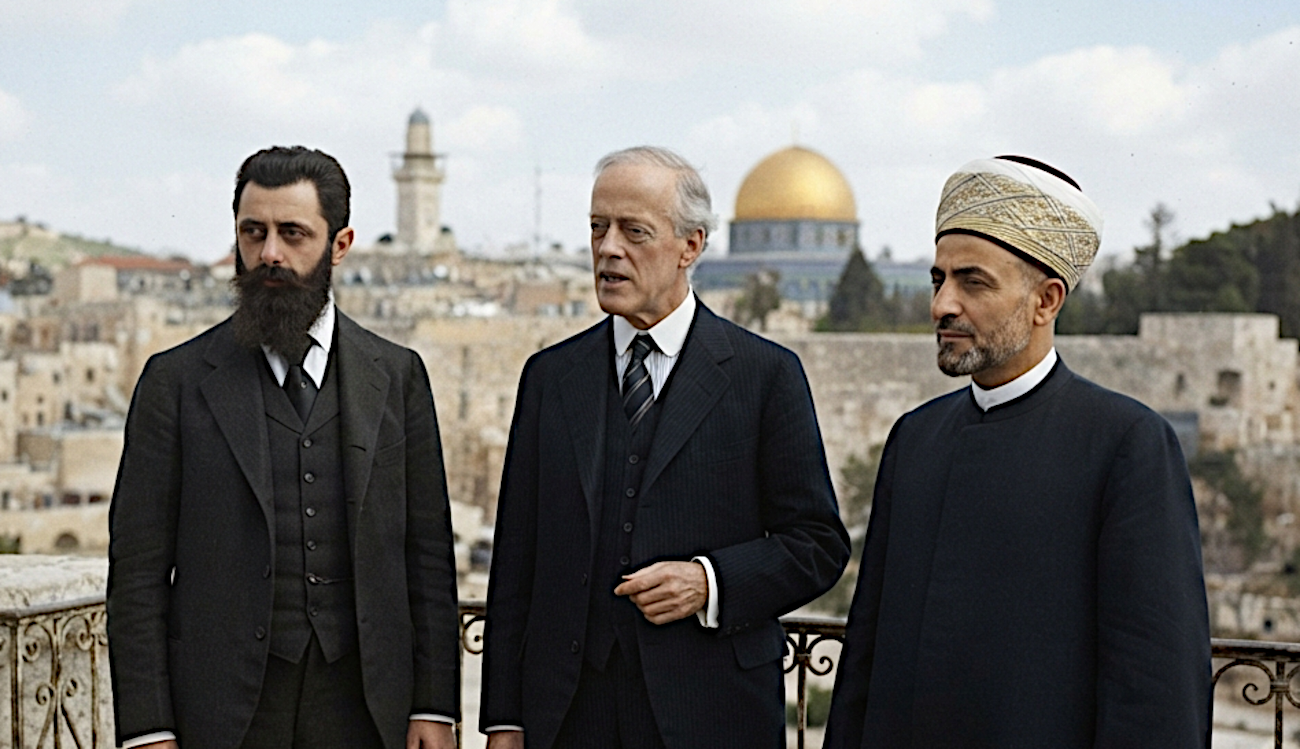
by author (AI)
The History Is More Complicated Than Either Side Wants to Admit
Whether Zionism was colonialism has become one of the most politically charged arguments surrounding Israel and Palestine, and both camps treat it as settled. For one camp, Zionism was a European settler-colonial project that displaced an indigenous population, full stop. For the other, the premise itself is a falsehood: Jews are indigenous to the land, were expelled from it, and returned to it, and calling that return “colonialism” is simply another way of denying Jewish history.
Both arguments contain real pieces of the record. Neither describes the whole of it, and the reason is that the question bundles several distinct historical phenomena — indigeneity, European nationalism, statelessness and persecution, organized settlement, imperial politics, and the collision of two national movements over one territory — that are usually argued as if they were a single question with a single answer.
Colonialism Was Never One Thing
Part of the confusion is definitional. “Colonization,” in the nineteenth and early twentieth centuries, could mean settlement, organized immigration, land development, or community-building under a sovereign power’s protection. The later academic category of “settler colonialism” carries additional assumptions about the relationship between settlers, indigenous populations, and a metropolitan power back home. Treating these as interchangeable is where most popular arguments about Zionism go wrong before they’ve started.
A Land That Was Never Empty
The right starting point isn’t 1897, when Herzl convened the First Zionist Congress, or 1917, when Britain issued the Balfour Declaration. It’s centuries earlier, because the Middle East is not a political landscape that can be read off the states and identities that exist today — it is a living historical archive, with civilizations, peoples, religions and empires layered on top of one another for millennia. Every generation there inherits stories older than the political entities that happen to be governing the land at the time.
The southern Levant is the clearest case. Ancient Israelites emerged within the broader Canaanite civilization; archaeology does not support the idea that they were an entirely foreign population arriving from outside the region, nor the opposing political claim that a contemporary population can be equated straightforwardly with the ancient Canaanites. A 2020 study in Cell examining 73 individuals from Bronze and Iron Age sites in the southern Levant found substantial genetic continuity among populations associated with Canaanite material culture, and found that populations related to those groups contributed ancestry to modern Levantine populations — alongside substantial later migration and admixture.
That doesn’t make modern Palestinians “Canaanites,” any more than it makes modern Israeli Jews “Canaanites.” Genetics doesn’t convert ancient civilizations into modern national identities. But it does undercut the simplistic version of the argument on both sides: the modern populations of the region are not neatly divisible into indigenous people and foreign people. They are products of thousands of years of migration, conquest, conversion, intermarriage and cultural transformation — Jews included, Palestinians included. Jewish exile did not erase Jewish connection to the land. Palestinian Arab identity does not erase Palestinian connection to the land. Both are true at once.
Modern Nationalism, Ancient Memory
The next layer is political, not genetic. Modern Zionism emerged in nineteenth-century Europe as a Jewish nationalist movement, shaped by European nationalism but also by a specifically Jewish historical experience — centuries of dispersion, recurring persecution, legal discrimination, and increasingly violent antisemitism. Herzl did not invent the idea that Jews had an ancient connection to Palestine; that connection was already embedded in Jewish religious, cultural and historical consciousness. What Herzl did was convert that connection into a modern political program — organizations, financing, land acquisition, encouraged immigration, negotiation with governments, a campaign for international recognition. That transformation is where the colonial dimension becomes impossible to ignore.
Herzl used colonial language himself. His 1896 pamphlet The Jewish State envisioned a Jewish organization capable of carrying out large-scale settlement, sponsored by a charter from a sovereign authority. In diary correspondence intended for Cecil Rhodes, he described the Zionist project as “something colonial” — a phrase that appears in his own writing, not one invented by later critics. There’s no honest way to pretend the early Zionists never thought in colonial terms. But Herzl’s word choice doesn’t establish that Zionism was merely an instrument of European imperialism; the movement had its own objectives, its own institutions, its own financing, and ultimately its own political ambitions independent of any patron. A national movement can employ colonial methods without being reducible to a colonial project.
The British Turn
The decisive transformation came when Zionism intersected with British imperial power. The 1917 Balfour Declaration announced that Britain viewed favorably the establishment in Palestine of “a national home for the Jewish people” and would use its best efforts to facilitate it, while also specifying that nothing should prejudice the civil and religious rights of the existing non-Jewish communities. The wording itself is the problem: Britain was committing to the political future of a territory whose overwhelmingly Arab population had not been offered equivalent recognition as a national political community. The subsequent League of Nations Mandate institutionalized that same asymmetry — Britain would facilitate the Jewish national home while protecting, but not empowering, everyone else.
That was unmistakably an imperial framework. But it doesn’t follow that Britain created Zionism. The chronology runs the other way: Zionism existed before the British conquest of Palestine. Herzl had already built the political movement and approached other governments, including the Ottomans, before Britain entered the picture. The Zionist movement went looking for a powerful patron because it needed one — not because it had been manufactured as Britain’s instrument. Britain didn’t install Zionism in Palestine; an independent national movement learned to operate within, and eventually benefit enormously from, an imperial international system already in place. That’s a materially different claim than “Zionism was British colonialism,” even though the two get collapsed together constantly.
Indigenous People, Colonial Method
This is the most useful way to hold the paradox together. If “colonialism” means a European imperial power planting a dependent population in foreign territory to extend its own sovereignty, Zionism doesn’t fit the model cleanly. If colonialism means organized settlement, land acquisition, immigration, institution-building, and the use of imperial political power to establish a new political reality in a territory already inhabited by another population, significant aspects of the Zionist experience fit the description exactly. Both observations are true simultaneously; they don’t cancel each other.
This is why settling the question by asking whether Jews are indigenous misses the point — indigeneity and political method are different questions. A population can be indigenous to a territory and still participate in a colonizing process. Describing Zionist settlement as colonial in method doesn’t make Jews foreign interlopers with no historical connection to the land.
That’s the complication both sides have reason to avoid. Those arguing Israel is simply a European colonial implant tend to minimize the depth of Jewish historical connection to the land, the persistence of Jewish communities there across the centuries, the weight of Jewish statelessness and persecution in Europe, and the fact that Zionism was a Jewish national movement with its own agency rather than a proxy. Those arguing Israel is simply the natural restoration of an ancient homeland tend to minimize that the land was already inhabited, that Zionist immigration occurred inside an era of European imperial domination, that Britain deliberately facilitated the national home, and that the consequences for the Arab population were severe. Neither selective history erases the other’s.
The Palestinians Were Not a Late Arrival
The argument also has to resist treating Palestinians as an obstacle that appeared only after Zionism arrived. They didn’t. The population had lived in the country for generations — Muslim and Christian, overwhelmingly Arabic-speaking, and increasingly conscious of a distinct Palestinian political identity during the same era Zionism was developing. That identity was modern, but modern does not mean artificial; modern nationalism is almost always modern. The French didn’t need to call themselves French in the Bronze Age for French national identity to be legitimate today; Palestinians didn’t need a fully formed twentieth-century nationalism in the age of the Canaanites to become a genuine national community later.
Ancestry, cultural identity and national identity are three separate things, and the same logic runs in both directions. Palestinians can carry substantial ancestry from ancient Levantine populations while also being an Arab people whose language and culture were transformed over centuries following the Muslim conquest. Jewish Israelis can carry substantial ancestry from ancient Levantine populations while also being the product of millennia of diaspora, migration and admixture. Neither proposition invalidates the other.
Anti-Colonial Revolt Against a Colonial Patron
There’s an apparent contradiction that gets used selectively by both sides: Zionism eventually turned on the British Empire itself, with Jewish underground organizations fighting the Mandate authorities until Britain withdrew. That doesn’t erase the earlier benefits Zionism drew from Britain’s imperial framework, but it also doesn’t prove Zionism was simply British colonialism. Colonial subjects turning against the power that initially enabled or governed them is not unusual; an alliance of convenience becoming a struggle for independence is one of the more common patterns in twentieth-century history, not an anomaly specific to this case.
The more interesting question isn’t whether Zionists eventually fought Britain — they did — but how an independent Jewish national movement used an imperial system to build the political, demographic and institutional foundations for sovereignty, and how that process affected another population already living there. That question gets lost whenever the history is reduced to a slogan in either direction.
Why Neither Side Will Give Up Its Version
The colonialism framing and the indigenous-restoration framing aren’t just competing historical readings — they’re load-bearing for arguments that operate well outside the historical record. “Settler colonialism” is the term that connects this conflict to a broader international legal and rhetorical apparatus: apartheid analogies, boycott campaigns, ICJ and ICC arguments, UN resolutions built on a colonizer/colonized framework that assigns fault and remedy. It is doing present-tense political work, not just describing 1897. “Ancient restoration” does equally specific work on the other side: it forecloses the question of what, if anything, is owed to a population displaced by that return, by treating Jewish presence as simply the correction of a historical wrong rather than a modern nationalist project with its own costs. Each side needs its version of the past to hold because of what it licenses in the present — which is exactly why “it’s complicated” answers get so little traction in the debate. Complexity doesn’t serve either argument’s downstream purpose.
History Is Not a Courtroom Brief
The temptation is to treat history as a courtroom in which one side must establish exclusive title to the land. But ancient history doesn’t issue modern property deeds. Archaeology can establish where peoples lived. Genetics can illuminate population relationships. Documents can establish what governments and movements intended. International law can establish the legal framework of a given period. None of that, individually or together, erases the historical existence of another people.
Was Zionism colonial? Parts of the project were explicitly conceived and conducted in colonial terms — Herzl said so himself — and Zionist settlement operated within, and ultimately benefited from, a European imperial system. Was Zionism merely European colonialism? No — it was also an indigenous Jewish national movement seeking sovereignty in a territory to which Jews held an ancient historical connection. Were Palestinians simply recent Arab outsiders with no indigenous connection to the land? No — their population was rooted in the Levant, their identity developed through centuries of continuity and transformation, and their modern national identity is no less real for being modern.
Both peoples inherited the same contested landscape and both eventually converted ancient memory, demographic continuity and historical experience into competing modern claims to sovereignty. The mistake current debate keeps making is treating the arrival of modern nationalism as though it erased every earlier layer of that landscape. It didn’t — it added one more. And the current argument over which label, “colonizer” or “indigenous,” gets to define the conflict is itself just the latest layer: a modern political fight borrowing the language of history to do work history alone cannot do, which is tell two peoples with genuine claims to the same land how to share it.
Related Topics