


‘Washington and Tel Aviv Are Changing’
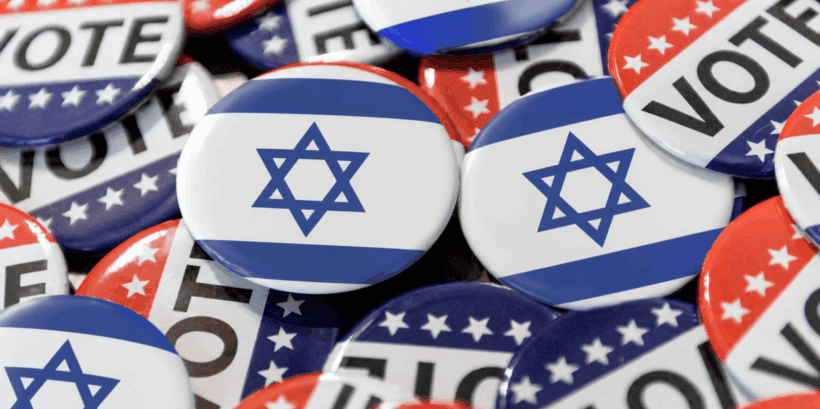
The political shifts linked to the American and Israeli elections are opening a new phase for the Palestinian cause. This is due to the changing public mood in the US towards Israel, the rising influence of the progressive wing within the Democratic Party, and the possibility of a new Israeli government that would end the era of Benjamin Netanyahu and the extreme religious right. However, the fundamental question is not only about the nature of the change in Washington and Tel Aviv, but also about its impact on policies towards the Palestinians and the Palestinian leadership’s ability to capitalize on these shifts.
Washington: “The Trump Plan Continues Under Greater Democratic Scrutiny”
American policy towards the Palestinian issue is expected to undergo a gradual transformation over the next two years, especially given the Democrats’ control of both the Senate and the House of Representatives, and the increasing influence of the progressive wing within the party. This shift is a result of the changes brought about by the war on Gaza, the Israeli massacres, and the escalating settler terrorism in the West Bank. These shifts will not necessarily signify a complete reversal of US policy, but they will make unconditional support for Israel more politically costly and subject the US administration to greater scrutiny.
Conversely, Trump will continue to support the Peace Council and its plan for Gaza, considering them among his most prominent political projects, albeit with less fervor. There is bipartisan agreement between Republicans and Democrats on the necessity of disarming the Gaza Strip, ending Hamas rule, and establishing new arrangements for its administration. Furthermore, criticizing Israel and expressing solidarity with the Palestinian people does not necessarily equate to supporting Hamas or its continued control of Gaza.
However, Democrats will pay closer attention to the mechanisms for forming the Peace Council, the interests of the participating parties, and the risks of transforming Gaza’s reconstruction into an investment project subject to political and economic calculations, rather than a means of rebuilding Palestinian life and guaranteeing national rights.
Therefore, future US policy will combine continued support for the Peace Council’s plan with increased criticism of Israeli conduct, particularly settlement activity and settler attacks. The future of the relationship with the Palestinian Authority will remain contingent on the nature of the next Israeli government. Israel: A New Government Doesn’t Necessarily Mean the End of the Conflict
On the Israeli side, the appointment of Gadi Eisenkot to form a government, bypassing Netanyahu, Ben-Gvir, and Smotrich, could represent a significant shift in the management of internal affairs and relations with the Palestinians. Despite disagreements within the opposition camp, the desire to end Netanyahu’s rule is a common denominator among its members.
However, a change of government does not necessarily mean a change in Israel’s strategic position on Palestinian rights; rather, it may reflect a shift in the methods and tools used to manage the conflict.
In Gaza, the new government is likely to align with the Trump administration on disarmament, ending Hamas rule, and implementing the Middle East Peace Process plan. However, the plan’s stalled implementation, and the subsequent blaming of Hamas, could revive the possibility of military escalation.
Conversely, the new government may pave the way for gradual Israeli withdrawals, the deployment of a stabilization force, and enabling the Palestinian National Committee and the new Palestinian police to assume their responsibilities, according to agreed-upon arrangements.
In the West Bank, the new government is expected to be more resolute in confronting settler terrorism, more willing to dismantle agricultural and pastoral outposts, and less hostile toward the Palestinian Authority. This could include reconsidering the transfer of accumulated clearance revenues and gradually easing restrictions on the entry of Palestinian workers into Israel.
However, a less extremist government does not necessarily mean one prepared to end the occupation or recognize a Palestinian state. There is a significant difference between changing the tools used to manage the conflict and changing the fundamental stance towards it.
Palestinians: From Waiting for Change to Regaining the Initiative
In contrast to these shifts, the Palestinian arena appears trapped in a state of stagnation, division, and a lack of strategic vision. This places Palestinians before a historic responsibility to abandon the policy of waiting and evading national obligations.
The past period has witnessed activity surrounding national dialogue and reconciliation, but it has not translated into practical and sustainable results. This reinforces the impression that some of these moves were more related to containing pressures than to a genuine will to reform the political system.
Elections are not a magic bullet for the Palestinian crisis, but they remain the essential gateway to restoring legitimacy and renewing the popular mandate. Legitimacy does not stem from closed-door understandings between leaders and factions, nor from the division of positions and posts, but rather from the citizens’ choice of those who represent them and decide their future. The next phase requires a national vision that transcends managing the division, addresses the relationship between the Palestinian Authority and the Palestine Liberation Organization, rebuilds institutions on democratic foundations, and links the reconstruction of Gaza to ending the political and geographical separation between the Strip and the West Bank.
Opportunities for change must be seized. Shifts in Washington and Tel Aviv may offer an opportunity to alleviate pressure on the Palestinians and rearrange some political, security, and economic issues, but they do not guarantee an end to the occupation or the establishment of a Palestinian state. The United States will continue its strategic calculations, and Israel will defend its interests, even under a new government.
Therefore, the real challenge lies not only in what Washington and Tel Aviv decide, but in the Palestinians’ ability to regain the political initiative and national legitimacy. Governments, alliances, and the balance of power may change, but without this, external shifts will remain deferred opportunities, and others will continue to determine the future of the Palestinian cause.