
Seeking honest leadership, and new narratives.
Washington. Do we have a problem?
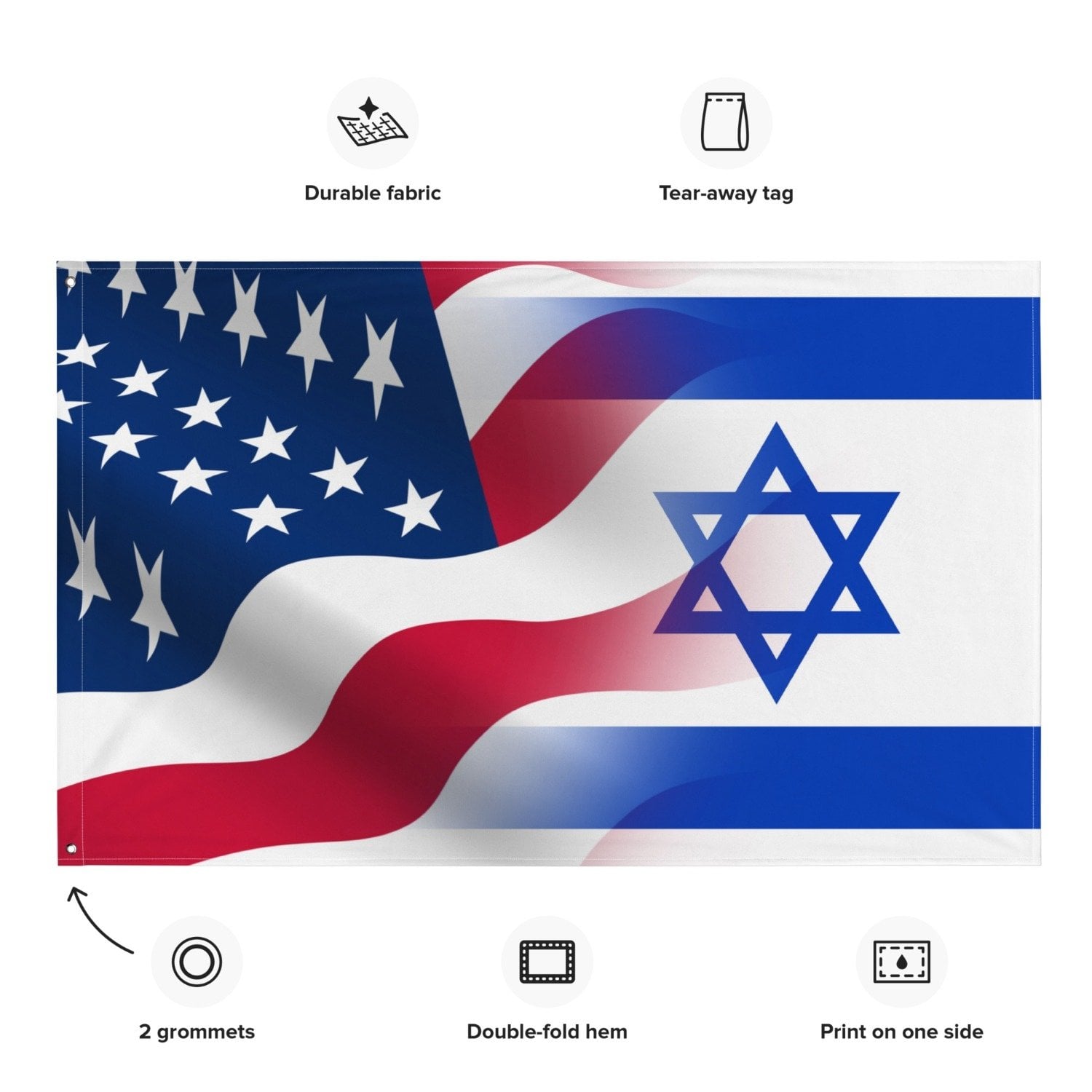
Credit: Shutterstock
In recent years many Israelis believed the greatest threat to the US-Israel relationship came from the Democratic Party. In my role as Chair of American Democrats in Israel my cohorts and I felt and continue to feel this sentiment to this day.
The announcement by President Trump of reaching an agreement or “Memorandum of Understanding” with Iran, caught many in Israel by surprise. So in the last few days I began to assess once again, how we got from the Joint Comprehensive Plan of Action or JCPOA (the nuclear arms deal brokered by President Obama and much maligned here in Israel as a horrible deal) to Trump’s Iran Deal, which today Israelis are claiming to be a horrible deal. Some say even worse than the JCPOA. So my question is simple: Is Israel still America’s special ally? And a second question: Did Trump buckle under the Iranian threat of global economic disaster?
Here is the answer to the first question. When President Barack Obama signed the JCPOA with Iran in 2015, Israel reacted with fury. Prime Minister Benjamin Netanyahu famously took his case directly to Congress, over the head of President Obama, warning that the agreement paved Iran’s path to a nuclear weapon. Republicans rallied to Israel’s side, Democrats stood behind President Obama, and the debate became one of the most polarizing moments in modern US-Israel relations. Long after Obama left office Israel was able to claim”victory” when President Trump withdrew from the JCPOA.
A decade later and history has a way of producing ironies.
The Trump administration’s recent memorandum of understanding with Iran has generated many of the same concerns in Israel that the JCPOA did. Far greater concerns in fact. Mainly as this agreement comes from a Republican administration led by the very president who withdrew from Obama’s deal in 2018, and labeled here in Israel as its best ally ever (not my words, but the words of Israel’s Prime Minister every time he has a chance).
So the elephant in the room is asking the following question: Has the United States begun redefining its relationship with Israel?
The Surprising Comparison
For years, opponents of the JCPOA argued that the agreement gave Iran too much while demanding too little in return. Yet, when one compares the JCPOA with the US-Iran memorandum, an uncomfortable reality emerges.
The JCPOA imposed strict limits on Iran’s nuclear program. It capped uranium enrichment, reduced stockpiles, limited centrifuges, subjected facilities to extensive international inspections, and created a formal enforcement mechanism.
The new agreement appears to be something quite different. The MOU’s primary objective is seemingly focused on regional stability. In other words “it’s all about the money.” It seeks to reduce tensions, secure maritime commerce, prevent wider conflict, and create space for future negotiations. While it reportedly includes provisions regarding enriched uranium and inspections, it does not appear to contain the detailed architecture of restrictions that characterized the JCPOA.
I somehow suspect that official Israel would do everything possible to have the JCPOA reinstated today. In other words, even critics of Obama’s agreement find themselves acknowledging that it imposed more direct controls on Iran’s nuclear activities and economic sanctions than the current arrangement appears to.
So, this deal has nothing to do with a nuclear Iran. And I ask myself the following question: “who blinked first?” And my answer is: I don’t think it was Teheran.
America First Meets the Middle East
The Trump administration approaches foreign policy through the lens of “America First.” Its goal is not to maintain alliances for their own sake, but to evaluate whether those alliances advance specific American objectives. Did I say “buisness” recently?
From that perspective, preventing the continuation of a regional war (PS. started by the US and Israel), keeping oil flowing through the Strait of Hormuz (after Iran closed them militarily), and avoiding further Middle Eastern military commitments, may be viewed today by Washington as more important than maintaining perfect alignment with Israeli interests.
So Israel assumed that Washington’s approach to Iran was aligned with Israeli interests. I fear that this assumption appears less certain today.
JD Vance’s Remarkable Message
The strongest indication of this shift may not have come from the agreement itself but from Vice President JD Vance’s response to Israeli criticism.
His comments suggested a relationship increasingly framed in transactional terms. American support, in his view (remember that he is one heart beat away from sitting in the “big chair” in the Oval Office), is not an expression of shared destiny but a policy choice that can be reevaluated. Such language would have been almost unthinkable from a senior American official only a generation ago. If such words were uttered from the mouth of a Democrat, the earth in Israel would shake.
The United States and Israel have certainly experienced disagreements before. Eisenhower pressured Israel during the Suez Crisis. George H.W. Bush battled Yitzhak Shamir over loan guarantees. Obama and Netanyahu fought openly over Iran.
Yet beneath those disagreements lay a broad consensus that Israel occupied a unique place in American strategic thinking. The recent rhetoric suggests that some in the current administration see the relationship differently. This sentiment, coming from a Republican administration caught Israelis off-guard.
The End of Exceptionalism?
Perhaps what Israelis are witnessing is not the weakening of the alliance but the end of Israeli exceptionalism within American foreign policy.
Support for Israel is eroding in Congress. Will it continue its downwards spiral? Time will tell. Prime Minister Netanyahu who knows how to read the mood in Congress better than most world leaders, hoping it would stop the anti-Israel surge in Congress, suggested recently an end to American military aid, signaling that he too understood the climate shift in Washington on both sides of the isle.
This is a message Israel needs to understand. Both political parties in the United States are beginning to view Israel through the prism of American interests rather than historical commitments. And the former does not sync with the latter.
What Israel Should Learn
Israel would be mistaken to treat the latest agreement as merely a disagreement with one administration. Instead, it should view it as a warning sign.
The special relationship can no longer be taken for granted. For generations, Israel’s security rested not only on military strength but also on a bipartisan American consensus that viewed the Jewish state as a strategic, moral, and democratic ally.
That consensus is eroding. It’s not disappearing, but it’s changing.
The answer should not be panic. And for certain, this is not the time for Israel to “choose” sides in America’s domestic political battles. Remember the phrase “bi-partisan” anyone?
The answer is rebuilding support among younger Americans, moderates, independents, Democrats, Republicans, and communities that increasingly know Israel only through headlines and social media. Is Israel able to do so? DM me, I may have an answer.
The lesson of the JCPOA debate and the new Iran agreement is ultimately the same: No alliance is permanent simply because it existed yesterday.
The US-Israel relationship remains one of the strongest alliances in the world. But if Israelis want it to remain special, they must recognize that “special” status must be renewed, explained, and earned with every generation.
Who Stands to Benefit the Most from This Deal?
If one steps away from the politics of Washington, Tehran, and Jerusalem, the biggest immediate beneficiaries of the memorandum may actually be the Gulf states.
For Saudi Arabia, the United Arab Emirates, Bahrain, Kuwait, Qatar, and Oman, the primary concern throughout the recent crisis was not the future of Iran’s nuclear program. It was the stability of the Gulf itself.
The Strait of Hormuz remains one of the world’s most important energy corridors, carrying roughly one-fifth of global oil and gas supplies. The conflict demonstrated just how vulnerable the region remains when shipping lanes are threatened and commercial traffic is halted. The memorandum’s most immediate achievement is that it seeks to restore freedom of navigation through the Strait and reduce the risk of a wider regional war. Energy markets responded positively, with analysts already lowering projections for future oil prices as the likelihood of prolonged disruption declines.
For Gulf leaders, that is no small accomplishment. Stability is good for investment, trade, tourism, and economic diversification efforts such as Saudi Arabia’s Vision 2030. Most Gulf governments have spent the last several years attempting to reduce tensions with Iran rather than escalate them. In that sense, the agreement aligns with many of their immediate interests.
However, for Gulf states the agreement postpones the most difficult issues surrounding the long-term balance of power between Iran and its Arab neighbors. Some Gulf governments may welcome a ceasefire, but they are unlikely to welcome a future in which Iran emerges economically stronger while retaining significant regional influence. Moreover, uncertainty remains over Iran’s future role in administering the Strait of Hormuz and whether the current calm will prove durable.
In that sense, the memorandum may best be understood not as a peace agreement but as a stability agreement. It lowers the temperature, reopens critical shipping routes, and gives all sides breathing room. What it does not yet do is resolve the fundamental strategic questions that have defined Gulf security for more than four decades.
For the Gulf states, that may be enough for now. For Israel, however, the unanswered questions are precisely the ones that matter most.
So Who Are the Winners and Losers?
As with most conflicts in the Middle East, the answer depends on who is keeping score.
Iran will undoubtedly claim victory because the regime survived. The Islamic Republic has long measured success not by prosperity or military dominance, but by endurance. If the regime remains in power and can portray itself as having resisted American, Israeli, and regional pressure, it will declare itself as the victor.
The Gulf states, as I stated, may emerge as the biggest short-term winners. If the memorandum succeeds in keeping the Strait of Hormuz open, reducing the threat of regional war, and restoring investor confidence, Gulf governments will have achieved their primary objective: stability. Their economies depend on predictability far more than ideological victories.
The United States can argue that it achieved its immediate goals as well. The Trump administration avoided a wider military conflict, reduced pressure on global energy markets, and created space for diplomacy without committing American forces to another prolonged Middle Eastern war.
Israel’s assessment is likely to be more complicated. If Operation Epic Fury weakened Iran’s military capabilities, disrupted its regional networks, and demonstrated the costs of aggression, Israel can point to meaningful tactical gains. Yet if the operation concludes with Iran retaining much of its nuclear infrastructure while receiving sanctions relief and renewed international legitimacy, many Israelis will question whether the strategic problem has truly been solved.
Ultimately, the real verdict may not come for years. The winner will not be determined by who claims victory today, but by whether Iran emerges from this crisis weaker or stronger than before. If the agreement merely postpones confrontation while allowing Tehran to rebuild, history may judge the operation and this agreement harshly. If it marks the beginning of a more stable Gulf region and a genuine constraint on Iran’s nuclear ambitions, then its architects will have achieved something far more significant than a temporary ceasefire.
Related Topics
Related Posts