Washington Tests Diplomacy With Iran—Under the Shadow of Force
On February 6, 2026, both the United States and Iran described their indirect talks in Muscat as a “good start.” However, behind the diplomatic niceties lies a stark reality: this round of discussions in Oman highlighted the challenges of negotiating amid deep-seated mistrust, ongoing pressures, and the looming threat of military action.
The talks, facilitated by Omani officials and conducted over several hours in separate rooms, were seen as productive in terms of clarifying each side’s positions, but they didn’t really make any significant progress. Iranian Foreign Minister Abbas Araghchi was careful to emphasize that Tehran was only willing to discuss its nuclear program, firmly refusing to engage on topics like ballistic missiles, regional proxies, or broader security issues that Washington insisted needed to be addressed.
From Washington’s perspective, the latest round of U.S.–Iran talks in Oman was never meant to be a breakthrough. It was a test of leverage, of resolve, and of whether pressure-backed diplomacy can still extract concessions from a regime that has mastered the art of delay.
The Trump administration approached Muscat with realistic expectations. This marked the first diplomatic interaction since U.S. strikes targeted Iranian nuclear sites last year, all taking place against a backdrop of military deployments, sanctions, and public warnings from the White House. That context is crucial. These talks weren’t an olive branch; they were more like an ultimatum disguised as a negotiation.
President Donald Trump’s public statements have been strikingly straightforward for diplomatic discourse. While speaking on Air Force One, he labeled the talks as “very good,” but he also issued a clear warning: if Iran doesn’t agree to a deal, the repercussions will be “very steep.” The message was intentional. Tehran is being informed that it has a limited opportunity to opt for diplomacy instead of escalation—and Washington is ready for whatever comes next.
What set the Oman talks apart wasn’t a sense of optimism, but rather the stance taken by the participants. The U.S. delegation featured not just Special Envoy Steve Witkoff, but also CENTCOM Commander Admiral Brad Cooper. When senior military leaders show up at negotiations, it’s not just for show. Their presence highlighted a key message from the administration: diplomacy is being offered from a place of strength, not out of desperation.
This latest diplomatic attempt did not occur in a vacuum. It followed a period of violent upheaval in Iran and a U.S. military buildup in the region, including the downing of an Iranian drone near American forces and sustained naval deployments in the Arabian Sea.. Tehran hinted at some potential flexibility regarding its nuclear program—suggesting a long-term freeze if sanctions are lifted—while outright refusing to engage on the topics of ballistic missiles or regional proxies. This presents a fundamental issue for U.S. policymakers. A limited nuclear deal that overlooks missiles, militias, and other destabilizing actions doesn’t truly address the Iran challenge; it merely freezes one part of the situation while leaving everything else in limbo.
That’s why the United States quickly slapped new sanctions on Iran’s oil-related networks right after the talks wrapped up. Rather than undermining diplomatic efforts, this move signaled the administration’s belief that pressure needs to be maintained alongside negotiations. The logic from Washington is straightforward: Iran only negotiates earnestly when it feels the heat.
Public messaging around the Oman talks has been unusually revealing, offering insight into how each side—and key observers—understands the stakes.
Oman’s Foreign Minister, Badr Albusaidi, who mediated the discussions, framed the talks as serious but preliminary, emphasizing process over outcome. In a post on X, he wrote that the discussions were “very serious,” useful in clarifying American and Iranian thinking, and aimed at identifying “areas for possible progress,” with results to be weighed carefully in both capitals. The message underscored that Muscat produced clarity, not resolution.
Very serious talks mediating between Iran and the US in Muscat today.
It was useful to clarify both Iranian and American thinking and identify areas for possible progress. We aim to reconvene in due course, with the results to be considered carefully in Tehran and Washington. pic.twitter.com/OWctzf2CXA— Badr Albusaidi – بدر البوسعيدي (@badralbusaidi) February 6, 2026
Reporting since then has reinforced Washington’s central concern: Iran may be willing to pause parts of its nuclear activity, but only in exchange for sanctions relief—and without touching its missile program. According to The New York Times, Iranian officials floated the idea of a long-term nuclear freeze while drawing a firm red line around ballistic missiles, a position that continues to frustrate U.S. negotiators seeking a broader security framework.
???????????????? In Friday talks with US diplomats, Iran says it may accept a long-term freeze on its nuclear activities if sanctions are lifted, though it firmly refuses to discuss its missile arsenal, The New York Times reported Friday.
– Shortly after the discussions in Oman concluded,… pic.twitter.com/15ixyCklqD
— Belaaz News (@TheBelaaz) February 6, 2026
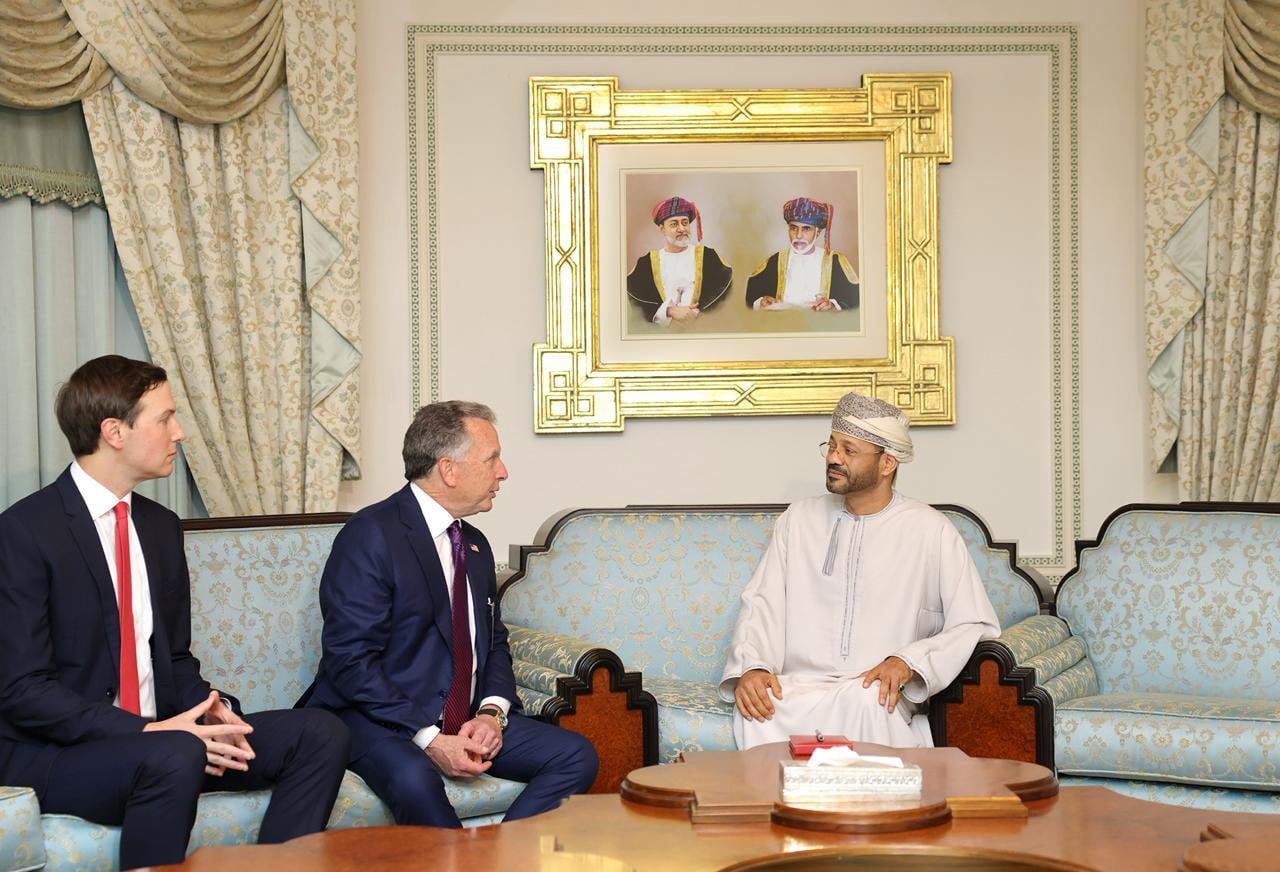
Photos from Muscat also carried their own message. Alongside Iranian Foreign Minister Araghchi and U.S. envoy Steve Witkoff sat Oman’s mediator—and, notably, CENTCOM Commander Admiral Brad Cooper. His presence reinforced that these talks are occurring under the shadow of military power, not as a substitute for it.
US just dropped a massive red flag on Americans in Iran – leave NOW!
The government issued an urgent "get out immediately" warning through the Virtual Embassy, saying security's tanking fast and they can't protect or evacuate you.
Americans told to hop commercial flights or… pic.twitter.com/s6ZI6Q9Y6Q
— Bill Mitchell (@mitchellvii) February 6, 2026
Analysts quoted by CNN captured the prevailing mood succinctly: “The threat of war is very serious.” That assessment aligns closely with Washington’s posture—engagement backed by readiness, not optimism.
BREAKING | Surrounding negotiations in Muscat just entered a new phase
The U.S. CENTCOM commander Admiral Brad Cooper has joined the American delegation in Oman.
That’s not routine diplomacy. That’s a clear signal of seriousness.When the military shows up at the negotiating… pic.twitter.com/SGDHe7Fd7y
— Martin (@Martin_Sedi) February 6, 2026
At the same time, voices from inside Iran continue to shape the moral and political backdrop to U.S. decision-making. Iranian journalist Sana Ebrahimi shared a video of a protester addressing President Trump directly: “We’re in the streets. Let’s finish this. Don’t let them kill us.” The plea reflects a growing expectation among protesters that U.S. pressure on Tehran is not just strategic, but consequential for those challenging the regime at home.
Another Iranian protester sends a message to President Trump:
“We’re in the streets. Let’s finish this. Don’t let them kill us.”
People in Iran took the President at his word when he said “help is on the way” and “keep protesting.”
They’re still hoping the help actually comes.… pic.twitter.com/Z7BY6bBaTF— ثنا ابراهیمی | Sana Ebrahimi (@__Injaneb96) February 6, 2026
U.S. officials are clearly factoring in the risks. The American Embassy issued a stark advisory urging citizens to “LEAVE IRAN NOW,” a reminder that diplomacy has not lowered the temperature on the ground.
???? The US has told its citizens to leave Iran immediately amid talks over the future of Tehran’s nuclear programme
Find out more ⬇️https://t.co/unyZkxNwKE pic.twitter.com/CF6shS6jzm
— The Telegraph (@Telegraph) February 6, 2026
Journalist Barak Ravid, reporting for Axios, confirmed that both sides plan to continue talks after this first round, reinforcing the administration’s view that engagement remains possible—but conditional.
????????????????????????U.S. and Iran plan to continue nuclear talks after first round in Oman. My report on @axios https://t.co/xXmg5oqpfu
— Barak Ravid (@BarakRavid) February 6, 2026
Other commentators have linked the nuclear talks to broader questions of legitimacy and alignment. Analyst Eli David argued that standing with the Iranian people is not only a moral imperative but a strategic one, urging sustained pressure on the Islamic Republic rather than accommodation.
I stand with my Iranian friends because they stood with us after October 7.
As Jews, we owe a debt to the legacy of Cyrus the Great, who ended our Babylonian exile. Now, we must return the favor: helping free Iran from the Islamic Republic and restoring our ancient alliance. pic.twitter.com/00HCKAnRZX
— Dr. Eli David (@DrEliDavid) January 19, 2026
Taken together, these signals point to a consistent U.S. approach: negotiations may continue, but leverage will not be surrendered, military readiness will remain visible, and any deal that ignores missiles, regional behavior, or internal repression will face deep resistance in Washington. Diplomacy, for now, is being tested—not trusted.