
Washington’s D-Day Pivot: Can Finance Do What Force Has Yet to Achieve?
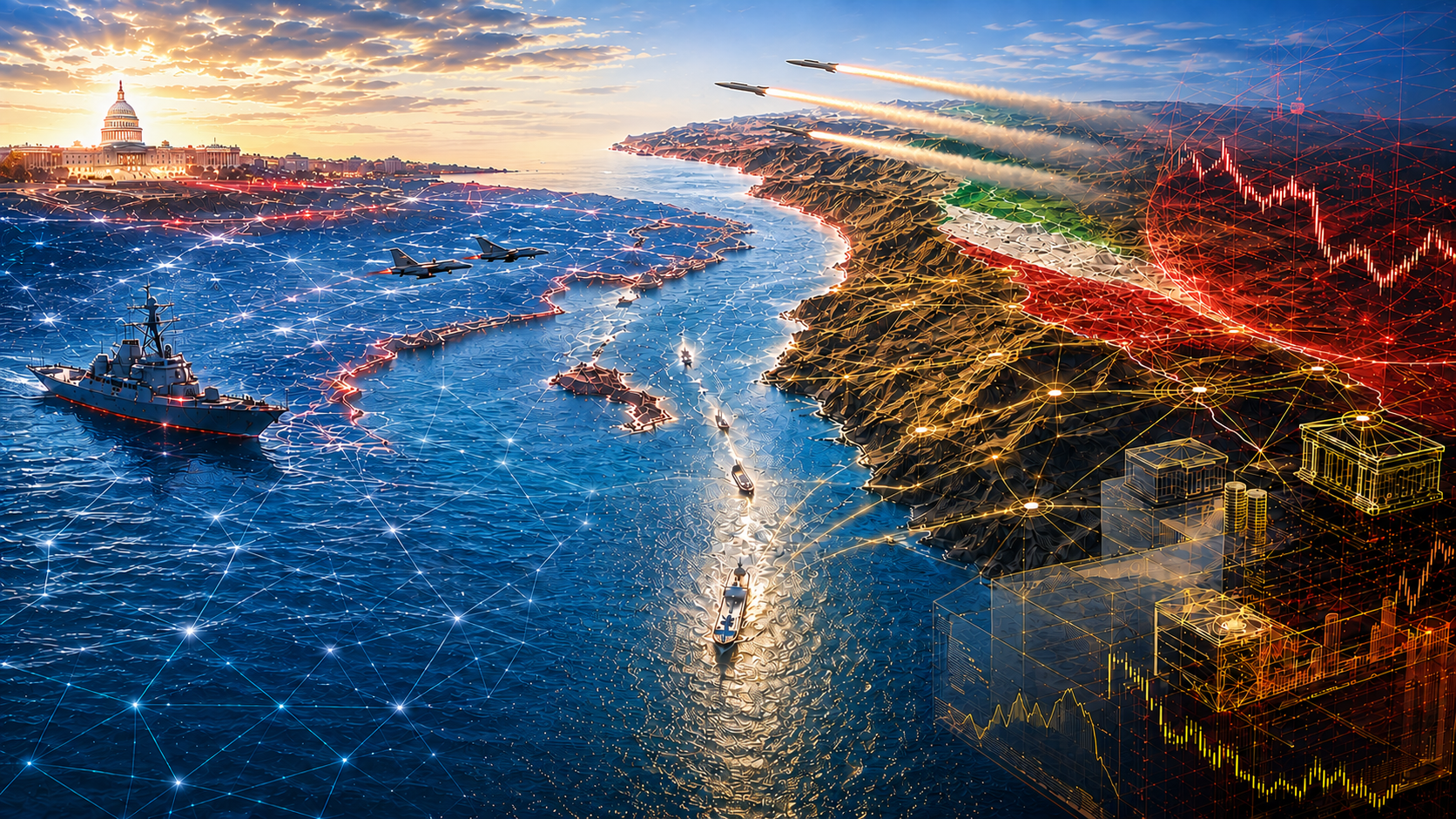
A US-protected oil corridor is weakening Tehran’s leverage in the Strait of Hormuz, while expanded sanctions are targeting the financial networks that sustain Iran. China—and the response inside Iran—will determine how far the strategy can go.
Six months of war have weakened Iran without producing surrender or a clear route to ending the conflict. Reuters reports that Washington is consequently shifting its emphasis back toward economic pressure, with further strikes considered unlikely for the time being.
It seems that Tehran presents that change as an admission that military force failed. Yet the more important question is whether the fighting has created conditions in which economic coercion can become more effective. Washington’s “Economic D-Day” is not simply another sanctions package. It is an attempt to combine control of energy traffic, financial isolation and pressure on Iran’s domestic economy.
A Maritime Advantage, Not a Victory
The first front is the Strait of Hormuz. According to Axios, the US military has been guiding 15 to 20 tankers through a southern channel near Oman each night. The operation has raised the flow of oil leaving the strait to nearly 10 million barrels a day—approximately half its prewar level—while US aircraft protect the convoys against Islamic regime in Iran’s missiles and drones.
The operation is coordinated by a task force at Fort Bragg that schedules separate inbound and outbound convoys. On August 25, President Donald Trump also announced that the US Navy had cleared mines from the strait’s main shipping lane, a claim confirmed to Axios by two American officials.
The strategic benefit is not simply that more oil can move. Washington is trying to distinguish between regional energy exports and Iranian commerce: easing the passage of the Persian Gulf oil while continuing to restrict Tehran’s shipments. That reduces Iran’s ability to use disruption in Hormuz to push up global energy prices and impose costs on the coalition opposing it.
Still, a protected corridor is not control of the entire waterway. It requires continuous surveillance, air cover and naval protection. Iran retains missiles and drones, and any sustained increase in attacks, shipping losses or insurance costs could narrow the advantage. The corridor can weaken Tehran’s bargaining position, but it cannot by itself compel a political decision.
The Financial Front
The second front began formally on August 24, when the Treasury Department launched Operation Economic Outcast. The campaign expands potential secondary-sanctions exposure across shipping, aviation, technology, gold and digital assets. Treasury also sanctioned nearly 60 entities, individuals and vessels and said foreign governments would receive deadlines to close identified Iran-related activities.
This is the real coercive mechanism. American leverage does not depend primarily on direct US trade with Iran. It comes from the importance of access to the dollar, American banks and the wider US market. Companies and financial institutions can therefore be required to choose between Iranian business and exposure to the American financial system.
The strategy’s weakness is enforcement. Small intermediaries, front companies and shadow-fleet operators can be replaced. Pressure on major financial institutions would be far more consequential—and far more politically dangerous.
China is therefore the decisive test. The US Energy Information Administration estimates that Iran exported about 1.576 million barrels a day of crude oil and condensate in 2025, of which approximately 1.567 million went to China. Much of this trade is handled by smaller independent refiners and opaque commercial networks. Unless Washington can disrupt the banking, shipping and settlement arrangements surrounding those purchases, Tehran will retain its most important source of external revenue.
Pressure Reaches Iranian Households
The new campaign is already influencing behavior inside Iran. The Wall Street Journal reports long fuel queues, accelerated purchases of food and renewed demonstrations by oil workers, pensioners and teachers concerned about the falling rial and the rising cost of living.
Iran’s official news agency, IRNA, reported that more than 26 million liters of petrol were distributed in Tehran in one day—30 percent above the usual level and the highest volume recorded this year. Officials attributed the surge partly to rumors and unusually high demand, while acknowledging temporary closures at some filling stations and damage to storage and distribution infrastructure.
These developments show how economic pressure can operate before every sanction is fully enforced. Expectations of shortages encourage households to buy more, placing additional strain on already fragile supply networks. Government assurances that distribution remains stable may have limited effect when queues and temporary shortages are visible.
Yet hardship does not automatically translate into political concessions. It may revive labour and social protests, but it can also allow the state to blame external pressure, intensify repression and transfer more of the cost to ordinary citizens.
The Measure of Success
Economic D-Day will succeed only if Washington can sustain the Hormuz corridor, move enforcement beyond replaceable intermediaries and make isolation alter Tehran’s political calculations. China will determine the strength of the external pressure; conditions inside Iran will determine its political consequences.
The United States has found a way to reduce Iran’s maritime leverage while increasing pressure on its commercial lifelines. Whether that produces negotiation, prolonged resistance or deeper instability remains unresolved. The difference between a strategic turning point and an ambitious label will be decided by enforcement—not by the announcement itself.