"These fragments I have shored against my ruins"
We Buried the Last One: From Witnesses to Silence
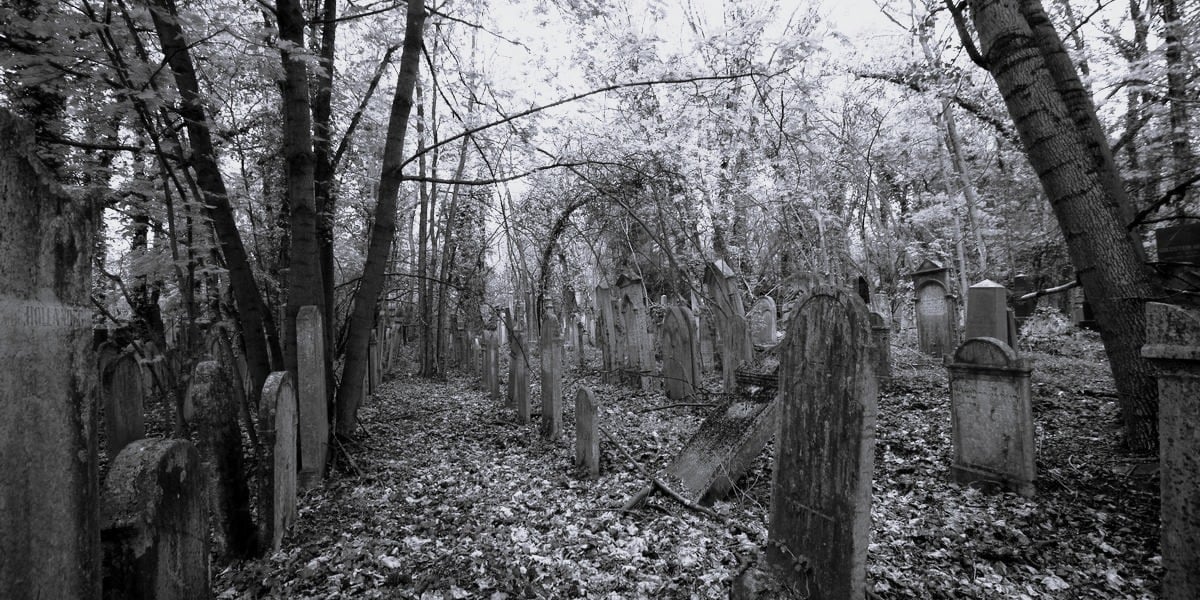
Kozma street cemetery
(Photo courtesy of the author)
Today we buried the last grandmother in my circle of friends. By the time one reaches fifty, the pattern of loss is already familiar: grandparents gone, too many parents, and in a few cases even spouses. None of it is easy, but it belongs to the order of things we expect. This funeral, however, carried a different weight from the beginning, because with her death the grandparents’ generation disappeared from our immediate world. While some of our parents remain, their generation is already diminished — no longer the intact cohort that once stood between us and old age.
When I came home, I put on Schubert’s Unfinished Symphony, as I usually do after funerals, and tried to understand what exactly had ended. It took time for the shape of it to become clear. She was not only the last grandmother among us; she was also the last Holocaust survivor I knew in person, and the weight of that was unmistakable.
The loss was therefore not simply familial. It marked the quiet disappearance of the last living connection to a generation whose presence had always been part of the background of my life, even when unspoken.
Although nothing could have prepared me for it, the thought had been with me since October. During a presentation at the Auschwitz Memorial and Museum, someone asked how many survivors were still alive. The lecturer offered an estimate, and as the discussion continued, it became apparent that I was the only participant who had known any survivors personally — more than one, in fact. When I mentioned that I was from Hungary, the lecturer nodded in a way that needed no further explanation; it placed me immediately, both generationally and geographically.
At the end of October, I still knew three survivors. A few days after I came home, before I had even managed to visit her, one of them died; in January, another. When the Claims Conference figures appeared shortly after, they only articulated in numbers what was already unfolding in front of me. The latest figures put the number of Jewish Holocaust survivors worldwide at 196,600, down from roughly 220,000 last year. The obituaries that now appear with unsettling regularity made the pace of this passage impossible to ignore.
And today, we buried the last one.
I realised that I was not only mourning “the last grandmother” but registering a historical threshold: the quiet passage from a world in which I knew survivors to one in which I merely know of them. The new figures showing the drop to under 200,000 in a single year are not simply statistics; they are the audible thinning of a register of memory that once lived among us, spoke to us, and, even in its silences, shaped the atmosphere of our lives. My own losses only made visible what is happening everywhere: we have crossed, without ceremony and almost without noticing, from the age of witnesses into the age of curators.
I grew up surrounded by Holocaust survivors. In Budapest in the 1970s and 1980s, it was not something families discussed openly; much was communicated obliquely, through absences, gestures, and the kinds of silences that were understood without explanation. It was a generation that lived almost apologetically, tiptoeing through life. Grandparents who had changed their surnames to something more Hungarian, because blending in felt safer, or because the old names no longer had anyone left to carry them. Grandparents who would never take their grandchildren to the swimming pool, not out of embarrassment for themselves, but out of a fierce, almost instinctive desire to shield the children from questions, stares, and the burden of knowing too early what those numbers on their arms meant. Grandparents who had learnt not to ask, not to elaborate, not to speak more than necessary. And even when they did speak, they relied on euphemisms, metaphors, and ellipses because it was easier that way — more survivable, and more acceptable, for victims and perpetrators alike.
Silence itself is not new. What is new is its finality. What happens when silence is no longer chosen or imposed, but simply the consequence of there being no one left to break it?
Related Topics
Related Posts