We Call Them Heroes. Why Are They Carrying the Trauma Alone?
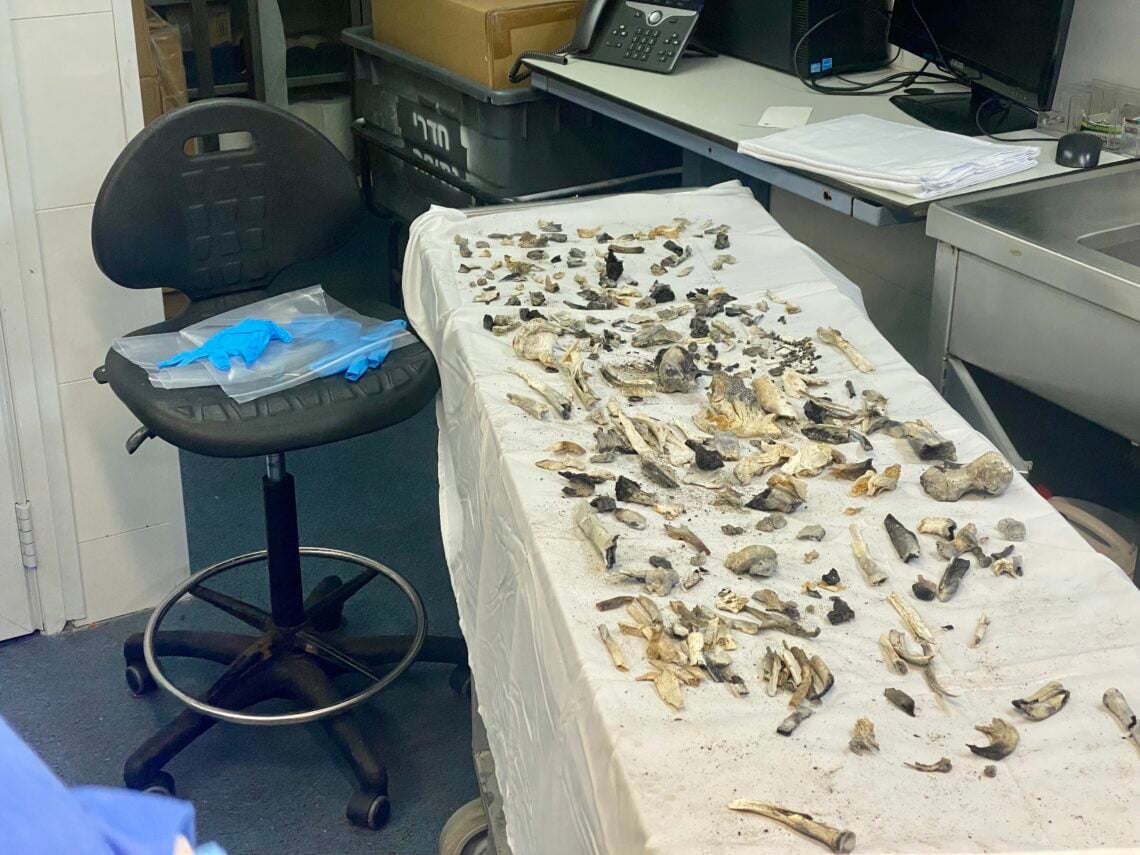
What Prof. Chen Kugel’s PTSD diagnosis reveals about the hidden cost of October 7 for Israel’s frontline helpers.
They are not made of iron.
Three years after October 7, Prof. Chen Kugel, director of Israel’s National Center of Forensic Medicine at Abu Kabir, has spoken publicly about being diagnosed with PTSD.
I wish I could say I was surprised.
In January 2024, the head of laboratories at the Histadrut told me about the toll already being carried by the forensic teams who had spent months identifying the dead after October 7.
One detail stayed with me.
The smell.
The smell of death that followed them home.
We often think of trauma as a memory of something terrible that happened. But trauma does not live only in our memories. It can remain encoded in the body and in the senses: a smell, a sound, an image, a physical sensation.
Long after the event has ended, one sensory cue can suddenly bring the nervous system back to a moment the mind is desperately trying to leave behind.
Prof. Kugel kept working. He has described functioning on “autopilot.” There was work to do, bodies to identify, families waiting for answers. Like so many others after October 7, he continued because stopping was not an option.
And then, when the intensity finally subsided, the trauma surfaced.
This is one of the paradoxes of prolonged emergency: functioning is not the same as healing.
Sometimes functioning is precisely what allows us to survive. We mobilize. We act. We solve problems. We take care of others. The nervous system gives us the energy to do what must be done.
But the cost may appear later, when the emergency quiets and the body finally has space to feel what it could not afford to feel before.
For three years, Israel’s frontline helpers have been holding an extraordinary burden.
Forensic workers. First responders. Doctors and nurses. Soldiers and veterans. Therapists. Social workers. Community leaders. Volunteers.
Again and again, we have called them heroes.
But heroism can become a dangerous expectation when it leaves no room for vulnerability.
The people who enter the most difficult places are still human beings with nervous systems, bodies, families and limits. Repeated exposure to death, suffering, fear and helplessness leaves traces. Compassion and professionalism do not make anyone immune to trauma.
Perhaps one of the lessons we need to learn from these three years is that caring for the helpers cannot begin only when they develop PTSD.
It has to begin while they are helping.
And this is where I feel angry.
Because even then, in those first terrible weeks and months, we already had tools.
We knew about psychological and emotional first aid. We knew about nervous-system regulation. We knew about the importance of early intervention, peer support, decompression and helping people process overwhelming sensory experiences before they became deeply entrenched.
Not every case of PTSD can be prevented. We should never pretend that it can. But we also know that trauma exposure does not inevitably have to become chronic PTSD. Early support and appropriate intervention can reduce risk and help the nervous system recover.
So why did we wait?
Why do we so often wait until someone cannot sleep, cannot function, develops panic attacks, depression or PTSD before we offer serious support?
We would never send people repeatedly into a physically toxic environment without protection and then wait for them to become ill before acting.
Why do we accept this when the exposure is psychological?
Our frontline helpers needed protection from the beginning. Not protection from witnessing what their work required them to witness, but protection from having to metabolize those experiences alone.
They needed practical, accessible tools to recognize what was happening in their nervous systems, regulate overwhelming activation, discharge accumulated stress and process the sensory imprints they were carrying.
They needed workplaces where five or ten minutes of regulation was considered part of the job, not a luxury. Where asking for support was understood not as weakness, but as responsible professional practice.
And they needed permission to stop.
To feel.
To receive.
To be cared for.
This is at the heart of our work at EmotionAid®: bringing emotional first aid to the people who are there first, so that those who care for others are also equipped to care for themselves.
We have spent years asking extraordinary things of ordinary human nervous systems.
Perhaps it is time to change the question.
Instead of asking, “How can our heroes keep going?”
we should be asking:
“What must we put in place from day one so they do not have to carry what they witness alone?”
Because the true measure of a resilient society is not only how its people rise in an emergency.
It is whether we have the wisdom to protect the people we ask to enter the fire.
Not three years later.
From day one.