
We Need a Better Glue
I recently read a review of Rabbi Doron Peretz’s book, Smallest Nation, Largest Family; Family as the Foundation of Jewish Identity. The quotations in the review, together with much of the current discourse in Israeli media, make me uncomfortable: I believe that the Jewish people, unfortunately, are not living up to the ideals of “nationhood”. In the political arena specifically, I believe that we frequently behave like a pesky, parochial and occasionally pathetic tribe.
I am a Haredi Jewish woman. I have no issue with Jewish solidarity, Jewish tradition or belonging to Am Yisrael. But I struggle to find dignity, gravitas or statesmanship in some of the increasingly familiar displays of tribal self-congratulation.
Consider the declaration, quoted in the review, that hundreds of thousands of Israelis abandoned the tranquil beaches of Goa to return to Israel, and that we are the only nation in the world where people need rescue flights to take them into a war zone. But Israelis are not unique in returning to defend their country. Ukrainians, for example, have returned home to defend theirs. Returning home to defend one’s country is understandable. It is not evidence of exceptional national virtue.
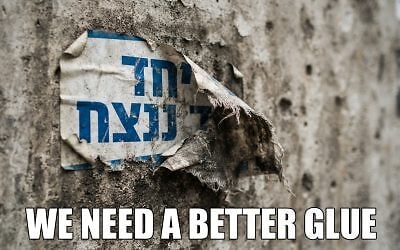
I am equally embarrassed by the habit of counting Jewish Nobel Prize winners as though their achievements establish the collective superiority of the Jewish people. And the tribal war cry, “Yachad NeNatzeach” – together we will overcome – increasingly repels me. Together who? Overcome what? And at whose expense?
Even the discussion of whether democratically elected Israeli citizens who happen not to be Jewish should be included in the next government is an extraordinary indictment of our political culture.
Excluding Arab citizens from government will not bring back those murdered on or since October 7, 2023, or the Jews who have died defending Israel since 1948. Nor will it undo the centuries of persecution and antisemitism suffered by Jewish communities around the world. The memory of Jewish victims is not hallowed by Jewish racism.
I have never met Rabbi Peretz, president of the World Zionist Organization and Executive Chairman of World Mizrachi. He seems like a remarkable man, and I salute the memory of his fallen son Daniel (z”l). But the words attributed to him in the review, describing the fight to return the hostages as an expression of the Jewish national family’s instinctive brotherhood, make me deeply uncomfortable.
He compares this instinct to Abraham’s determination to rescue his nephew Lot. It is a moving biblical analogy. But I question its accuracy.
Yes, there were extraordinary expressions of solidarity and compassion. There were also profound disagreements over the conduct of the war, the government’s priorities and the means by which the hostages might be returned. If a national family instinct had so completely taken hold, why did the demonstrators demand that their government bring the hostages home? Why was a rallying cry not directed at Hamas – “Let My People Go!”
I question the political usefulness, and indeed the honesty, of presenting a deeply fractured society as though it were united by brotherhood. Declaring how united we are when our divisions are so profound does not heal those divisions. It risks making those who acknowledge them feel disloyal. It replaces the difficult work of reconciliation with a comforting story about ourselves.
A family is something you are born into. Citizenship is something you practice.
We seem to have confused the Jewish people with the State of Israel. The two are not interchangeable. A Jew living in America can belong fully to Am Yisrael while also belonging politically to the American nation. Israeli citizenship is a different relationship: one between an individual and a sovereign state, with rights and responsibilities that cannot and should not depend on ancestry or religious affiliation.
Judaism does not need the modern nation-state to validate it. Our religious tradition has its own conception of Jewish belonging, rooted in Torah, covenant, peoplehood and a relationship with Eretz Yisrael. Nor does the land belong to us simply because we declare it so. In fact, the more profound theological proposition is that we belong to the land, with obligations towards it. As the Torah warns, the land can spit out those who fail to uphold those obligations.
The Nation-State Law does not make me more Jewish. Nor does it make Israel a more capable or respected state. Jewish spiritual survival cannot be legislated into existence. And for those anxious about preserving a Jewish majority, I would suggest that the answer lies in the vitality of Jewish life itself: learning Torah, observing Shabbat, keeping kosher, raising families and transmitting Jewish tradition. A confident Jewish identity should not need to be sustained by anxiety about the rights and presence of non-Jewish citizens.
If Israel wants to be treated as a serious state on the international stage, it needs to start behaving like one. Historical suffering deserves recognition, but it does not confer permanent political immunity. Sovereignty brings responsibilities. A mature state must be able to explain its actions in terms of principles that extend beyond its own historical experience.
Nor should Israel define its international relationships exclusively through the prism of existential threat. We live in the Middle East. Our neighbours are not merely security problems to be managed, and our Arabic-speaking citizens are not an awkward complication in an otherwise Jewish national project. They are potential partners in building a different regional future.
Trade, transport, energy, water, agriculture, technology and infrastructure offer opportunities for cooperation that could benefit Israelis and their neighbours alike. The Abraham Accords and the proposed India–Middle East–Europe Economic Corridor are not guarantees of peace or prosperity. They do, however, offer possibilities that deserve to be taken seriously. A country with ambitions to become a regional economic and diplomatic hub needs a political culture capable of thinking beyond its own internal tribal negotiations.
This is also why I believe we need to rethink what we mean by shared responsibility.
In my Times of Israel post, Has Israel’s Security Model Become Its Weakness?, I proposed replacing the existing national-service model with a serious Citizens’ Service framework, equal in standing to military service. The proposal recognises that contribution to society need not mean military participation, and that different citizens can serve in different ways without surrendering their religious or cultural identities.
My subsequent Project Crown – outlined in New Hareidim Must Offer More than “Integration” develops this idea further, linking military and civilian service to housing, employment opportunities and investment in the country’s periphery. It is an attempt to move away from a system in which communities negotiate exemptions and privileges towards one in which citizens have meaningful opportunities to contribute and participate.
 These proposals are not simply solutions to the Haredi conscription dispute. They reflect a different conception of the social contract: citizenship as an active relationship between the individual and the state, rather than a hierarchy of competing communal claims. They challenge the assumption that the state must choose between preserving religious life and establishing equal citizenship.
Equality does not mean uniformity. A Haredi woman, an Arab citizen, a Druze man and a secular Jewish man need not live identical lives or make identical choices to share a civic framework. Their religious, cultural and personal identities can remain distinct. What they should share is equal citizenship: rights, dignity, access to opportunity and meaningful ways of contributing to the society in which they live.
A country cannot function indefinitely as a collection of competing communities, each demanding special treatment while resisting common responsibilities. Nor can it build a confident international identity while treating its own citizens as members of different grades of belonging.
I am not proposing that we abandon Jewish identity. Quite the opposite. I want Jewish identity to be sufficiently secure not to require constant political reinforcement.
We need a better glue. Not another declaration that we are one family, not another invocation of Jewish exceptionalism, and not another attempt to persuade ourselves that our differences disappear when we repeat a slogan loudly enough.
We need to create a sense of belonging, to acknowledge our failures without feeling that we are betraying our history, and to build relationships with our neighbours without interpreting every political question through the prism of tribal survival.
We need to be able to disagree without questioning one another’s legitimacy.
A mature state does not need to pretend that its citizens share a single identity or an uncomplicated history. It needs institutions that treat them fairly, political leaders who can articulate a vision beyond their own constituencies, and citizens who recognise that the future of the country is a responsibility they share.
Washing our dirty Jewish linen in public is not an act of disloyalty. It may be the only way we begin to heal.
I have never met Rabbi Peretz, but I would welcome the opportunity to meet him for a public conversation about these questions. I would like to hear his argument in full, and to explain why I believe that the family metaphor, however comforting, is not enough.
Israel needs more than a family. It needs citizens who feel that they belong.