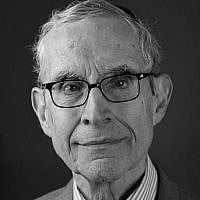
‘We weren’t there’: What I heard when Herzi Halevi broke his silence
In a packed Manhattan hall, Israel’s former chief of staff owned the failure of October 7, buried the betrayal myth, and revealed that Sinwar’s battle plan included orders to go viral.
Some conferences you attend. Others you carry home with you.
On Sunday, the Museum of Jewish Heritage in lower Manhattan hosted Shurat HaDin’s third annual Rage Against the Hate conference. It brought together people who rarely share a room: international lawyers, security and foreign policy experts, academics, influencers, students, organizers and leaders of pro-Israel organizations from across the spectrum.
Nitsana Darshan-Leitner, who has spent years taking terror financiers to court, set the tone. “We are all fighting on behalf of the Jewish state,” she told the crowd. “Each one does his role, does his job.” Her organization, she explained, fights “in the legal field, going after terror financing, trying to do anything we can in order to eliminate our enemies.”
Then former IDF Chief of Staff Lt. Gen. (Res.) Herzi Halevi sat down with journalist Asaf Liberman, and the room went still. It was his first public conversation since leaving his post in March 2025. For more than a year and a half, the man who led the IDF on the darkest day in Israel’s history had kept silent. On Sunday, he spoke.

“This is an expression of the failure”
Halevi could have started with maps and arrows. Instead he started with a family.
“I don’t want to speak only analytically about the failure,” he said. He spoke of the “many pictures and many videos and text messages” he still sees when he visits bereaved families. Then he described the image so many of us carry: Shiri Bibas clutching Kfir and Ariel, after her parents were murdered in their home and her husband was dragged away.
“I look at Shiri Bibas’s eyes, and I see the fear, and I see the uncertainty,” he said. “And we weren’t there. Not on the right time to be helpful, to rescue her. And this is an expression of the failure.”
He was just as direct about what should have come earlier. Israel had ranked its threats Iran first, Hezbollah second and Hamas third, he explained, and Hamas worked hard to convince Israel it did not want war. Looking back, Israel did not need a formal declaration to change the reality on the Gaza border. “There are enough opportunities to take one incident and to turn it over into things you would like to make,” he said. “It can be a full war, it can be a wide operation, but it will change the situation, and you will not be walking just half a meter from a cliff.”
Then came the caveat every honest postmortem needs: “This is with what we know today; we didn’t know that then.”
Sinwar’s plan was built to go viral
“I would like maybe to give the enemy’s perspective,” Halevi said. “It will make it a little bit clearer.”
Sinwar, he explained, worked from two principles. “First principle: of surprise. That was top priority. He did all he could in order to surprise us. Second one: simultaneity.” Every civilian and military point along the roughly 65 kilometers bordering Gaza “was attacked immediately after 6:29 in the morning.” It took the IDF “six to seven hours to stop the deterioration and make a turning point.”
Sinwar also assumed Israel would never send ground forces into Gaza. Halevi did not spare his own institution: “Unfortunately, we helped him to think that.”
Then he shared the detail that silenced the hall. In a tunnel in Khan Yunis, Israeli forces found the October 7 plan with Sinwar’s own handwritten notes, “directing video shot the vicious action while you are doing that inside Israel and load it into social media sites immediately.”
The goal, Halevi said, was “to cause our reservists to stay at home, to cause them a feeling that Israel is collapsing,” and “to drag Hezbollah into the battlefield.” Sinwar deliberately kept Hezbollah in the dark, betting the footage alone would pull them in.
Both bets failed. By late morning, Israel sent Hezbollah a message: “We were surprised in Gaza, but we are watching you, Hezbollah, tightly. If you are going to make just a small move, a very heavy hammer is going to go down on Lebanon.”
And the reservists did the opposite of what Sinwar planned. “Many of them went out before they got a phone call,” Halevi said. “They went with pistols against RPGs and AK-47 Kalashnikovs.”
Hearing that Hamas’s leadership wrote social media into the battle plan cut deep for me. This was no afterthought. It was methodical. Sinwar and his commanders understood how images travel across networks, how to bend minds and hearts, and how to turn our own emotions against us while the whole world watched in agony. We already knew they were evil. This showed how far past the horrors of that morning they meant to go. They wanted to traumatize us, degrade us, and leave wounds that would last for years.
Sitting in that audience, I had flashes of those images. They were planned, executed and released by men who knew this attack would stay with us for generations.
That is why I co-founded IMPACT after October 7: to organize, empower and mobilize our community to combat Jew-hatred and amplify Jewish joy and resilience, and to give people a tool to make a difference online and offline. Sinwar understood that the feed is a front in this war. So do we. His videos were meant to freeze us. Instead, they mobilized a generation. Fear is loud. On October 7, courage was louder, and every day since, our joy has to be louder still.
“I know 100% there was not a betrayal”
Liberman raised the question that has poisoned Israeli discourse: too many Israelis now believe October 7 was an inside job.
Halevi answered in three parts. First, values: “I know 100% there was not a betrayal, for sure. Why? I know those people.” He could not imagine a colleague who had spent decades “putting his own life under the highest risks” suddenly deciding to help Hamas.
Second, mechanics: “In order to help Hamas, it is not enough to have one person who is cooperating. You need a network, a very wide one.” And: “After three years, and we haven’t found yet even one of them.”
Third, knowledge: “I know to explain how October 7th happened to the very small details.” When you know every detail of a failure, the conspiracy theory has nowhere left to hide.
Asked if he had been accused personally, he answered as a commander. People who believe an officer would accept losing “three or four soldiers” for a political maneuver, he said, “don’t understand what does it mean to be a commander.”
“I remember every soldier that I lost in my 40 years of service, 38 years of command,” he said. “I remember the date, the place.” Flying over Israel by helicopter, “when I flew over a place that I lost a soldier, my eyes went to that point with the memory.”
He insisted this isn’t about protecting generals. It is about bereaved families who must cope “not only with losing a son or a daughter,” but with “the horrible thought that someone wanted it to be like that, from us. This is horrible.”
His message to Israel’s political leaders: “Go and check, and if you have questions, come and ask us. But when you know, say it loud and clear.”
“Are you going to do this operation to rescue your own family?”
On the war, Halevi refused easy slogans, including “total victory.” “The last thing I can say about war is simplicity,” he said. As a brigade commander, he told his troops before entering Gaza: “Smile to changes. It is always changing, every moment. And if you are angry on changes, you will not do well.”
He explained why air power alone was never enough, borrowing from The Catcher in the Rye: “Where do the ducks go when the pond freezes over? Where are the terrorists when we are attacking from the air?” Hundreds of tons of bombs killed very few. Only a ground maneuver created the friction to find them, killing roughly half of Hamas’s terrorists and “about 90% of high echelon commanders.”
He described the moral calculus with unusual candor. When Hamas turned a school full of displaced families into a command center, the IDF had options: strike immediately, wait “15 hours” to pinpoint the exact room, or mount a costly ambush. “We take time,” he said. International law, he noted, sets principles of distinction and proportionality but no formula. “They tell you just consider. And we considered, we made decisions, we also made mistakes. You cannot fight in the kingdom of uncertainty, or fog of war, and avoid mistakes all the time.”
On the hostages, he was blunt: “Without military strong pressure inside Gaza, we couldn’t bring the hostages back. I can prove it; I know it.” Then, unprompted, the hardest admission of the day: “Unfortunately, we had mistakes. Our bombs killed hostages. It was unintentional, of course; we didn’t know that they are there.” He named Sahar Baruch, killed in a rescue attempt that failed.
The most moving moment came when he described approving a rescue. “You don’t know that you are going to succeed, you don’t know how to measure 80%, 90%.” So after studying the intelligence and watching the rehearsals, he would “sit in your office, close your eyes, now imagine your own family sitting in this house and ask yourself: Are you going to do this operation in order to rescue your own family?” And a second question: “Are you willing to be the first one walking up the stairs to rescue the hostages?”
“When two answers were ‘yes,’” he said, “I decided to bring it up and to move forward.”
On whether more hostages could have come home alive sooner, he chose his words carefully. The government decides; the army recommends. “I think that this really should be part of Israel checking,” he said, “and I’ll say that in Hebrew on an appropriate day.”
“We should be strong for many years ahead”
Before lunch, Darshan-Leitner took the microphone with a question of her own. “Do you think that there will be a point where Israel truly eliminates all the terror organizations around it and within: the Houthis, Hamas, the PLO, Hezbollah?” she asked. “Will there be a point where … we will get to a total victory?”
Halevi answered with a memory. As a boy, he asked his grandmother, a bereaved mother, what he would do as a soldier. “She answered me, ‘By the age of 18, we will not need soldiers anymore.’” He paused. “I’m not saying that today, not to my children.”
That landed hard for me. My own grandmother, a Holocaust survivor, came to my schools to tell her story of survival, hoping her testimony would spare the next generation this fight. Instead, it became our training.
“This is the Middle East,” Halevi said. “In the Middle East, it’s better to be strong and to be ready for a very long journey, knowing that during the last 3,000 years, we didn’t have even 40 years of a quiet period of time.” Then, to laughter: “And if we experience a good surprise, we will manage.”
He invoked Samuel Huntington’s Clash of Civilizations. “Huntington was right,” he said. “We are moving to a clash of civilizations, and this is what we are seeing today.” And he praised exactly the work Darshan-Leitner’s team does: “The main change of terrorism is the access for technology, and technology costs money. To cut budget to terror organizations, it is so important.”
His warning about the war applies to all of us. “Tactical and operational achievements are very important,” he said, “but they experience gravity. If you don’t put a strategic shelf in order to underpin those achievements, gradually you erode the achievements you’ve just got.”
Darshan-Leitner made the same case in her closing remarks. The fight is no longer only on the battlefield, she argued; it runs through courtrooms, funding streams, artificial intelligence and social media. Her call was to “shift from defense to offense.”
Halevi’s closing words pointed the same way: “Working together, keeping on attacking those terror threats, cutting the money, making a better explanation about what we are doing, will not solve all of our problems, but will bring us to a much better situation.”
Sinwar bet that videos of our worst day would make us stay home. He lost that bet. Our job, online and in every room like the one at the Museum of Jewish Heritage, is to make sure he keeps losing it.