Weizmann Creates Plant Producing Psychedelics for New Therapies
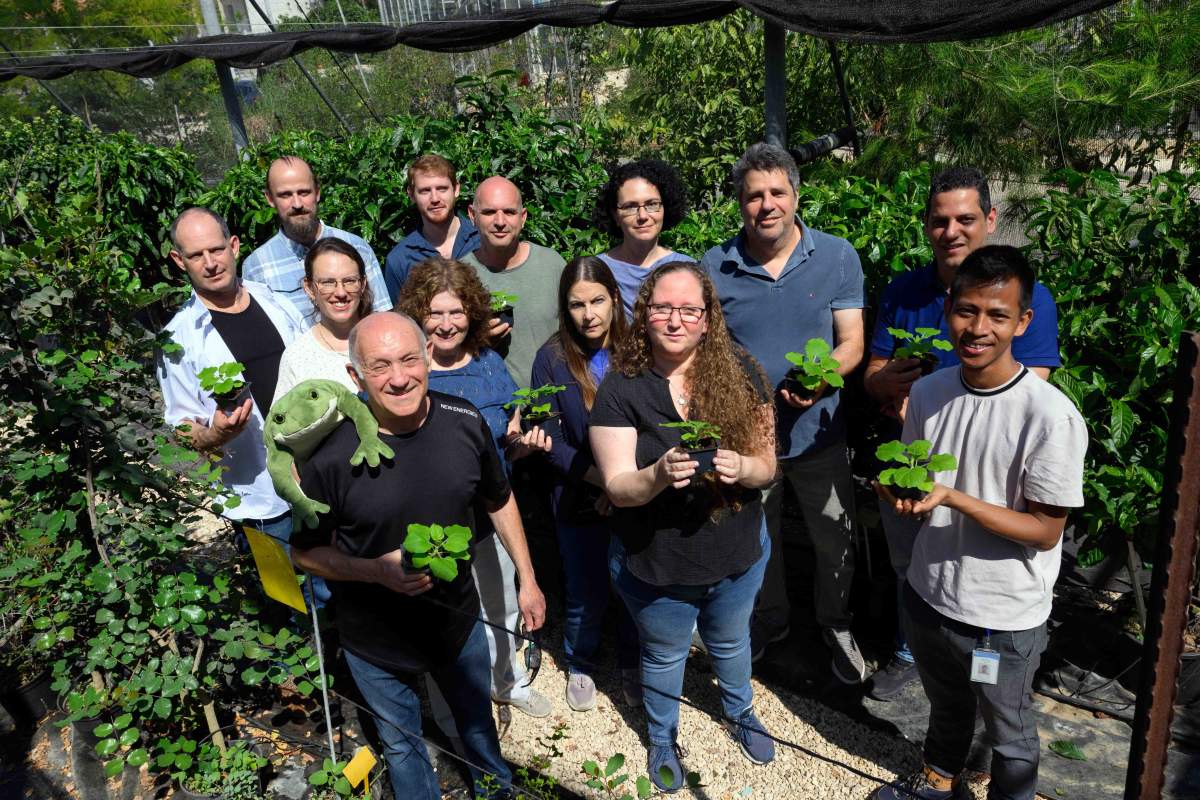
A genetically modified plant capable of producing five psychedelic compounds with therapeutic potential for psychiatric disorders could transform the future of mental health treatments. The discovery, led by researchers at the Weizmann Institute of Science in Israel, was published in the journal Science Advances and marks a new frontier in the development of medicines for conditions such as treatment-resistant depression, anxiety, post-traumatic stress disorder (PTSD), and substance dependence.
For the first time, scientists have succeeded in combining within a single plant substances that naturally occur separately in plants, fungi, and even animals. Using genetic engineering, the team transformed the species Nicotiana benthamiana into a true “biofactory” capable of producing DMT, psilocybin, psilocin, bufotenin, and 5-MeO-DMT — compounds widely studied for their potential in treating mental health disorders.
Beyond reproducing these molecules in a controlled way, the researchers also developed new variants with properties not found in nature, potentially expanding their therapeutic applications. “In practice, we created a kind of biological cocktail, not by mixing substances externally, but by combining metabolic pathways within a single organism,” explains Professor Asaph Aharoni of the Weizmann Institute of Science.
In another major breakthrough, the team managed to increase production of one of the hardest-to-obtain substances by up to 40-fold, which could significantly accelerate research and the development of new medicines.
Currently, many of these compounds depend on extraction from slow-growing plants, rare fungi, or even endangered animal species, limiting their availability for research and raising environmental concerns. The new technology offers a sustainable, scalable alternative, enabling these molecules to be produced in the lab within days without putting pressure on natural ecosystems.
More than just creating a new way to produce psychedelics, the study paves the way for an unprecedented generation of medicines developed from plant biology. Researchers are already working on new applications of the technology, including plants capable of synthesizing complete combinations of therapeutic compounds and, in the future, edible varieties that could deliver carefully controlled doses for medical use. The discovery highlights the potential of genetic engineering to accelerate the development of innovative treatments for diseases affecting millions worldwide.
The Weizmann Institute of Science is among the world’s leading multidisciplinary research institutions. With an international community of more than 5,400 scientists, laboratory technicians, and students, the institute stands out for its vibrant and collaborative academic culture.
For over 90 years, Weizmann has been dedicated to generating knowledge and developing innovative solutions to combat disease and protect the environment, consolidating its reputation as one of the most prestigious research centers globally, recognized for academic excellence and scientific impact. In 2025, the Institute was ranked 6th in the Leiden Ranking, which evaluates academic research quality based solely on quantitative criteria such as publications and citations, placing it alongside internationally renowned universities such as Princeton, Harvard, Stanford, and MIT.
Follow Friends of Weizmann:
Website: www.amigosdoweizmann.org.br
Facebook: Amigos do Weizmann – Brazil
Instagram: @weizmann_brasil
LinkedIn: weizmann latam
Source: Liane G. Zaidler / Weizmann Institute of Science