
Welcome to DSA Air Lines
In recent elections, candidates affiliated with the Democratic Socialists of America (DSA) have made significant electoral gains. If the DSA gains real power, it will have to run real industries. The Democratic Socialists of America have never proposed running an airline, but the organization has a coherent enough theory of ownership to imagine what flying on DSA Air Lines would be like.
The DSA position is that the people who do the work should govern the enterprise. Most of what follows from that premise is achievable tomorrow, by any carrier willing to change who owns it. One commitment is not. DSA’s 2025 resolution binding members to anti-Zionism, applied honestly to an airline, does not narrow the business. It prevents the business from having planes.
Economics and physics govern how an airline treats a passenger. Economics is negotiable. Physics is not. Seat pitch, lavatory footprint, meal service, and hiring practices are all economics, and a worker council has genuine latitude to renegotiate all of them. In 1985, the average coach seat pitch on a U.S. carrier was approximately 35 inches; today it is closer to 30, and on some low-cost carriers, 28. That contraction did not happen because human femurs got shorter. It happened because a passenger compressed into 28 inches generates more revenue than one given 35. A council answering to flight attendants rather than a yield algorithm could reverse that math tomorrow, the same way it could leave the lavatory alone, fold the meal back into the fare, or fund an apprenticeship pipeline over a diversity office. None of this requires an act of aviation engineering. It requires a change of ownership, which is exactly what DSA Air Lines proposes.
Some constraints do not move regardless of who owns the airline. Critics have long argued the FAA’s evacuation testing conditions are more forgiving than a real emergency, but the rule itself does not bend: the Federal Aviation Administration requires that the cabin evacuate in full within 90 seconds, with half the emergency exits blocked. Boeing and Airbus sell the same fixed door geometry to whoever can pay for it. Ownership will change who decides. It does not change what the fuselage will permit.
The clearer test of the airline’s character is not its seats but its routes, and here ownership does move something. This is not speculative: In 2025, DSA chapters organized against a commercial carrier’s decision to fly deportation charters for federal immigration enforcement. The protest spanned 40 cities over 9 months and ended when the airline terminated the contract. DSA Air Lines’ policy would be no different: no deportation contracts, no military charter work. Refusing a customer category is a decision any airline can make, and many already have. It costs revenue. It does not cost the airline its existence.
Refusing scheduled service to Israel, given the organization’s 2025 commitment to anti-Zionism as a binding condition of membership, belongs in the same category, on its own. Israel is one destination among the thousands a mid-size carrier might eventually serve. An airline can build a viable network around an absence, just as it can around a presence. This refusal, taken alone, is a route decision, not a design flaw.
The technology beneath the seats is a different problem, and it is here that the thought experiment can no longer resolve itself. Israel is the only country that has mandated anti-missile defense systems on its own civil fleet, Elta’s Flight Guard and later Elbit’s C-MUSIC. DSA Air Lines can decline this hardware at no cost: C-MUSIC is found only on El Al, Arkia, and Israir aircraft, built for a threat profile that no U.S. domestic carrier shares. The harder case sits further back in the aircraft, where the sourcing becomes invisible. Elbit Systems and Israel Aerospace Industries built decades-long positions supplying avionics, sensors, and composite components into a global defense-and-aerospace supply chain that no single airframe can cleanly untangle. A Boeing or Airbus fuselage clears hundreds of subcontractors before delivery.
DSA’s 2025 resolution commits members to divestment from companies that materially support Israel. It does not name avionics suppliers, and it offers no mechanism to trace a wiring harness back to its country of origin, which leaves DSA Air Lines two ways to apply it. Read loosely, the resolution disqualifies Elbit or IAI only as a headline, primary vendor. This is the same posture every airline flying Boeing or Airbus metal already holds by default, since none of them can promise a fuselage certifiably free of Israeli-made components at any remove either. Under this reading, DSA Air Lines’ anti-Zionism is a route policy dressed as a procurement policy, indistinguishable in practice from any competitors.
Read strictly, every traceable Israeli-sourced component disqualifies a supplier, and DSA Airlines cannot certify a Boeing or an Airbus fuselage at all, because no tier of either company’s supply chain has been shown to be clean. There is no third manufacturer building comparable jets at commercial scale outside that footprint. Comac, the most likely candidate, is not yet certified to operate at the scale or in the markets DSA Air Lines would need, and its own supply chain has not been independently shown to be any cleaner.
This is the constraint that makes DSA Air Lines different from every design choice discussed above. The seat pitch, the lavatory, the meal, the apprenticeship pipeline could all be adopted tomorrow by a change of ownership alone. Nothing new would need to be invented, and nothing new would need to be acquired. The Israel commitment, applied honestly, is not a constraint on how the airline is run. It is a constraint on whether the airline can be built at all, because it, in principle, disqualifies the only two manufacturers capable of supplying it with
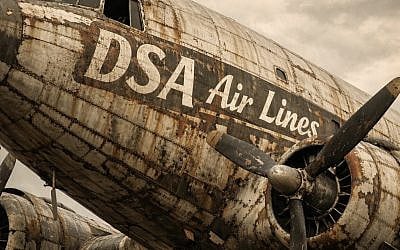
a fleet. A boycott of grapes had substitute growers. A boycott of a bag fee has a substitute business model. A boycott of the entire commercial aerospace duopoly has no substitute. It has an empty tarmac.
In mythology, Daedalus built wings because no other way off the island existed; Icarus’s failure was flying the wings he had too close to the sun. DSA Air Lines does not face Icarus’s problem. Boeing and Airbus have already built the wings, tested them, and sold them to whoever can pay. The obstacle here is neither appetite nor physics. It is that the one commitment DSA Air Lines cannot compromise without abandoning its own founding resolution. It is the one commitment that keeps it from ever taking possession of a plane. Every other decision in this essay describes an airline that could exist tomorrow. This one keeps it exactly what it has been from the first paragraph: a thought experiment, grounded in real politics, that cannot yet clear the runway.