Welcoming the Stranger Among Us
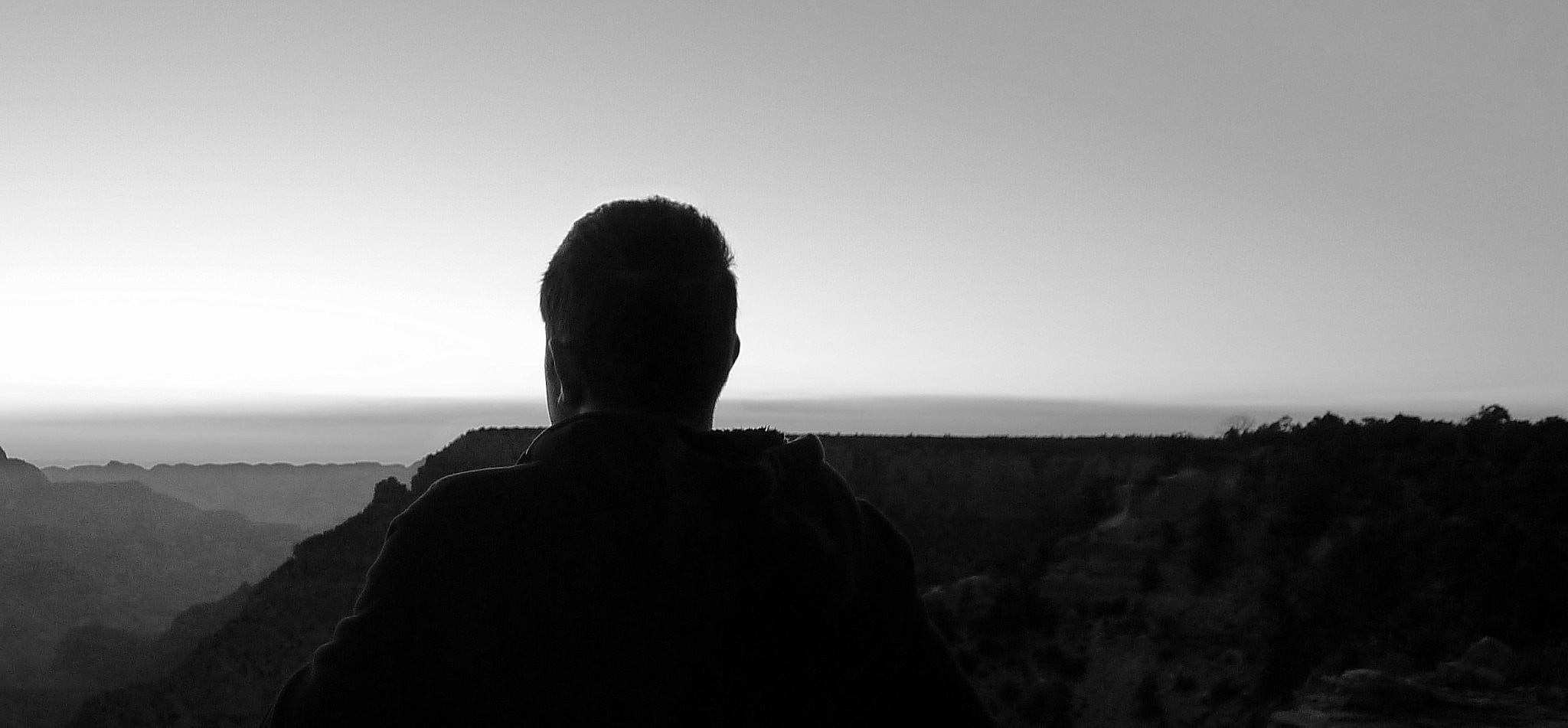
Thirty years ago, our son was diagnosed at a child development center with pervasive developmental disorder (autism) and we were told that “he would have to be institutionalized.” Twenty years later, when he was a junior in college, majoring in Creative Writing and minoring in Philosophy, I asked how his class in Dante was going. He replied, “Well Dad, we’re making our way through purgatory.”
At five years old, Jacob began his formal education with no support or special services at a community Jewish day school. When it came time for high school, we applied to two local Jewish community schools. He was rejected from both. We were given no explanation—although they continued to send us fundraising letters.
I was the Executive Director of Hillels in my community at the time, and I knew the heads of both schools. I was struck by the callousness of the process. As a Jewish communal professional, I recognized that by rejecting our son, the schools were also isolating and alienating our entire family and, more broadly, fracturing our connection to the Jewish community.
A year after Jacob’s high school rejections, we moved to Atlanta, where he was accepted at the Weber Jewish Community High School. There, he did well in his classes, participated in every annual school play, and, in recognition of his academic achievement, graduated as a Georgia HOPE Scholar. Following his graduation, he continued his active engagement in the Habonim Dror Zionist youth group by spending a gap year in Israel, where he worked on a moshav and volunteered at a youth center in Tiberias.
These days, it is so gratifying to survey the broad array of wonderful Jewish community support programs and initiatives for children with developmental and learning differences. Those in our communities who support them and lead them are heroes. With the number of children being diagnosed as autistic now at one in thirty-one (according to the CDC), these programs are more important than ever. Our next communal responsibility is to advance opportunities for these individuals to find meaningful career paths that match their capabilities and potential.
But what is our individual responsibility? How can each of us ensure that autistic individuals and those with other developmental and learning differences and their families feel welcomed in our communities?
One of the bedrocks of our Jewish tradition is welcoming the stranger. The commandment to welcome the stranger is mentioned 36 times in the Torah—more than any other commandment, even more than the commandment to love God. According to our scholars, hospitality toward guests is greater than receiving the Divine Presence (Shabbat 127a:13).
The Hebrew word “ger” is most often translated as “stranger” in English translations and commentaries of our sacred text. A more accurate translation might be a “sojourner” or “alien”—someone living among us who is different.
I believe this is true of how many people perceive autistic individuals and others with developmental and physical differences. It is easy to view these members of our community as being alien—someone among us who is different. They may be non-verbal, run in circles, and hold their hands over their ears and scream. From the outside, these behaviors may seem bewildering and frightening.
But while they may seem incomprehensible to us, actions of autistic children have meaning and purpose.
In his book “Uniquely Human: A Different Way of Seeing Autism,” Barry Prizant writes that we fail when we treat a person “as a problem to be solved and to be fixed rather than an individual to be understood.”
At an early age, when our son Jacob seemed lost in his own world and became increasingly isolated from us and alien to us, we learned from Drs. Stanley Greenspan and Serena Wieder, the two remarkable Jewish clinicians who founded the DIR/Floortime model, that if we wanted Jacob to enter our worlds, we had to enter his. Thus, we were guided to follow his lead. Rather than trying to stop behaviors that others might deem “not normal,” we learned to use them as invitations to enter his world and honor his initiative.
Each of us can honor and respect the actions of those with developmental, physical, and learning differences and welcome them and their families into our communities. If they are making odd sounds in our synagogue, perhaps they are praying in their own way. Certainly, God knows what they are saying and recognizes their intent. We learn from Abraham that our tents should be open on all sides.
There is a broader lesson we can learn from those that we see as neurodiverse. Until we learn to communicate with one another—to enter into each other’s worlds, we are all aliens to someone else—another culture, another generation, another political perspective.
Of all the many things I have learned from my son Jacob, this is among the most valuable.
David Raphael is a long-time Jewish community professional. He and his son Jacob have recently published a shared memoir, “A Miracle of the Heart: A Father and Son’s Autism Journey.” David can be reached at david@narrowbridge.us.