Were You Tempted to Cheat?
A Shabbat-table question about AI turned into something older — what makes creation authentic?
Redemption is fine, but auto-completion is moral peril”
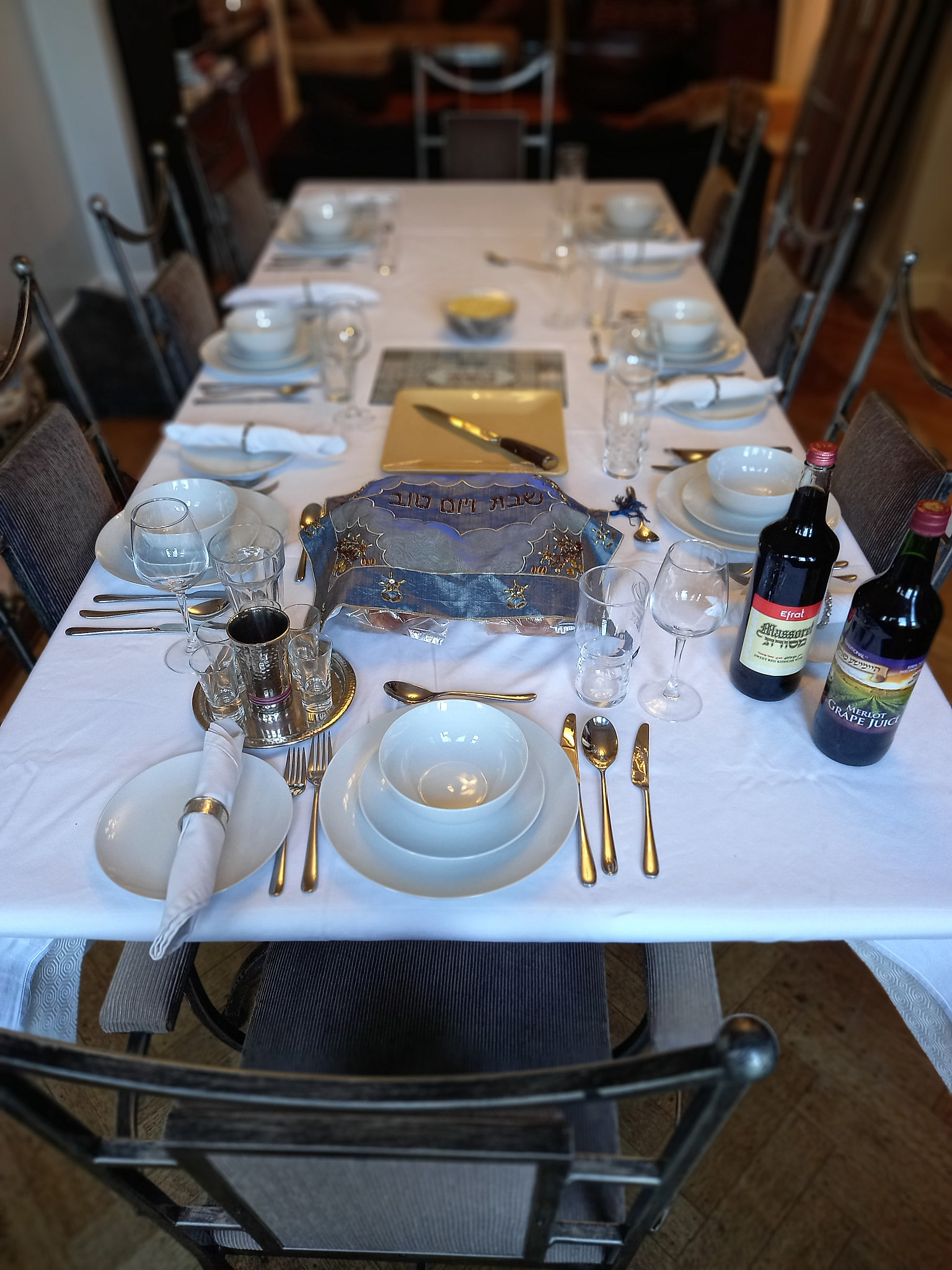
One Friday night, between candlelight and conversation, our Shabbat table looked like a modest literary festival. Two of our guests were well-known authors — people whose book jackets have stared wisely from shelves much longer than I have been on my writing journey.
At some point, as we moved from soup to mains – meat and veggie, and the discussion turned to writing. I was explaining my work — the long essays that weave criminology and faith, the reflections that now appear in The Times of Israel Blog Section, and the curious challenge of writing both personally and academically without losing the human voice in either. I explained the structure of my PhD which involved submission of work in the first year. I explained some of it was challenging as it involved technical writing outside what I feel is my field of criminology and is definitely very far from fiction, which I enjoy writing.
One of them paused, leaned forward, and asked, perfectly seriously:
“Tell me honestly… were you tempted to cheat?”
There was a silence — the kind of silence that only very clever people know how to make. Then:
“I mean — do you use AI?”
I laughed, probably too loudly. Of all the moral temptations available in the modern world, this was the one they thought might undo me. Apparently, redemption, forgiveness, and moral reform are fine — but auto-completion is a bridge too far.
Still, their question lingered. It wasn’t meant unkindly. In its own way, it was a mark of respect. They were really asking something deeper: what does authorship mean now? When thought can be simulated, who do we become as thinkers?
It’s an interesting assumption, though, isn’t it — that using technology to assist thought is somehow dishonest. Writers have always had help: editors, dictionaries, thesauruses, spouses, coffee, insomnia. We borrow structure, tone, rhythm — even courage — from the voices that came before us. In one of my books, I wrote a poem in iambic pentameter, and that was definitely borrowed from a famous author.
Jewish learning itself is built on havruta — paired study, two people wrestling with text together. The whole Talmud is an extended dialogue, centuries of collective intelligence footnoting one another. If that isn’t collaboration, what is? The idea that solitary genius equals purity is a modern myth, not a moral truth.
When I write, I am never alone. There are echoes of other writers — sociologists and sages, voices that haunt and harmonise. There are the people whose stories I’ve carried: those rebuilding their lives after prison, those still finding faith inside it. Even my own memories hover in the margins like uninvited editors.
So no, I don’t see technology as cheating. It’s another mirror, another conversation partner. The problem isn’t the tool — it’s whether we still do the thinking.
If I’m honest, I am tempted to cheat sometimes. Not by outsourcing words, but by skipping the struggle. Writing is slow; thinking is slower. The glow of a screen that promises instant structure is seductive. But the reason I don’t cheat has nothing to do with virtue. It’s because the process is the point — the wrestling, the revision, the discovery that happens in the margins.
That’s where faith and writing overlap. Teshuvah — repentance or return — is a process of rewriting the self. You can’t fast-forward it. You can’t outsource it. The line between thought and redemption is handwritten.
Maybe what unnerves us about AI isn’t that it mimics thought, but that it exposes how much of our own creativity depends on dialogue — that we are, and always were, co-authors with the world.
Judaism has never feared repetition or reinterpretation. We retell the same stories every year, knowing that meaning changes because we do. Each generation adds its commentary, its “update.” Maybe this is the digital age’s version of midrash: a vast, imperfect conversation, trying to make sense of what it means to be human.
I looked at my dinner companions, both so accomplished, so steeped in the printed word. They probably write with fountain pens, revise on paper, trust the physical weight of language. And yet, in that moment, they seemed to be asking a theological question disguised as a technical one: what makes creation authentic?
Perhaps the answer is that authenticity isn’t about who holds the pen; it’s about who risks being seen in the writing.
I smiled, tore another piece of challah, and said:
“No, I didn’t cheat. But I do have help — ancient, not artificial.”
They looked intrigued. I poured the wine, and thought how odd it was that a table full of writers could spend an evening worrying about who gets to call themselves one.
Maybe, in the end, that’s the oldest question of all.