What an ‘eruv’ taught me about fighting antisemitism
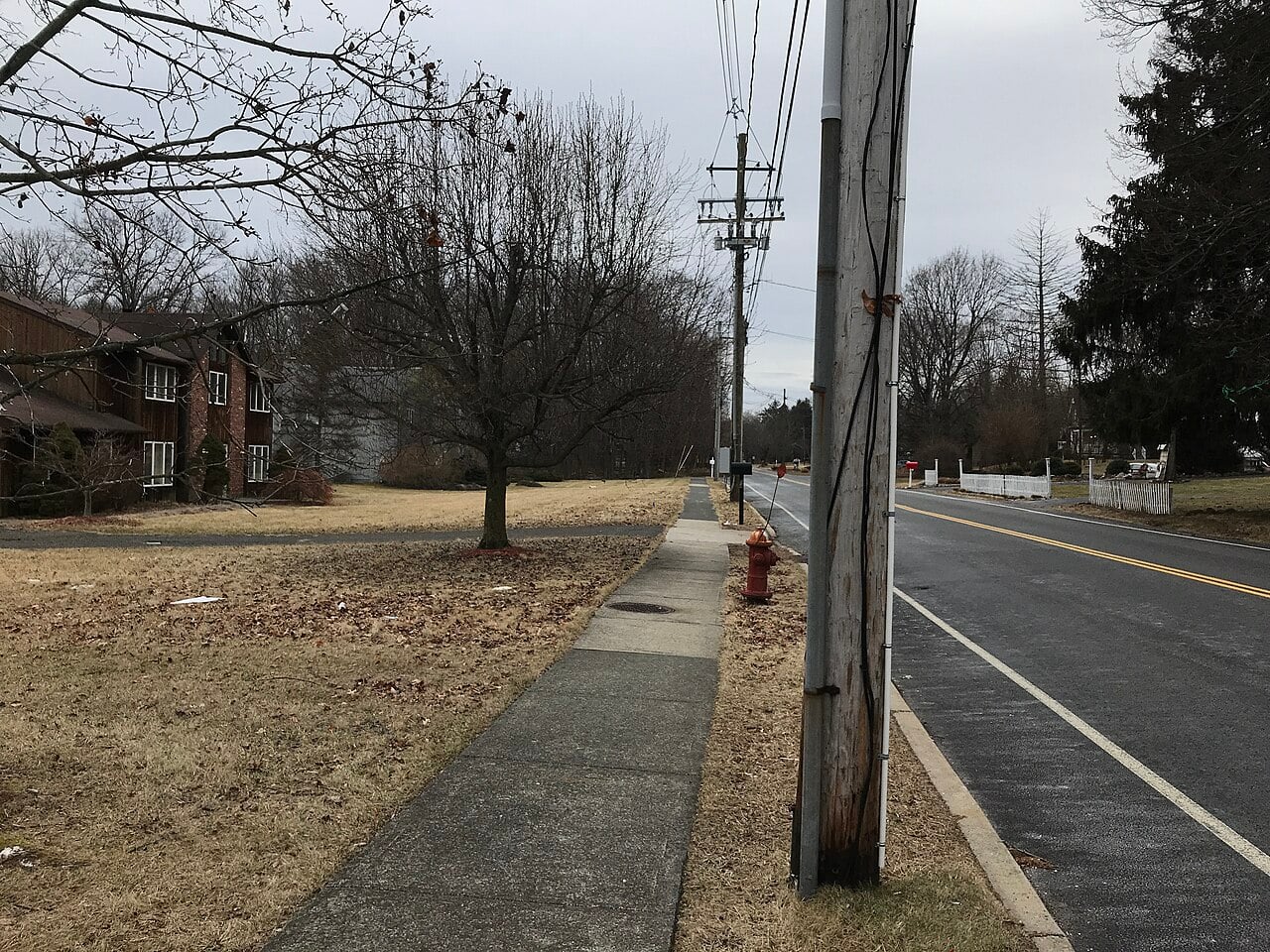
It was the late 1990s, and I’d been a county commissioner for nearly 10 years when Yaakov walked into my office. Of my 600,000 constituents, no more than 10 percent were Jewish; far fewer were Orthodox. My own Jewish education was rudimentary at best. When Yaakov started discussing an eruv, I didn’t know what it was.
We had met many times at public events. He always said hello, thanked me for my service, chatted about local goings-on, and made sure I remembered: “My name is Yaakov.” He called me to offer an opinion or a resource when controversies emerged. I saw that he was knowledgeable and sincere, and I appreciated his efforts to connect with me.
Now he asked for my help.
Yaakov’s town council refused permission for an eruv. Stringing wires around utility poles would be an eyesore, one insisted. It could damage property values, another claimed. Of the four most vociferous opponents, two were Democrats and two were Republicans, so there was no obvious partisan explanation for their opposition.
Yaakov didn’t assume bad faith. “They’re not antisemitic,” he said. “Just confused. After all, you never heard of an eruv either.”
That distinction matters.
Antisemitism is real, and Jews everywhere must be vigilant. But not all objections to a Jewish request are antisemitic, and not everyone who opposes something they don’t understand is motivated by hostility toward Jews. Some people are simply unfamiliar with Jewish life. Sometimes they need information. Sometimes they can be moved by meeting the people affected by a decision.
Yaakov understood that. More importantly, he had already built a relationship with me before he needed my help.
Today’s Jewish communities face a complicated political environment. Jews are divided, like the rest of America, by party, ideology, and increasingly by the issues that dominate our public discourse. Those disagreements are not going away, nor should Jews ever be expected or assumed to think alike.
But political disagreements need not prevent us from building relationships across those differences. If we want to push back against antisemitism and ensure that Jewish communities can live, worship, and participate fully in American life, we can all start close to home.
Think local. Act face-to-face.
We cannot expect to change the minds of many social media personalities or podcast hosts. Few of us have the ear of national political figures. But all of us can develop relationships with people who exercise influence in our own communities and political parties. This may seem easier in suburban towns than in major cities where many Jews live, but even a metropolis the size of New York has hyperlocal boards and neighborhood partisan leaders.
These low- or no-profile actors matter. They help determine how government responds to residents and how political organizations understand the voters they represent.
Among the key players are:
- Mayors, county commissioners, local councils and other elected officials, who make decisions about public services, economic development, health and safety. Their choices can affect whether Jewish families feel secure and welcome. Consider: If Jewish spaces were threatened in your neighborhood, would those in charge respond because they have to? Or because they understand and care about the people affected?
- Land use, zoning, and other appointees, who control the physical environment. They can facilitate – or complicate – construction and expansion of facilities like synagogues, day schools, community centers, and, yes, eruvs.
- Local Democratic and Republican party officials like ward or precinct leaders, who work block by block and neighborhood by neighborhood. They interact with voters, advocate for candidates, and engage with elected officials. They can encounter antisemitism in their own communities, reinforce it, challenge it, or simply fail to recognize it.
The good news is that ordinary citizens can build bridges to all of them, just as Yaakov did.
Here are three practical ways to begin.
- Establish positive relationships – in person. Take advantage of opportunities like public hearings, events and celebrations, a mayor’s office hours, or a precinct captain’s open house. Introduce yourself to officials you can access. Thank them for their public service. Offer to be a resource. Stay in touch. Don’t wait until you have a problem. Should the time come to challenge a decision or raise a concern, your voice may be amplified, and your opinion carry more weight if you are a familiar constituent, rather than a stranger showing up for the first time. Yaakov knew he could count on me because he already had my ear – and my respect.
- Participate in local campaigns and civic organizations. You don’t have to be excited by every candidate for school board, city clerk, or fire district commissioner. But local candidates and political volunteers are often deeply connected within their communities and to other elected officials. A few hours of volunteer work or a modest contribution can open the door to people you might otherwise never meet. And they will remember you.
- When you vote, pay attention to local races. National elections attract enormous interest and publicity, but some of the most critical decisions affecting Jewish communities are made much closer to home. While local elections, primaries, and ballot questions receive far less public attention, the winners will directly influence zoning, public safety, education, and community development. When we participate consistently, we also have a meaningful say in who helps to shape our neighborhoods and local political organizations over time.
Of course, no amount of relationship-building guarantees success. Yaakov ultimately got the eruv, but only after many phone calls and explanations. Some people are unreasonable and some disagreements are irresolvable.
Still, relationships matter.
The Jewish experience in America has always required us to navigate institutions we did not control while creating communities within them. We cannot determine what every elected official or political activist will believe. But we can determine whether they know us.
Before we need an ally, we can become good neighbors.
Before we face a controversy, we can build durable bridges.
And before we assume that someone who disagrees with us is hostile to us, we can do what Yaakov did: introduce ourselves, explain who we are, and give people a chance to know us.
Whether our goal is to construct an eruv, expand a shul, respond to a crime, or simply to live in peace, Pirkei Avot reminds us: “It is not your duty to finish the work. But neither are you at liberty to neglect it.”