Nonprofit Leader, Physician, Speaker, Helping People Find Belonging
What Babka Taught Me About Belonging
I have a lot of chocolate babkas in my freezer. 13 to be exact. They’re all from my favorite place, Coffee Redefined, in Brooklyn. It takes me over two hours to get there and back, so I only make the trip once a year to fill up my extra freezer. The reason why I am partial to this brand (and trust me, I have tasted almost every single babka on this list!) is that you can choose the level of “done-ness”, ranging from gooey to cakey. I depend on chocolate for fuel, and I’m not very particular about what form it comes in. I do, however, need it to be dense and rich. I don’t care how tasty the flavor profile is, or whether the ingredients are organic or fair trade. If the end product is dry and crumbly, I am not interested.
A few weeks ago, during a meeting of colleagues-turned-friends who gather monthly (the Jewish Feminist Founders Collaborative, which started two years ago with backing from Chavurot and the Jim Joseph Foundation), we shared an ah-ha moment. Everyone knows about my obsession. In fact, I was in charge of making sure everyone had one of “my” babkas to take home at our last in-person retreat.
I was bemoaning my broken foot (which happened while I was a scholar in residence in Pittsburgh at the end of May)and the fact that it was too difficult for me to hobble on crutches to get to my precious babka. This immediately sparked a discussion:
“Why can’t you just have someone get you a piece of babka?” I laughed. “Because they won’t get me the right part.” You see, I only eat the gooey chocolate swirls with just enough cake around them to keep everything intact. If I’m the one cutting the slice, I can perform a very precise babka dissection, extracting only the good parts and leaving the rest. It’s a highly specialized skill: good thing I’m a doctor.
And then someone said, “I never really understood your babka obsession until now. Babka has so many layers of cake-y dough, and sometimes burnt parts. It made no sense. But now that you’re saying that you dig through the outside to get to the middle, I get it. I’m just imagining all these babka carcasses all over your house.” We all cracked up.
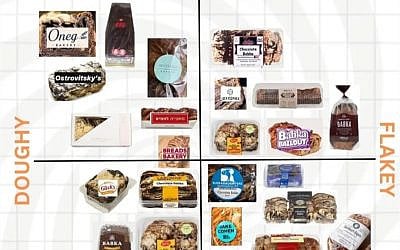 And everyone immediately understood this oddly specific thing that makes perfect sense to me. Why settle for the dry, crumbly part when what you really want is the soft middle? If you take away the dough, the crust, or the structure that holds it all together, all you have is chocolate goo, and that’s not babka. That’s not the dessert that inspires viral posts. If I wanted the mush, chocolate pudding or mousse would suffice.
So what is it about babka that has such a hold on me?
__
When I was in an endless cycle of miscarriage after miscarriage, I barely had an appetite, let alone a particular preference for a certain type of babka. Simple pleasures didn’t matter anymore. It was an endless cycle of hell, holding onto a tiny shred of hope that this baby would be the one that would make it, while simultaneously steeling myself against the possibility that the pregnancy might end again, without warning, without any signs. It was walking into a doctor’s office full of hope and not remembering how I left. Days and nights blurred into one, because how could I sleep when my baby died (again and again and again and again). It’s the constant, crushing belief that it will always hurt this bad, because how could it not?
I remember the little purple orchid sent by a friend, which sat on my kitchen windowsill; every time I washed the dishes, it reminded me that someone cared. I remember my friend Rebecca telling me I was going to survive: she knew because she had multiple miscarriages, too. “You were there for me,” she said. “You sat with me while I cried. Now let me do the same for you.” People brought dinners, took my other kids for playdates, and cajoled me into getting outside for a walk.
And then, one day, I suddenly felt like I could get up and take a shower. And a few days later, I wanted to go to Target.
A friend invited me to a Shabbos meal a couple of months after one of the miscarriages. I wasn’t sure that I was ready to be with people. Who else was she inviting? How many other people would be there? Were any of them pregnant, or did they have babies? She assured me that, before inviting me, she considered how she might make it as safe a place as possible for me, so she chose only people who met those criteria. I was blown away that she went out of her way to make me feel so comfortable at her table. I didn’t have to pretend to be okay, even though my loss wasn’t so recent anymore. I could show up, messy and still a bit raw, without being judged as too sensitive.
It took me a very long time to feel brave enough to return to our synagogue. Jewish communities are wonderful because we all take care of each other, but there is very little that stays private. Everyone knew what had happened to me. Some joined meal trains, sent fuzzy blankets, or scented candles. But I wasn’t ready to talk about it yet; I was still too fragile, and not prepared for the insensitive lines like, “Don’t worry, you’re young…you’ll have another baby.”I knew the minute I walked in, the whispering would start. I just wanted to fade into the background instead of feeling like I had a scarlet letter on my chest.
But community is community. If I didn’t feel comfortable there, I would never be able to go back to work, where people didn’t care about me in the same way. (In fact, I ended up quitting my job as a pediatrician after my third miscarriage. It was just too hard to take care of other people’s babies when mine kept dying.) So, I pushed myself to go one Shabbat morning, when I felt like it wasn’t so acceptable to hide anymore. I will always remember the friend who came to sit next to me, gave me a quick hug, and held my hand throughout the entire service. I hadn’t known what I needed until she gave it to me: someone who understood without asking me to explain.
And to me, this is what belonging feels like. Belonging is not a grand gesture or the perfect word. It’s the thing that holds people when life falls apart. It is one decision to make sure someone knows they still have a place at the table. It’s not only about support groups, podcasts, webinars, community trainings, or resource guides. Those matter, but not in the way we think. They train people to be attuned to the wallflowers and the people who don’t show up. They help people realize that we don’t only help those who yell the loudest. We also need to find the ones who feel uncomfortable asking, who aren’t ready to ask, and who don’t know where to go to ask.
Belonging doesn’t just appear. It’s built by the people who quietly create the structure around us. The rabbi who chooses the right language. The coworker who remembers. The friend who checks in. A community that notices how and where to show up for each other. It’s the ordinary, small conversations, texts, and invitations. It’s about being seen, not forgotten.
People think belonging is like the gooey chocolate in the middle of the babka. But, in reality, the dough is what makes the babka possible. The dough becomes the crust that gives the babka structure, and turns it from an amorphous blob into the dessert I love. It holds it in place, just enough, so that the gooey filling can be the centerpiece.
And truly, that’s all I wanted. Not for someone to guarantee that I would have a baby, but for someone to say, you’re still wanted here. Everyone deserves to feel that they belong, especially when their life doesn’t turn out the way they thought it would. We need to know that our communities can hold us. We need to hear that, no matter how messy our middle gets, we will always have a place. Especially in the days leading up to Tisha B’av, perhaps the greatest antidote to sinas chinam isn’t simply avoiding baseless hatred. It’s noticing the person who feels invisible and making sure they know they still have a place among us, making sure they know, “Yes. You belong here.”
So when I am up to cutting myself a piece, I’m still going to dig around for the rich, chocolatey layers and leave as much of the outside as I can. Because even though belonging is the dough, the quiet, steady part that holds us together, I can’t wait to taste the fudgy sweetness again.
Related Topics
Related Posts