What cancer taught me about the desert
Living through the experience of cancer and transmitting the experience of cancer treatment to someone you love are two very different experiences. When I was diagnosed, I largely walked into each step on the journey completely blind. I chose not to read anything online to preserve my own mental health (as much as that was even possible) and I did not know anyone who had recently experienced this to even ask. I implicitly trusted my team of doctors. They gave me appointment times and I showed up. They offered treatment plans and I, frankly, told them that as long as it would cure me, I was along for the ride. But no one told me what the ride would feel like or taste like or how each decision would ultimately impact my life, both in the immediacy and long-term. And now, on the side of treatment that inches closer to cured with every passing day, when I have the tremendous honor of guiding others across the immense and often foreboding expanse that is active cancer treatment, I wonder how the experience might have been different if I had my own guide. Would I have even believed her? Would her description have matched my own? And frankly, would knowing about each next step have even been helpful?
I have always been a bit baffled by the opening of Parshat Masei with its extensive list of each stop that Bnei Yisrael (the Children of Israel) made on their journey through the desert. Why do we need to know each stop they made? Occasionally, we learn something about a particular location, but not always. For instance in Bamidbar (Numbers) 33:9, we read, “They set out from Marah and came to Elim. There were 12 springs in Elim and 70 palm trees, so they encamped there,” but a few lines later, “They set out from Alush and encamped at Rephidim; it was there that the people had no water to drink.”
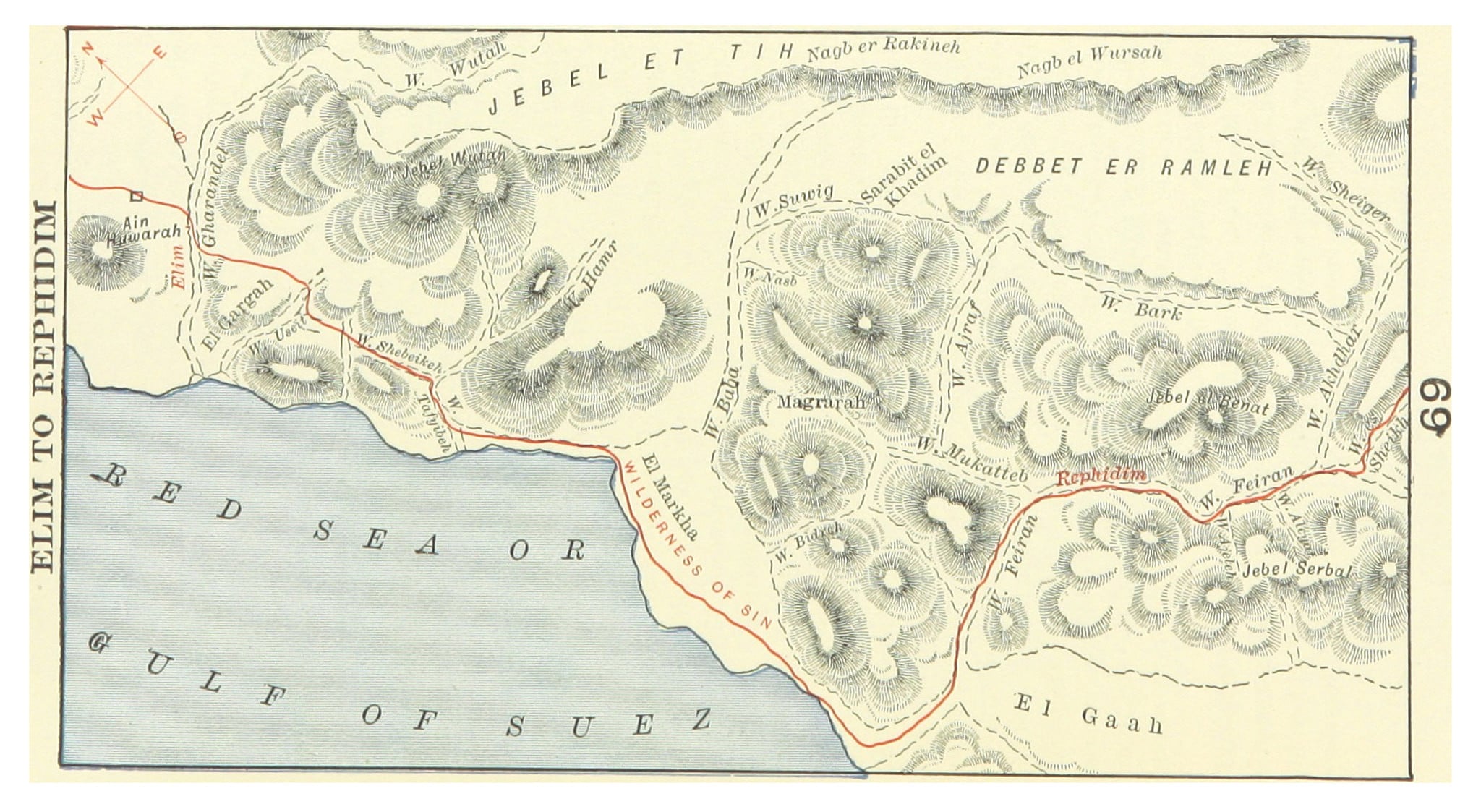
Every name on that list matters as each one is a place where Bnei Yisrael actually stood, breathed, and endured, regardless of whether the Torah tells us what happened there. But Elim and Rephidim specifically are two of the moments that the Torah details for us, and the contrast between what it shares about each one is noteworthy. In Elim, there were 12 springs, which according to Rashi, were one for each tribe, and 70 palms, paralleling the 70 elders. Elim, coming as it does right after the bitterness of Marah, is written as an exhale, as if God wanted us to know, explicitly, that this leg of the journey asked nothing of them but rest.
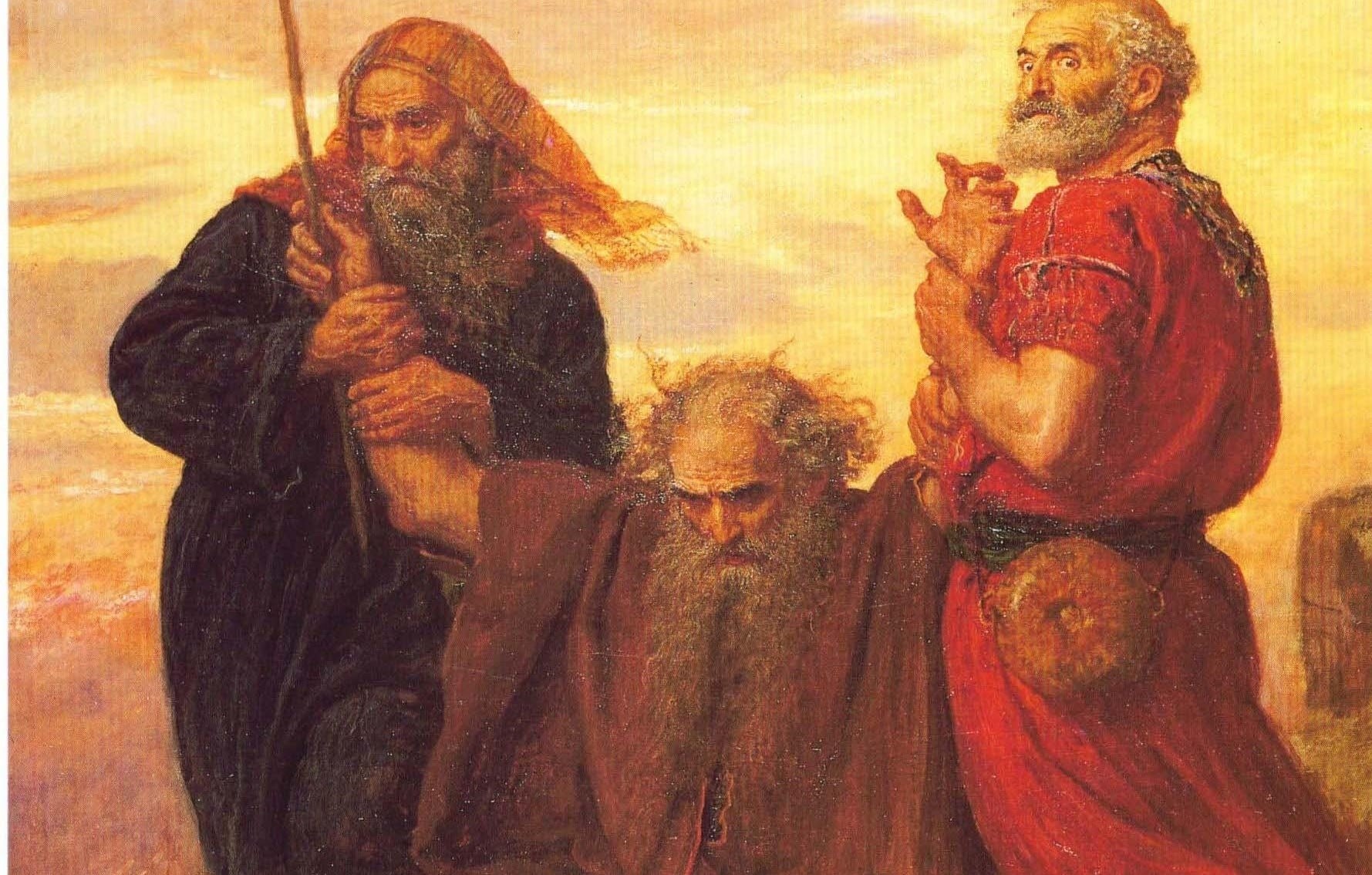
In contrast, at Rephidim, the Torah tells us only that water was absent. And if we follow the story back to where it is detailed in Shemot (Exodus), we find that this was more than a quiet inconvenience. It was a people at their breaking point, a leader crying out to God in despair, and Amalek descending on them while Moshe’s arms had to be held aloft just to keep the battle from being lost. Elim asked them to enjoy what they were given. Rephidim asked them to keep believing when there was nothing yet to hold onto, a harder, rawer kind of emunah, faith, being carved in real time.
In Bamidbar 33:51 through the end of chapter 34, God pivots from the list of encampments and tells Moshe exactly what the next stop toward the land will actually require. They will have to drive out the inhabitants of the land, destroy every carved image and molten idol, and take possession of a country they have never seen, dividing it among themselves by lot, family by family, tribe by tribe. For 40 years, this generation had known danger mostly as something that arrived and had to be survived: thirst, hunger, even Amalek’s attack at Rephidim, met and repelled in a single day.
What God now tells Moshe to prepare them for is a different kind of danger in which they will be the ones initiating the fight, nation after nation, with no clear end date in sight. I think of how much cancer treatment is like this. Chemotherapy, like the thirst in the wilderness, is something you endure until it passes. Surgery, like the battle at Rephidim, is acute and frightening, but it arrives and ends in a day. What comes after, the years of surveillance, the follow-up scans, the vigilance that never fully lifts, asks something closer to what the conquest asked of Bnei Yisrael: to keep initiating the vigilance yourself, long after anyone else is still holding your arms up.
I often find it quite challenging to center God in the story of cancer treatment, to find glimmers of holiness in what is otherwise quite a brutal experience. But the accounting of the journeys in our parsha is evidence that God is always there, even at the most challenging of stops.
I do, however, find myself wondering about the moments when God handed Moshe something hard to say, instructions so difficult they would have seemed unbelievable coming from anyone but God. Did Moshe ever hesitate? Did he ever look back and ask, even silently, are You sure they need to hear all of this? Because the easier thing, always, is to narrate only the Elims, the rest and recuperation, the easier moments. It would be easier gloss over the Rephidims to try to spare someone the crushing, anxiety provoking weight of it. But that mercy would be a type of abandonment. It is only because the Torah insists on naming Rephidim, on giving it as much detail as it gives Elim, that someone walking that road after them can recognize it when they arrive there themselves, and know: this stop is supposed to be hard. You are not doing it wrong.
I still cannot fully answer whether knowing each next step would have made my own journey easier, or simply given me more time to dread it. I suspect the honest answer is both. Elim did not need to be detailed to be enjoyed. Bnei Yisrael could have simply arrived, found water and shade, and rested, the way any of us can be handed a good day without needing to understand why it is good. But Rephidim is different. Rephidim required the detail. A people who did not know they were walking into thirst, into a leader’s despair, into a war that would have to be won with raised arms and no promise of victory, would have broken in a way that naming it in advance might have prevented. I don’t think Bnei Yisrael needed the same kind of map for Elim that they needed for Rephidim. Every stop was named, but not every stop needed to be explained. And that, I’ve come to believe, is the real answer to my own question. Detail must be offered as a calibrated mercy. The good days can be named simply and still be received as gifts. The more trying days that ask for a stronger emuna, faith, need a fuller account, offered gently and specifically, so that the difficulty itself is recognized as expected rather than as failure.
I do know that in all the ways that I have a map to offer now, I choose, every time, to hand it to the next person walking blindly into the desert. This map will do nothing to mitigate the thirst at Rephidim, nor can it turn a scan or a surgery date into Elim. But just as we are shown the list of journeys of Bnei Yisrael with more or less detail at every stop, I have come to believe that the people I walk with deserve nothing less. So this is what I offer, to my dear friend, and to everyone still counting their own stops: May you find your Elims, may you be given the strength for your Rephidims, and may you arrive, whole, known, and healed.
Refua shelama and Shabbat shalom.
–
In the merit of the complete refua shelama of my dear friend, Rachel bat Esther.