
The perpetual cyberabbi!
What changed after the flood was not humanity
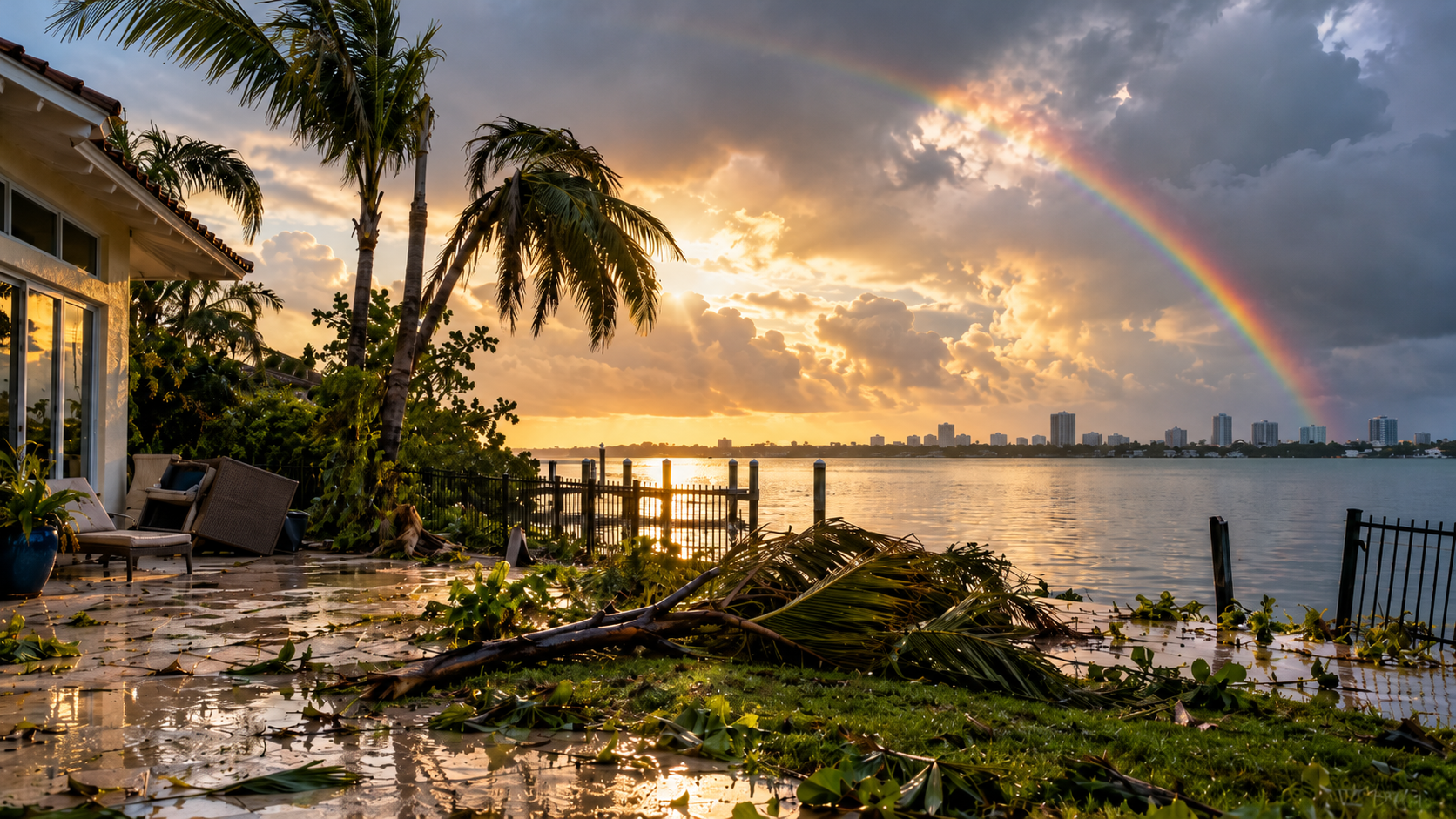
AI-generated image created with OpenAI’s ChatGPT for Rabbi Ammos Chorny
Parashat Noach suggests that covenant begins when perfection is no longer the condition for relationship.
Living in South Florida during hurricane season teaches you a peculiar discipline. You watch the cone. You secure what you can. You charge the phones, fill the gas tank, bring in the patio furniture, and wait. But there is another moment for which no checklist quite prepares you. The morning after. Eventually someone opens the door and asks: What does the world look like now? That is where my Torah reading begins this Shabbat.
Because our congregation follows the triennial cycle, we enter Parashat Noach after the Flood. The rain has stopped. The waters are receding. God tells Noah, Tzei min hateivah: “Come out of the ark.” The catastrophe is over. What comes next is, in some ways, the more difficult part.
Noah must step back into a world that has been profoundly altered. He must rebuild, cultivate the earth, and somehow trust that the future is still worth inhabiting. Then God establishes a covenant. We usually remember its symbol: the rainbow, which has become one of the gentlest images in the Torah, almost a biblical reassurance that everything will be all right. But that is not quite what the text says. God does not promise that there will never again be storms. God does not promise that human beings will stop hurting one another. God does not promise that the world will become safe. In fact, one of the most striking features of the Flood narrative is that humanity does not appear to have improved very much at all.
Before the Flood, Genesis describes the inclination of the human heart in grim terms. Human thought has become corrupted, and violence fills the earth. After the Flood, God again acknowledges that the human inclination is inclined toward evil from youth. The diagnosis is disturbingly familiar. Humanity has survived the Flood, but humanity has not been cured. And yet the response is different.
Before the Flood, human corruption leads to destruction. After the Flood, human imperfection becomes the setting for covenant. That may be one of the most radical theological turns in Genesis. Covenant is not God’s reward for a perfected humanity. It is God’s decision to remain in relationship with an imperfect one.
The rainbow, then, is more than a comforting sign. It represents restraint. God places a limit on the divine response. The world will continue to contain violence, disappointment, failure, and moral danger, yet total destruction will no longer be the response to human imperfection. The covenant does not remove human freedom or human failure. It creates a relationship sturdy enough to survive them. That idea reaches far beyond the story of Noah.
Eventually every serious relationship encounters the same discovery. The person we love is not perfect. The community we join will disappoint us. The institutions we trust will fail. Our children will make choices we would not have made. Our parents will turn out to have been human. And if we are sufficiently honest, we eventually make another discovery: nor are we quite the people others may once have imagined us to be. What happens then?
One possibility is withdrawal. We retreat into an ark of our own making. Sometimes that is necessary. There are moments when protection, distance, or boundaries are essential. The ark saved Noah. But it was never meant to become his permanent home. At some point the door has to open. Tzei min hateivah. Come out. Not because the world has become perfect. Not because danger has disappeared. Not because everyone has learned the lesson we hoped they would learn. Come out because life still awaits us outside.
That is where covenant becomes demanding. It asks whether relationship can continue after illusion has disappeared. Can I remain committed once I know that the other person is capable of disappointing me? Can a community remain a community when its members disagree, fail one another, and sometimes fall short of what they claim to believe? Can I remain responsible for the world after I have stopped expecting the world to be fair? The Torah’s answer is not naïve optimism. Noah himself will soon prove deeply imperfect. Human beings will continue to fail one another. The generations that follow will build Babel. Nothing in the story suggests that the Flood solved the problem of being human.
What changes is the response to that problem. The covenant says: we will continue. Not without boundaries. Not without judgment. Not without consequences. But without making perfection the price of relationship. That may be why the rainbow appears only after the storm. Its meaning depends upon the sky that preceded it. It does not erase what happened. It does not promise that nothing will ever be broken again. It says that destruction need not have the final word.
Those of us who live in hurricane country understand something about that. After the storm, the first question may be, “What survived?” But eventually another question follows: “What do we do with what remains?” That is the question Noah faces when the door of the ark opens. It may also be the question covenant asks of us. Not whether the world has finally become worthy of our care. Not whether the people around us have finally become what we hoped they would be. But whether, knowing what we now know about human beings and about ourselves, we are still willing to step outside, accept responsibility, and remain in relationship.
What changed after the Flood was not humanity. What changed was the possibility that imperfection no longer had to end the relationship. That, I think, is the spiritual promise I hear in the rainbow.
Related Topics