Journalist
What Columbia still gets wrong about antisemitism
(Wikimedia Commons)
Despite expulsions and task forces, Jewish students still feel fear, and the hate that made them targets is far from gone. Columbia acted too late, said too little, and still hasn’t reckoned with the antisemitism it helped normalize.
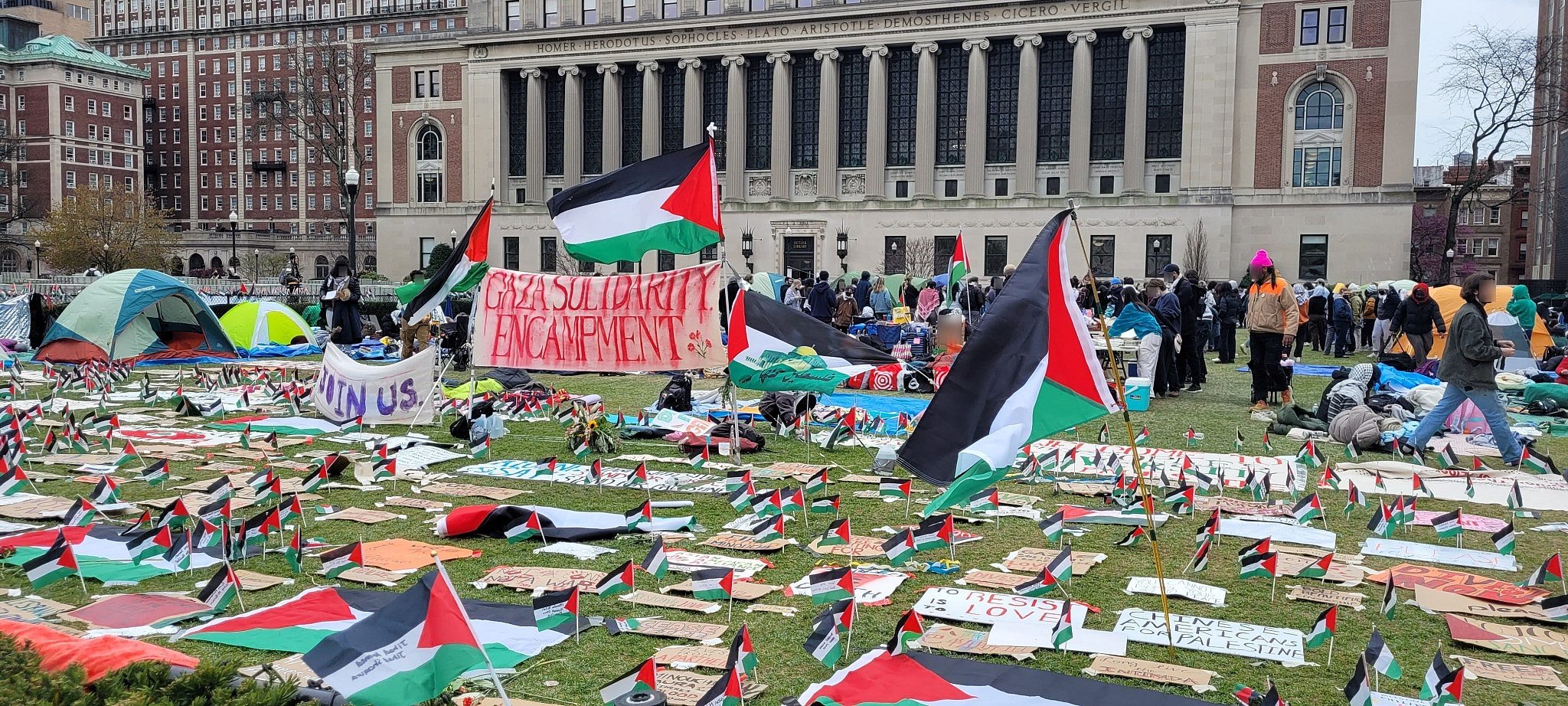
They called it the Gaza Solidarity Encampment. They pitched tents, handed out flyers, and read poetry. They broadcasted their pain to the world from a New York City lawn, students, activists, and outsiders who claimed to speak for Palestine. But the truth that emerged from Columbia University over the last year was far darker than protest theater. This was not peaceful dissent. This was a slow, deliberate unraveling of safety, civility, and shared humanity, especially for Jews.
The media headlines may focus on expulsions, suspensions, and millions in lost federal funding. The university’s talking points praise new judicial boards, enhanced policies, and a partnership with the Anti-Defamation League. But none of it addresses the core truth: antisemitism was allowed to metastasize at Columbia. It was incubated, legitimized, and defended in the name of free expression, until it could no longer be ignored.
Let’s be honest: this didn’t begin in April 2024 with tents on East Butler Lawn. It started decades ago, in the slow normalization of anti-Zionism as a progressive ideal, and in the failure of elite institutions to distinguish between critique and hate. It took until now, after campus riots, Hamilton Hall’s occupation, and Jewish students fleeing dorms, for Columbia to admit it had a problem. And even now, the university’s response reads like crisis PR, rather than a moral reckoning.
When chants of “From the river to the sea” echoed through Butler Library and when Jewish students were told to go “back to Poland,” this stopped being a protest. It became persecution. No number of press statements, no quiet expulsions behind administrative doors can erase the fear that spread across Columbia’s Jewish community.
The very people responsible for making Columbia unlivable for Jewish students were lionized.
The Trump administration’s decision to revoke $400 million in federal funding was more than a political move; it was a mirror. Columbia, like many elite universities, needed that funding to survive. It capitulated. New disciplinary boards were created. A revised definition of antisemitism was adopted. Police were given greater authority. And yet, it all feels like theater, a play with no soul. Because the question remains: why did it take this much to act?
The answer is disturbing: for too long, Jewish pain was not taken seriously. For too long, antisemitism was dismissed as a misunderstanding of Zionism. And for too long, progressivism allowed itself to ally with movements that cloaked Jew-hatred in the language of liberation.
Let us be unequivocal: Zionism is not racism. It is the national self-determination of the Jewish people. To chant for intifada, to idolize the October 7 attacks, to demonize students wearing Stars of David, is not political discourse; it is a hate crime dressed in college gear. And to suggest, as some professors and student organizers still do, that anti-Zionism is not antisemitism, is to ignore lived reality.
When Jewish students are told that their support for Israel makes them unfit to be on campus, that is antisemitism. When they are told to conceal their religious identity for safety, that is antisemitism. When Jewish identity is reduced to a political stance subject to violence, that is antisemitism.
Columbia’s new rules, its Task Force on Antisemitism, and its cooperation with the ADL are welcome. But they’re reactionary. They happened because the fire got too hot. What happens when the heat fades? Will the campus slide back into tolerance for hate under the guise of activism?
This is not just Columbia’s problem. It’s Harvard’s. It’s Berkeley’s. It’s every institution that now finds itself teetering between freedom and decency. If Columbia, with all its resources and prestige, failed to protect its Jewish students for so long, what does that say about the rest of academia?
Because the students chanting “Zionists don’t deserve to live” are not gone. Because the professors who defended them are still tenured. Because the administrators who stayed silent are still employed. Because Jewish students still look over their shoulders on campus. Because a Jewish student wearing a Star of David can still be asked: “Are you a Zionist?”, not as a question, but as an accusation.
Until the culture changes, until universities embrace that defending Jewish students is not negotiable, no policy will matter. Until anti-Zionism is recognized as the modern mask of antisemitism, and until Jewish self-determination is treated with the same dignity as every other people’s, then this fight remains unfinished.
Columbia has taken steps. But steps are not solutions. What Jewish students deserve is safety, dignity, and respect. And unless universities are willing to fight for those values, not just when cameras are rolling but when no one is watching, then the reckoning we need has only just begun.
Related Topics