


What Czechoslovakia’s Arms Deals Teach Israel Today
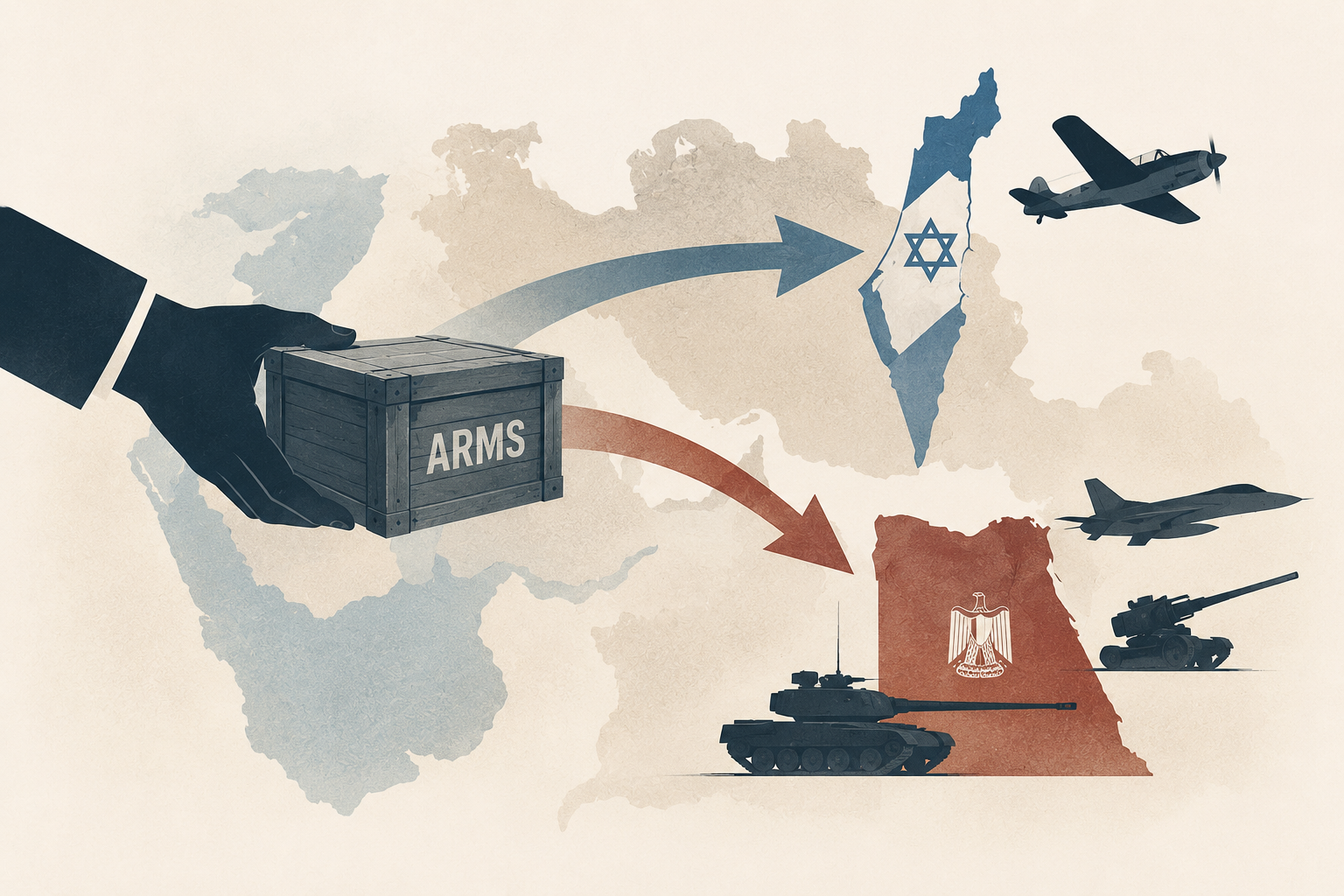
In 1948, the newly declared Israel faced an existential dilemma. Independence had been proclaimed, yet survival was far from guaranteed without sufficient arms. An international arms embargo restricted access to weapons while neighboring Arab states were mobilizing for war. Under such circumstances, the balance of power was not merely disadvantageous—it was potentially fatal.
Into this strategic vacuum, Czechoslovakia intervened. Through a series of secretive yet decisive transfers—later known as Operation Balak—Prague supplied rifles, machine guns, ammunition, and aircraft such as the Avia S-199. Although these were not technologically superior weapons systems, they were available at a critical juncture and were delivered in sufficient quantities to matter.
The impact was both immediate and profound. These weapons enabled Israel to transform from a fragmented militia force into a more coherent military structure that could conduct sustained operations. More importantly, this offered the material foundation that was necessary to withstand the early stages of the war. In that sense, Czechoslovakia’s arms shipments not only influenced the outcome of individual battles but also played a decisive role in enabling Israel to preserve itself as a sovereign country. The geopolitical consequences were fundamental—Israel’s survival embedded it permanently into the Middle East’s strategic system.
Nonetheless, within ten years, the identical arms supplier contributed to triggering a diametrically different transformation. In 1955, Egypt, led by Gamal Abdel Nasser, signed a large-scale arms agreement with Czechoslovakia, effectively functioning as a conduit of the Soviet Union. The arms transfer was neither limited nor improvised. Instead, it was a massive, systemic rearmament program that included MiG-15 jets, tanks, artillery, and training systems.
The consequence was systemic and not simply additive. Egypt rapidly emerged as one of the major military powers in the Middle East, altering the regional balance by directly impacting Israel’s strategic calculations. If the 1948 case allowed survival under constrained circumstances, the 1955 deal triggered ambitions, rivalry, and escalation. It marked the decisive entry of Cold War bloc politics into the Middle East, incorporating the region into a broader global structure of competition. The effect swiftly unfolded. The military shift contributed to rising tensions that formed part of the strategic backdrop to the Suez Crisis. In particular, the 1955 arms export did not stabilize vulnerable actors. Rather, it accelerated the emerging rivalry and deepened systemic instability.
Taken together, these two cases illustrate a consistent strategic pattern. Arms transfers are not neutral, commercial transactions but rather one form of intervention that could reshape a regional order. The overall impact would be determined by the geopolitical context, beneficiary, timing of the transfer, and the specific capabilities that are transferred. The same supplier enabled the survival of a country and later triggered the opponent’s militarization within a time span of seven years—a relatively short interval. Such a pattern is not confined to the Cold War period. In the contemporary era, it is reappearing, albeit in a different form.
In today’s Middle East, South Korea is emerging as an important arms supplier. Over the past decade, Seoul has established itself as a competent exporter by combining rapid delivery, relatively affordable prices, and increasingly sophisticated systems. South Korea’s defense industry has demonstrated strength especially in the fields of artillery, armored platforms, and light attack aircraft, and has showcased a proactive approach when it comes to technology transfer and localized production.
Countries like the UAE and Saudi Arabia have already taken steps to diversify their procurement portfolios, and South Korea offers an attractive alternative to traditional suppliers. Unlike Czechoslovakia in 1955, Seoul is not behaving as a proxy for a global ideological bloc. Nevertheless, the structural implications of its expanding influence should not be underestimated.
South Korea’s arms exports would likely accelerate military modernization across multiple countries simultaneously. By lowering costs and increasing accessibility to advanced systems, they would enable a broader range of actors to enhance their capabilities. This would cause a diffused and distributed shift in the regional balance—whereas in the mid-1950s, Czechoslovakia’s arms transfers helped create a single dominant challenger. At the same time, the diversification of suppliers would naturally weaken the political influence of traditional great powers, including the United States and Russia. Thus, Middle Eastern countries would be less constrained by a limited set of relationships. This would create a more flexible yet less predictable environment, diminishing external players’ ability to manage escalation.
For Israel, the reemergence of an external supplier that could shape regional capabilities suggests both risk and opportunity. The historical experiences of 1948 and 1955 illustrate that the issue at stake is how arms transfers interact with a broader strategic environment.
One potential course of action lies in selective engagement. South Korea’s massive production and platform development capabilities are complementary to Israel’s strengths in high-end technological domains, including missile defense, unmanned systems, and electronic warfare. Instead of treating Seoul as a competitor in the arms market, Israel could explore avenues for cooperation that would allow it to remain central to the integration and upgrading of regional military systems.
Maintaining a qualitative military edge is equally important. As relatively inexpensive and advanced systems proliferate, there exists a chance for regional actors to bridge the systemic gap with Israel—not by reaching parity in all categories of weapon systems, but by complicating its operational planning. This underscores the necessity of continued innovation, even in areas where Israel already excels, including layered air defense, artificial intelligence, and network-centric warfare.
Diplomatically, Israel has a stake in shaping the environment in which arms transfers occur. This does not mean outright opposition to South Korea’s exports, but rather cooperation with partners to avoid unstable outcomes and encourage responsible practices. Here, the key objective is to influence the direction of capability development in a way that reinforces stability.
Ultimately, the crucial lesson of the Czechoslovakian case hinges on the importance of anticipation. In 1948, the arms transfer preserved a country facing an existential threat. In 1955, it contributed to a cycle of escalation that shaped the region for decades. The distinction was not in the weapons systems themselves, but in the strategic context in which they were introduced.
Czechoslovakia’s arms exports to Israel and Egypt in 1948 and 1955, respectively, clearly showcase the enduring influence of external suppliers in shaping regional order. These cases were not individual transactions but rather catalytic events that redefined the Middle East’s balance of power. As South Korea expands its role in the global arms market today, similar dynamics are beginning to emerge. The question is not whether these changes will occur, but how they will be managed—and whether Israel will position itself as a passive observer or an active shaper.

