
Welcome to the Ongoing Situation
What do you mean you’re not Russian?
My face keeps writing checks my vocabulary can't cash
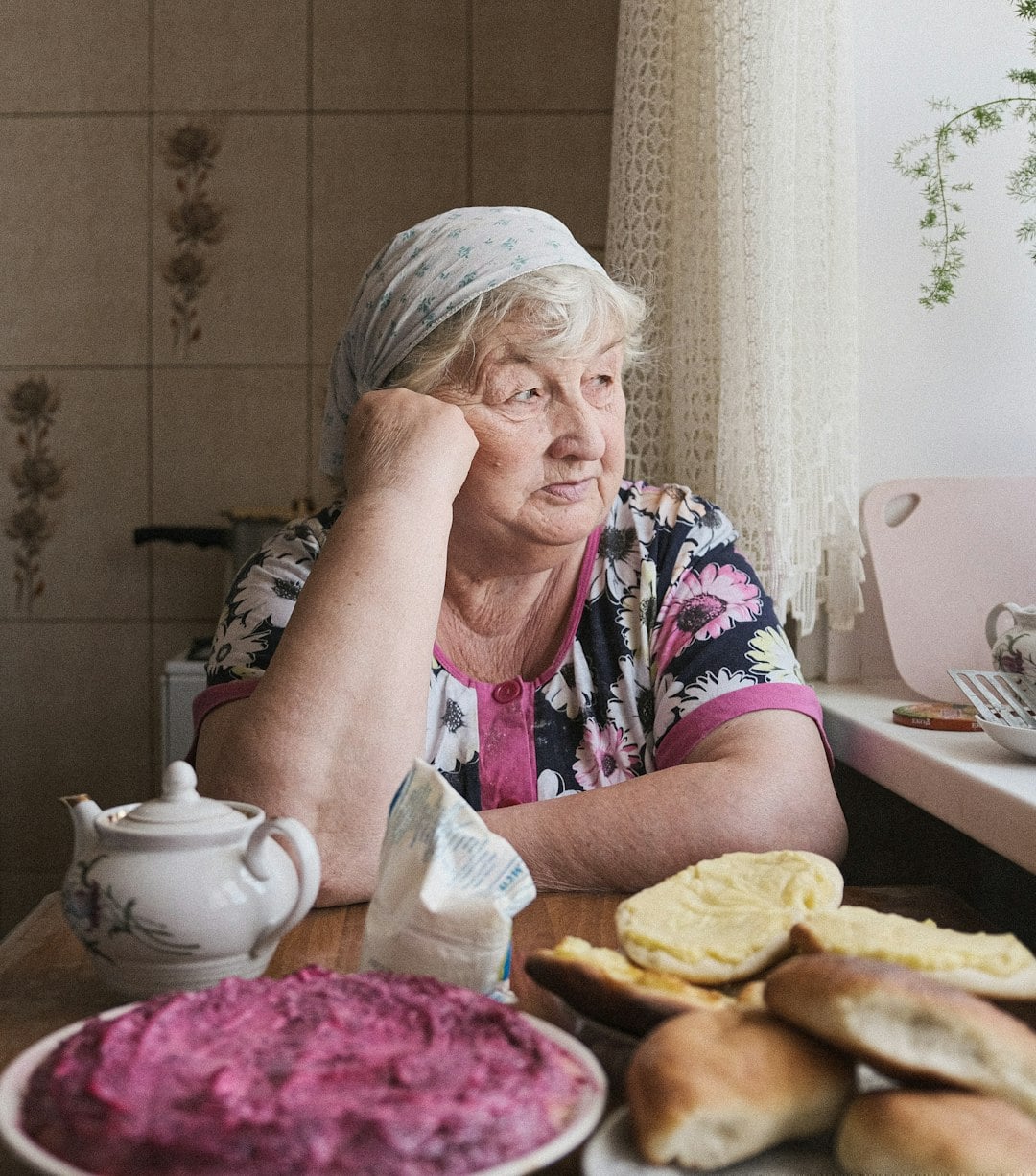
A woman sitting at a table with food on it. (Photo by Anton Luk/Unsplash)
There is a brief moment that occurs several times a week in Israel when a Russian-speaking stranger sees me and becomes visibly relieved.
It happens in pharmacies, supermarkets, elevators, bus stops, and government offices. The setting hardly matters. Sooner or later, someone studies my face for a moment and decides a mystery has been solved.
Their eyes brighten.
A smile appears.
Finally, they seem to think. One of us.
Then they start speaking Russian.
And just like that, I ruin everything.
The disappointment is immediate.
Not anger. Not hostility.
Something closer to heartbreak.
I respond with the same apologetic smile immigrants everywhere eventually perfect.
“Sorry,” I say in Hebrew. “I don’t speak Russian.”
This answer rarely resolves the situation.
Instead, it introduces confusion.
The stranger stares at me.
I stare back.
We both know something has gone terribly wrong.
Until moving to Israel, nobody ever mistook me for Russian. Since moving here, I am approached more often in Russian than in Hebrew.
The blonde hair doesn’t help.
Neither do the blue eyes.
Nor, according to one particularly direct taxi driver, does my face.
“You look completely Russian,” he informed me.
I wasn’t aware faces came with language settings, but apparently mine arrived preconfigured for Moscow.
To be fair, I understand the confusion.
My family history sounds less like a biography and more like an administrative error.
My father is South African, though largely raised in England. My mother was Israeli-American. My parents met and married in Israel. My older brother and sister were born here. I grew up in the US before eventually moving back myself.
The result is that I possess an accent that appears to have been assembled by committee.
Americans hear it and ask where I’m from.
South Africans hear it and ask where I’m from.
Brits hear it and ask where I’m from.
Israelis hear it and ask where I’m from.
By this point, I’m beginning to wonder myself.
My accent is not American enough for Americans, not South African enough for South Africans, and not Israeli enough for Israelis.
Unfortunately, my family history offers just enough evidence to support everyone’s incorrect theories.
My ancestors escaped Lithuania.
My greatest contribution to Slavic culture is looking like I know where the good pickles are.
This information has never once helped me understand Russian, but it does seem to encourage strangers to keep trying.
The reaction follows a remarkably consistent pattern.
First comes confusion.
Then denial.
They repeat themselves, slower this time.
I continue looking at them the way a golden retriever looks at a tax form.
Then comes bargaining.
“Parents?”
“No.”
“Grandparents?”
“No.”
“Husband?”
Also no.
Eventually, they switch to Hebrew, though often with the visible suspicion that I am withholding Russian for personal reasons.
As though I am some sort of linguistic fugitive, living under an assumed accent and hoping my past doesn’t catch up with me in the shampoo aisle.
The truth is that I understand why they keep trying.
Because immigrants are always searching for each other.
Not necessarily for friendship.
For recognition.
For familiarity.
For the possibility that someone else understands your references without explanation.
A Russian-speaking Israeli sees a blonde woman standing in line at Super-Pharm.
An American hears an American accent across a crowded room.
An Argentinian overhears Spanish.
For a few hopeful seconds, a stranger becomes evidence that home still exists.
I’ve spent most of my life disappointing people who thought they had successfully identified me.
There is always a flash of triumph when someone believes they’ve figured me out.
It is almost immediately followed by the realization that they have not.
Russian Israelis think I’m Russian.
British people think I’m South African.
South Africans think I’m British.
Americans occasionally decide I’m Australian.
Everyone is wrong, but not wrong enough to stop guessing.
For years I found this mildly annoying. Now I find it oddly comforting.
Most people spend their lives trying to belong somewhere.
I’ve accidentally developed the opposite talent.
I belong everywhere just enough to create confusion.
Maybe that’s what happens when your family spends generations running away.
A little Lithuania. A little South Africa. A little America. A little Israel.
Enough history to explain everything. But certainly not enough to explain it quickly.
Which is why, several times a week, a Russian-speaking stranger sees me in a pharmacy and lights up with recognition.
For one glorious moment, they’ve found one of their own.
Then I open my mouth.