


What does the future hold for UK Jewry?
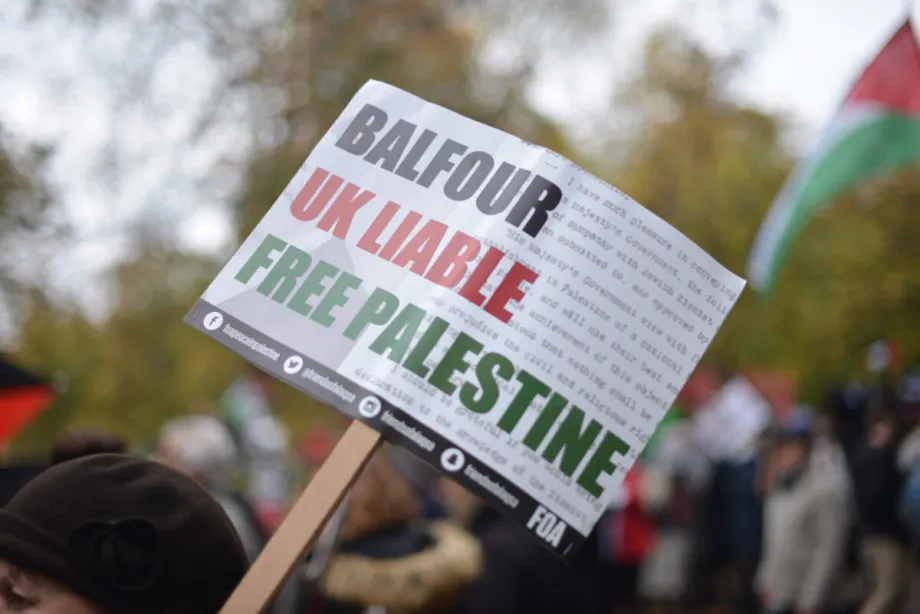
The recent two weeks are historically significant for two reasons. The first: the most important elections in Israel’s history, is yet to be included in the textbooks, and the second, November 2, 1917, Balfour Declaration marks a decisive moment in the history of Britain and Israel. It is also the moment when the triangle of the British, Jewish, and Palestinians become entangled. On this date, the British Government, led by the Prime Minister David Lloyd George, expressed support for the establishment of a national home for the Jewish people in Palestine. 
A century later, a resistance to the Balfour Declaration is notably more worrying than before October 7th terrorist attacks. In September 2026, Britain Owes Palestine campaign group submitted a 400-page legal petition to the government “challenging the government to account for Britain’s systemic breaches of international law during its unlawful occupation of Palestine”.[1]
A petition against the Balfour Declaration has been brought to the UK Government as dozens of MPs call for a formal apology by the Government for the issuing of the Balfour declaration which they state destabilize the peace efforts today.
The Palestinian Information Centre news website that is available in 8 languages, published this story arguing that “This year’s anniversary comes amid the continuing repercussions of Israel’s genocidal war on Gaza…”[2].
At the same time, in the Middle East, historical elections have taken place in Israel, at timing of surge in global resistance to the country. On Saturday, masked protesters set fire to Israeli flags in Lyon, France. Hundreds of Palestine Action supporters were arrested in a demonstration in the front of the US Embassy in London for expressing support for a proscribed terrorist organisation. An organisation that vandalized RAF jets and is a threat to British national security.
But demonstrations against Israel and terrorism threats are not occurring in a vacuum. Implementation of effective policies, particularly immigration policies, is vital. As it is well known, escalation in the Middle East has had a significant impact on Western countries in Europe and North America. In September 2026, the UK Home Secretary, Shabana Mahmood, announced the reopening of the UK Resettlement Scheme for new referrals. Around 1 in 4 referrals will be for Afghan women and girls and Palestinian refugees. Many Palestinians reside in the UK are not happy with the new scheme, and this may lead to further tensions. In 2025, the UK Government’s asylum policy supported scholars and fully funded students in Gaza with university places for the 2025 to 2026 academic year to enable them to travel to the UK and commence their studies.
The current Resettlement Scheme is available only to Palestinians who are in urgent need of resettlement and already escaped Gaza to neighbouring countries, such as Lebanon and Jordan. Most Syrian refugees in the UK have been resettled directly from the countries surrounding Syria to which they had been displaced by the conflict, with the aim of integrate refugees legally and safely.
The umbrella alliance Communities for Palestinians UK (CFP) has been leading a different vision than this of the Home Office, according to which all Palestinians in Gaza who wish to build a new life in the UK will be able to achieve their goal. This is the focus of CFP current campaign. CPF partners such as, ‘Global Movement to Gaza’, advocate for ‘stopping the genocide in Gaza’, ‘anti-colonial solidarity’, and ‘collective resistance’.
The problem is evidently with those who fled Gaza and state they acknowledge Western values but operate against them by using the migration channel to bring into Western countries radical ideologies. There needs to be strict monitoring that none of the new arrivals are in any way affiliated with Hamas, as in a recent case, where a former Hamas member was given asylum and citizenship in the UK before “plotting” a terrorist attack against Jews in Europe (September 2026). And this is not an isolated case. The notorious terrorist Abu Hamza al-Masri who was convicted for terrorism offences in the US is back in the headlines as his council home is being renovated at the expense of the taxpayers.
This week, the Home Secretary Shabana Mahmood announced on dramatic changes to the migration system, including changes in refugees’ settlement. Refugees (people who have been granted asylum in the UK because they are unable to return to their own country as they fear prosecution) who arrived in the UK through an official government scheme will qualify for settlement after five years. However, other refugees will need to wait 10 years and either work or study. Refugees who arrived in the UK by small boat or another illegal route will have to wait 20 years if they work or study, and 30 years if they don’t.
The UK adopted the Canadian Refugee Model. Researching the integration of refugees in both countries, I can say that refugee journeys and integration into Western countries in Europe and North America is similar as the refugees in both cases fled Middle East conflicts with the aim of rebuilding new life in the hosting countries. Having said that, after October 7, the narrative of many refugees from Gaza arriving at the UK, prevents successful integration, as they use the democratic space in a negative way that pushes against successful integration and peaceful co-existence in the UK with their anti- western values and rhetoric.
An integration of refugees from Gaza in the UK can only be successful when there will no longer be refugees claiming that they escaped the genocide Israel committed in Gaza. The Canadian model of the Prime Minister from 2015 to 2025, Justin Trudeau, to embrace diversity, to understand the other, to treat refugees as a human being who lost everything they ever had, all of these initiatives can’t be valid when the migration route is being undermined by dangerous politization, which contributes to the undermining of the security of the Jewish communities and beyond, in the diaspora. There is an urgent need to mitigate the risks by delivering reliable information about the objective reasons for displacement in Gaza.
The Law Lecturer and Board of Deputies member Ze’ev Portner shared with me his thoughts regarding the future of the UK Jewry saying: “Next year will mark the 110th anniversary of the Balfour Declaration – an event that will be commemorated by Britain’s Jewish community as a seminal moment, not only in British Jewish history but also in the broader history of the Jewish people. The overwhelming majority of the community will look back with pride on the fact that it was a British Foreign Secretary, Arthur James Balfour, who issued the Declaration on 2 November 1917. By expressing support for the establishment of a national home for the Jewish people in Palestine, this commitment helped lay the foundations for the eventual establishment of the State of Israel. The British Government will also be encouraged to commemorate this historic anniversary, despite ongoing campaigns by critics of the Declaration who seek to delegitimise it and who continue to call upon successive governments to apologise for its issuance”.
Israel’s President Isaac Herzog began consultations with party representatives on forming a new government, a process which will be finalise on November 10, 2026, in a ceremony that will be held at the Knesset as a new parliamentary term will begin. Many would agree that after the formation of the government, collaborations and close links of Israel with the Jewish Diaspora is of mutual interest to strengthen the Jewish state and the Jewish communities in Israel and around the globe.
[1] https://www.britainowespalestine.org/