
Saudi by blood. Zionist by Spirit. Bridging worlds
What ‘Free Palestine’ Won’t Tell You?!
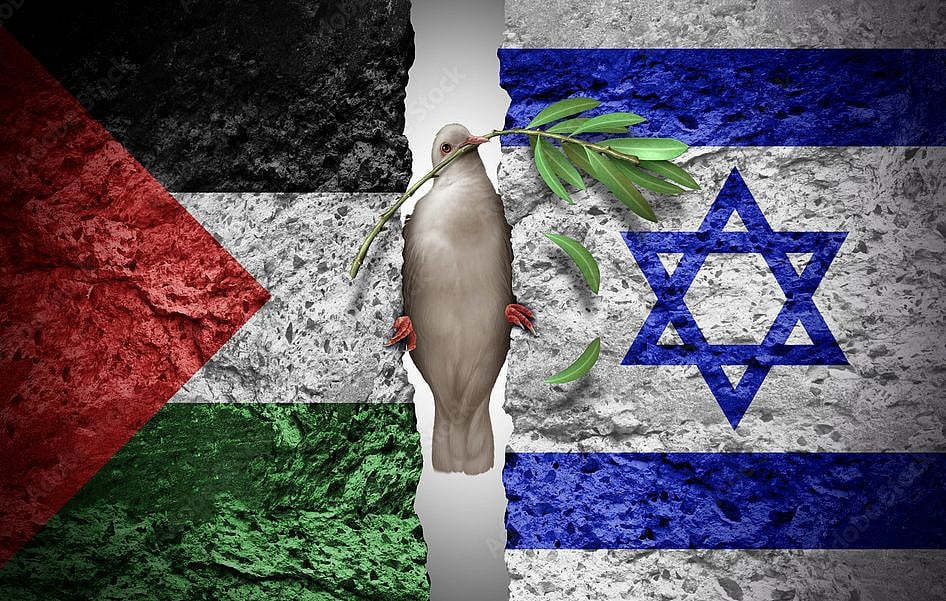
A Call for Truth, Reform, and Real Peace
Across campuses, protests, and global headlines, a growing number of voices chant “Free Palestine”—but few stop to ask: free from what, and for what future? As someone who values truth, human dignity, and the pursuit of peace, I must ask hard questions. I care deeply for the Palestinian people. I grieve for the suffering they endure, the displacement they face, and the pain that spans generations. The indoctrination of children—killing their dreams, hopes, and futures generation after generation, grieves me and makes my heart ache. I often pray for change, a supernatural change that only God can bring. But I cannot, in good conscience, align myself with a political cause or leadership that perpetuates conflict, glorifies violence, and refuses to pursue genuine reform or reconciliation. Here’s why:
What Being an Arab and an American Taught Me
What being an Arab taught me is to have passion and fire in my soul. What the West taught me is to be free—to think, to explore my God-given intellect, to reason, to search for truth, and to exercise freedom of speech. I hold both of these identities dearly. And it is from this unique lens that I examine the Palestinian cause.
A President Without a Mandate
Mahmoud Abbas was elected in 2005, and his four-year term expired in 2009. Since then, no presidential elections have taken place. He remains in power not through the will of the people, but by internal party decisions from Fatah –حركة التحرير الوطني الفلسطيني (فتح)- and the PLO. Over 15 years of stalled democracy has eroded any claim to legitimate governance. A political cause that claims to fight for freedom but denies its own people that same freedom is not one I can support.
Leadership That Glorifies Death
The Palestinian Authority, along with factions like Fatah, often promotes martyrdom, celebrating those who die in attacks against Israeli civilians. They name schools after “martyrs” and pay salaries to convicted terrorists through what is known as the “Pay for Slay” policy. True leadership promotes life, not death. Real liberation movements build futures, not cults of sacrifice.
Institutionalized Hate Over Hope
From childhood, many Palestinians are exposed to textbooks and media that erase Israel from the map, dehumanize Jews, and praise resistance through violence. Peace is impossible when generations are raised on hatred. I stand with education that teaches truth, coexistence, and dignity for all. But it won’t be impossible if there is domestic regime change in Palestine—including a different system of education, a redefined identity, and structural, ideological, and generational shifts to create a more representative, accountable, and peace-oriented political system.
A Deep Legitimacy and Trust Crisis
Recent polls reveal that nearly 70% of Palestinians don’t believe the PA can reform. Over 80% want Abbas to resign. There is no functioning accountability, and corruption is rampant. When citizens lose trust in their leaders and are given no democratic means to change them, hope collapses. (PCPSR, 2024).
A Cause Without a Clear Vision
What does the Palestinian national movement offer its people? No functioning economy. No protection of freedoms. No plan for peace. Only slogans, incitement, and a weaponized victim narrative. A people deserve more than eternal resistance; they deserve dignity, opportunity, and responsible governance. Is this ideology going to continue forever?
Absent Democratic Processes
No national elections have been held since 2006. The last Palestinian elections were held in January 2006. Since then, there have been no presidential or legislative votes—even though Abbas’s term ended in 2009. Elections scheduled for May and July 2021 were postponed by presidential decree (Reuters, 2021). This prolonged delay has created an unelected leadership with no accountability to the public. As highlighted by the Carnegie Endowment for International Peace, the Palestinian political system continues to suffer from democratic decline and authoritarian stagnation. (Carnegie, 2021). Democracy is not just about voting; it’s about the ongoing consent of the governed. That consent is missing.
A Culture of Victimhood, Not Accountability
Many Arab leaders, including Palestinians, have spent decades blaming Israel for their internal failures. Instead of addressing their own broken systems, corrupt governance, and toxic ideologies, they deflect responsibility. This culture of victimhood has created a cycle of misery that leadership refuses to break.
As Thomas Jefferson once said, “The government you elect is the government you deserve.” A people who demand dignity must also demand accountability.
Let’s Get to the Root of the Issue
Why does the so-called Palestinian cause remain unresolved after nearly eight decades—not only in the Middle East but on a global scale? This is not a rhetorical question. It is a call to reflect on the deeper issues at play. For 77 years, the Palestinian people have remained trapped in a cycle of conflict, while political leaders consistently avoid the necessary steps for reform and reconciliation.
Who bears responsibility?
What concrete efforts have been made toward lasting peace?
Too often, we hear calls for Israel’s disappearance rather than a vision for mutual coexistence. It is time to ask:
how many more generations will be sacrificed to this same unyielding narrative?
Is there not a desire for a future marked by dignity and life, rather than perpetual loss?
The truth is, the habitual rejection of peace negotiations by Palestinian leadership has entrenched a cycle of conflict, blocking opportunities for meaningful reform and regional integration. . While Israel continues to build a thriving society founded on innovation, pluralism, a diverse society built on acceptance and respect, and resilience, the Palestinian leadership remains entrenched in grievance and blame. It is fair to ask: what future is being constructed under this vision? Leadership must move beyond slogans and confront its own failures if the people are ever to experience the peace and prosperity they deserve.
One More Reason: I Stand with Israel Because I Stand for Shared Values
Israel is not perfect, but it is a thriving democracy, a land of innovation, and a refuge for Jews after millennia of persecution. It offers freedom of religion, press, and speech—including to its Arab citizens. I have seen firsthand the beauty of Jewish-Arab coexistence in Israel. This is the kind of future the Middle East needs.
Standing for Peace Means Standing for Truth
The narrative that blames Israel for everything while excusing the failures of Palestinian leadership is dishonest. Real peace begins when we hold all parties accountable. I long to see a new generation of Palestinians rise up and say:
“We want more than rage. We want reform.”
Tired of the Endless Cause
As an Arab, I can honestly say—we are tired. Tired of this endless “Palestinian cause.” Tired of the finger-pointing at Israel. This cause has become a burden on the entire globe—an endless, evil cycle. Let’s be real: if nothing changes, nothing changes. Until when will this victim mentality continue? I want to scream: “Enough is enough!!” Why is it so hard to choose peace over revenge?
As an American educated in the West—in the most powerful country in the world—I say this: the model Israel provides as a democracy in the Middle East is something we should admire, applaud, and learn from.
The Jewish people are a blessing to this region.
The whole world has evolved, changed, and advanced—but Palestine has remained stuck!!! What is the solution then?
If we as Arabs could remove the lens of hate and jealousy, Arab nationalist pride, put down our weapons that hinder us from having peace, and pick up the tools of love, partnership, and peace—we might just discover the Middle East we’ve always dreamed of. A Middle East reborn in truth, not in terror.
The Abraham Accords Give Me Hope
One of the most encouraging developments in recent years has been the Abraham Accords. When countries like the United Arab Emirates, Bahrain, Morocco, and Sudan chose to normalize relations with Israel, they crossed a historic threshold—rejecting decades of hostility in favor of dialogue and shared opportunity. These bold steps inspire hope. I dream of a day when more Arab nations join this path. And I wonder—if the Palestinian leadership could recognize that Israel is not their enemy, but a potential partner for peace, would they too dare to extend a hand instead of a fist? Perhaps they might see what others have already seen: that coexistence is not surrender—it’s the beginning of healing.
Criticism of the IDF: A Distraction from the Core Issue
Criticism of the IDF is often brought up to undermine the legitimacy of Israel’s existence. But it is irrelevant to the truth of what has been happening for decades. Ever since Israel declared its independence in 1948, Arab nations declared war—launching attack after attack that left Israel with no choice but to build a strong military presence. Why?
Because in the international system, the best way to survive is to be VERY POWERFUL. Strength is not a luxury—it is a necessity for existence.
Hope Beyond the Headlines
I don’t stand with Palestine as it is currently led—but I do stand with Palestinians who seek a better future. I stand with Jews and Arabs who believe in building bridges, not burning them. I stand for a vision of peace that begins with truth and ends with dignity for all. That is the only cause worth fighting for.
Related Topics
Related Posts