
What Gilad Janklowicz Understood About Our Bodies and Television
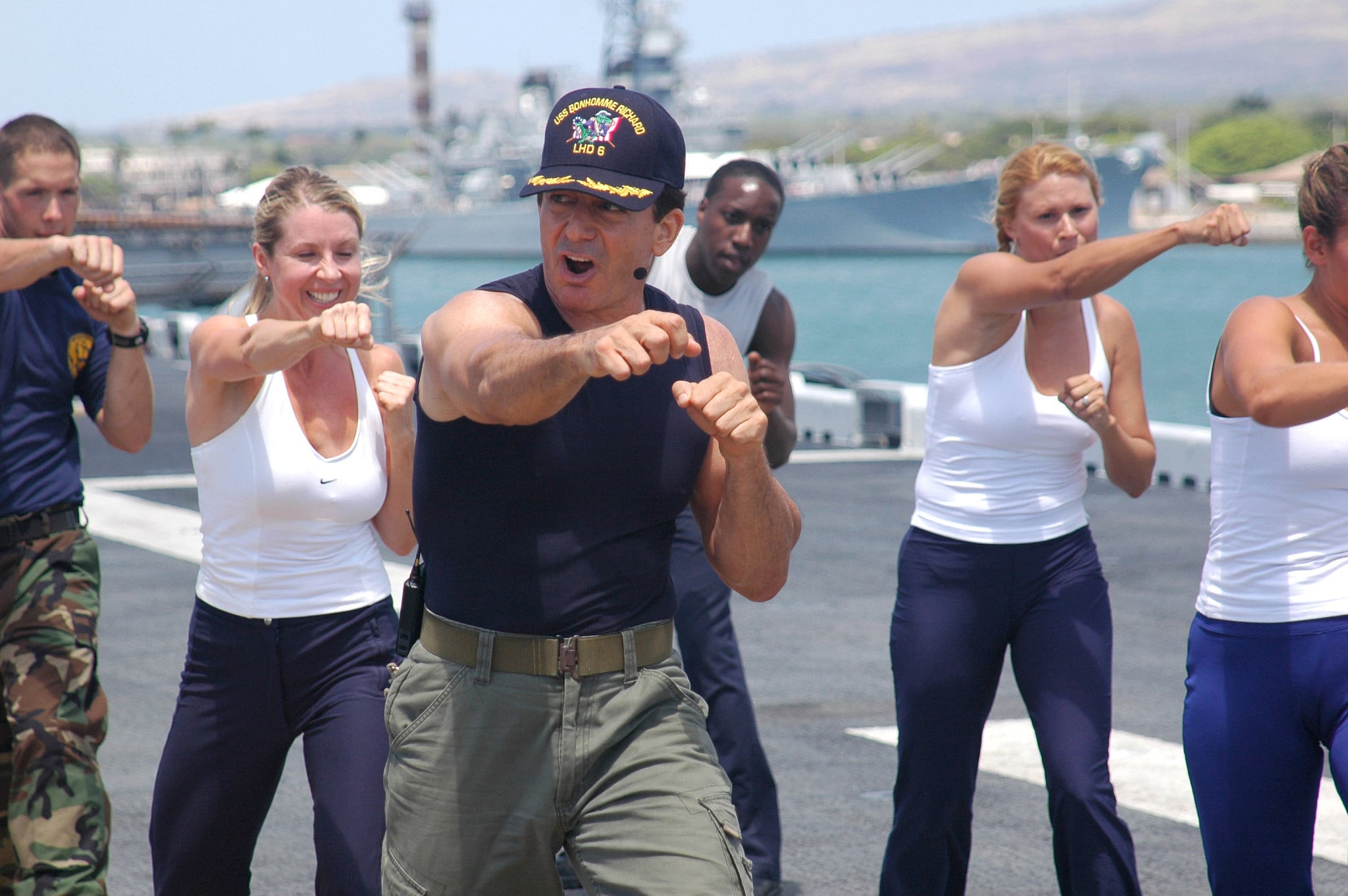
Gilad Janklowicz, who died on June 9 at the age of 71, spent forty-two years coaching viewers through a screen. A former Israeli decathlon champion, he had moved to California to train for the Olympics until an Achilles injury ended that hope in 1978. He stayed, studied film at UCLA, and in 1983 launched Bodies in Motion, a daily televised workout that ran for some six hundred episodes. He is remembered as the man who got a generation moving. But the subtler thing he understood, about the screen and the body in front of it, is worth holding onto too.
Designers inherited a word for it: affordance. The term was coined by the psychologist James Gibson to describe how we perceive a thing in terms of what it lets us do. A flat plate on a door says push; a handle says pull; a chair offers itself to sitting before you have decided to sit. The object does not command. It invites, and the body answers before it has noticed the question.
The technologies we call media do this too, and more quietly, because they are thought of as carrying information rather than arranging our bodies. Yet each one arranges us. The broadsheet holds the arms wide and bows the head. Radio drew a family into a ring around a single source of sound. Television set one bright rectangle in the corner and turned the whole room to face it. The phone bends the neck down into the posture now found on every street. A medium is never only a message; it is also a position the body is asked to hold, and most of us hold it without recalling that we agreed.
The position television asked for was stillness. One screen to be faced, a fixed distance, a schedule that would not wait. The set offered the room a single shape, and the room took it. The viewer on the couch was not lazy. He had accepted the invitation built into the thing.
Janklowicz found a second invitation hidden in the first. The set still asked you to sit, and he could not change that. But what moved on the screen could ask for something else, so he changed what moved on it.
He was not the first to bring exercise to television. Jack LaLanne did calisthenics on air from 1951; Jane Fonda’s tape arrived in 1982. What set Janklowicz apart was where he put the camera. They worked in studios, where exercise stayed what it had always been: a special activity, done in a room set aside for it, that you had to enter. He took it outside, onto the beaches of Hawaii, and once onto the flight deck of a Navy ship, into the open world you already lived in. The invitation changed in kind. It was no longer come to the class. It was move where you already are. Trained as a filmmaker, he understood that the screen did not just record the workout; it framed the invitation the workout made to the body, and he reframed it.
He rarely appeared alone, either. He filled the shot with people exercising beside him, sometimes family among them, so that the screen no longer held up an expert to be judged against but a group you could fall in with. The invitation was not look at this body. It was do what we are doing. The medium that asked a nation to sit was now asking part of it to stand.
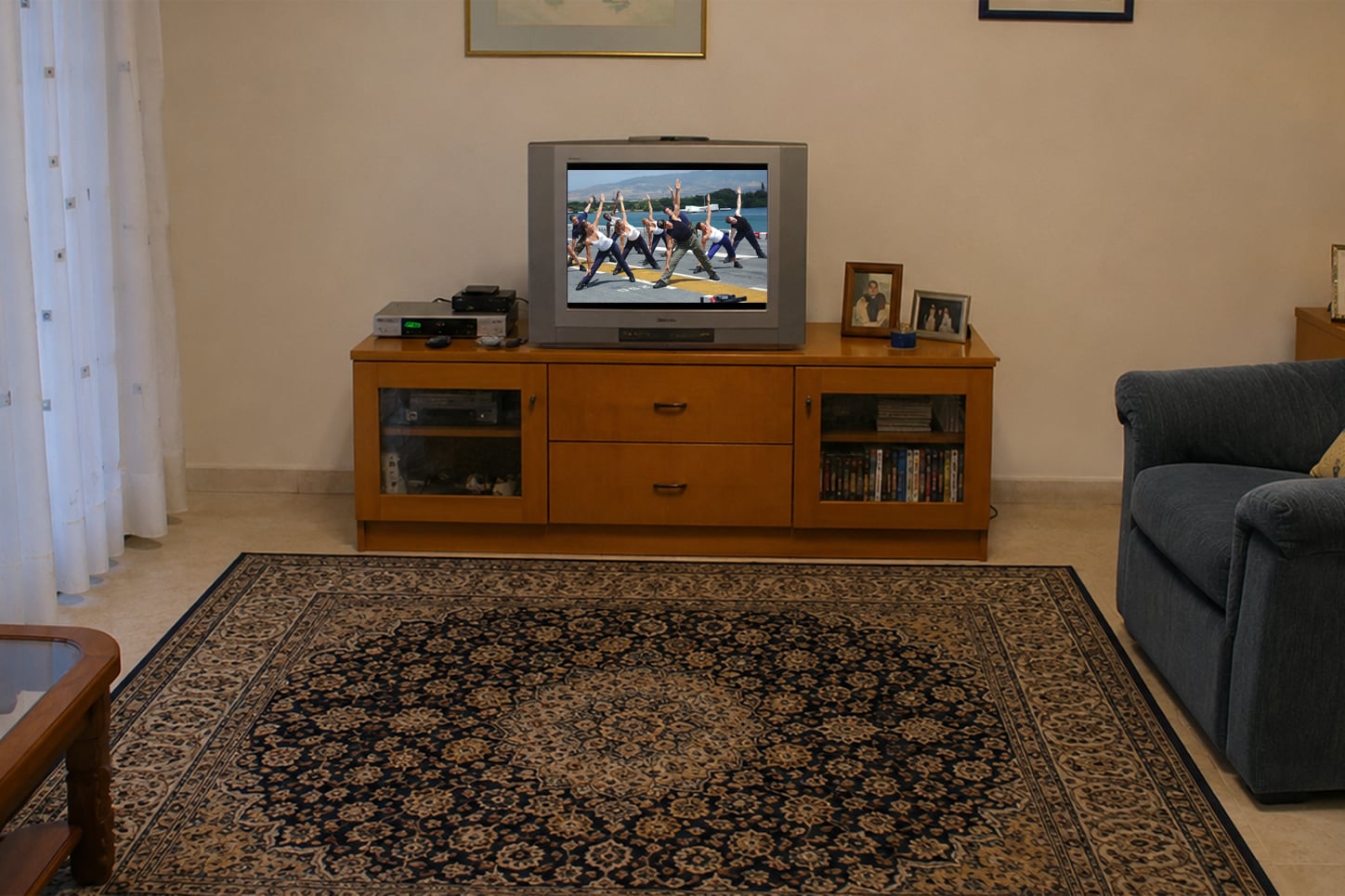
Home video carried the change further. A broadcast made you keep its hours, but a tape could be paused, rewound, repeated until the legs had learned the sequence. That control of your own pace, the privacy to be a beginner, was what turned a televised hour into a habit a person could keep.
Following a screen through a workout, at home, on your own time, stopped seeming strange and came to seem like nothing at all. He helped make it ordinary.
He closed each episode the same way, with a line that became his signature: till next time, keep in motion. For a great many people, half-watching from the carpet, it worked. They kept in motion.
And he made an older charge look mistaken. For most of its life television stood accused of the opposite crime: it was the great machine of passivity, the medium that planted children in front of it, bred the sedentary life the doctors warned of, and sank the viewer motionless into a couch. The screen and the moving body were cast as opponents. Janklowicz spent forty-two years showing the fault lay not in the screen but in what we had chosen to put on it.
The question he leaves is not whether a screen can move the body. It always could. The question is in what ways, toward what end, and whether it can still move us the way a man in the open once moved millions. Those who remember the show can picture him still counting, still smiling, still calling us to our feet.