What Happens to Jewish Life When School’s Out?
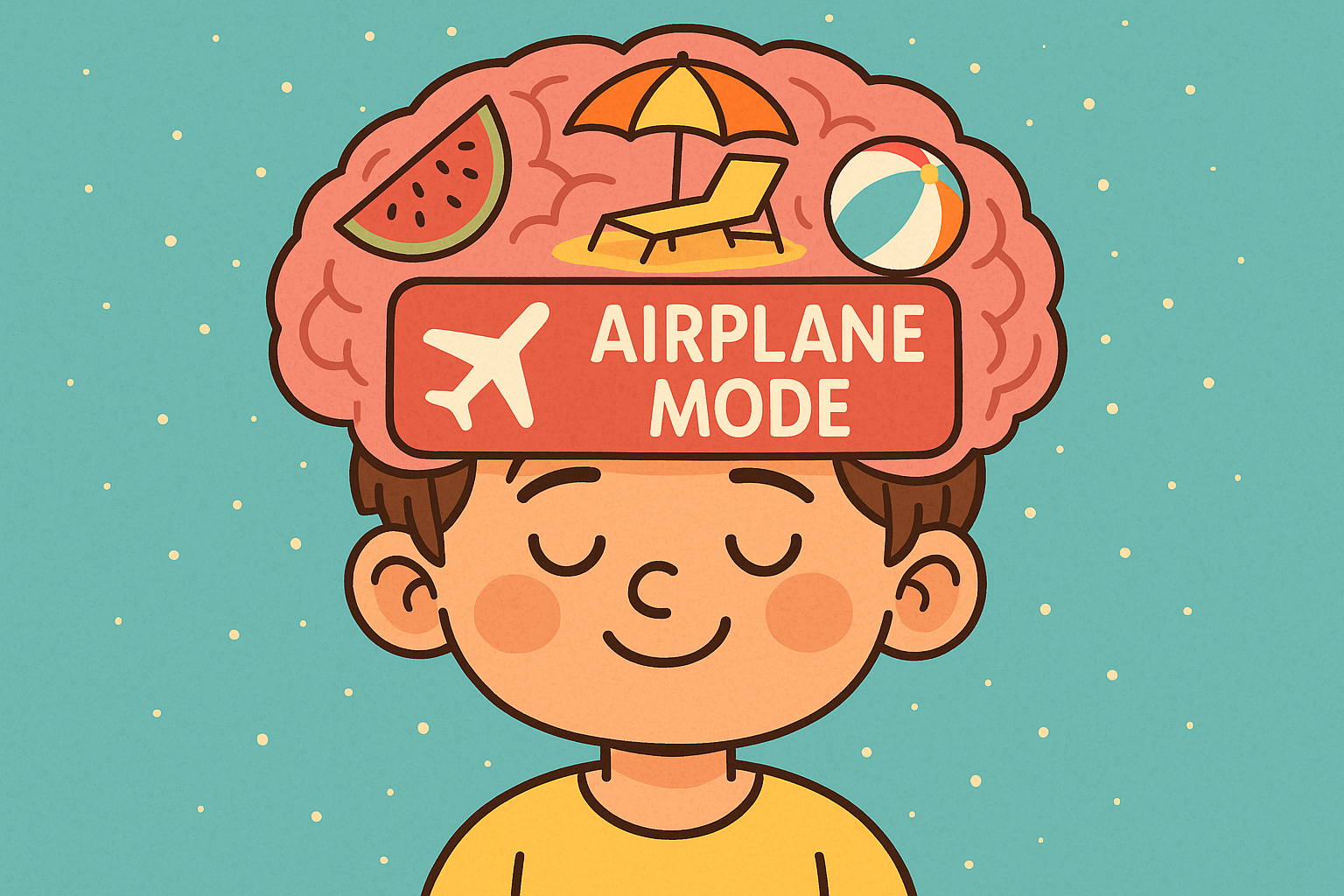
Joyful, joyful — summer is in full swing! Here in Israel, it took a few extra days — or even weeks — to recover from the war with Iran, but now the school year already feels like a distant memory. Lunchboxes have been washed and tucked into cupboards, and book reports have been replaced by beach chairs and picnic blankets. Our kids’ brains have officially entered vacation mode — just like our phones switch to airplane mode during a flight.
And while I fully recognize the need for a mental reset from time to time, does that mean there’s nothing to learn during the summer months? Do the end-of-school bells signal the end of growth, reflection, and meaning?
And if so, does Jewish life also go into “vacation mode”?
Our Jewish identity isn’t bound to an academic calendar. There’s no “off-season” for mitzvot. Tefillot are still recited, regardless of whether we have school, camp, or just a lazy beach day ahead. There’s still Torah to be learned, chesed to be done, traditions to uphold.
I feel the tension in my own home. The familiar sighs and eye-rolls — “Haven’t we earned a break?” or “We’re on vacation!” — echo through the house. And it leads me to ask: how do we balance the very real need for R&R with the ongoing rhythms of Jewish living? How do we motivate our kids to stay Jewishly engaged even when the classroom lights are off?
For many Jewish families, summer camp is the answer. Day camps and sleepaway camps alike offer an incredible bridge between the values instilled during the school year and the lived experiences of Jewish life during the summer. Kids learn tefillah under the trees. They braid challah in art class. They sing Hebrew songs around the campfire. They belong.
And this isn’t just theoretical.
Recently, I listened to a podcast from the Foundation for Jewish Camp featuring Jonah Platt and his mother, Julie Platt, the immediate past Chair of the Jewish Federations of North America. In the episode, they spoke about the “secret sauce” of Jewish camp and its enduring impact on Jewish identity and continuity.
“Everywhere I turned, there were Jews my age,” Julie recalled of her Camp Ramah experience. “And for the first time, I had Jewish friends who understood my world.”
It’s an organic, almost effortless connection — just being Jewish together, sharing common values and heritage, makes all the difference.
“There’s empirical data on the impact of Jewish camp on forming Jewish identity,” Jonah noted, “but honestly, you don’t need it. Just being there — lighting Shabbat candles, singing traditional songs, putting on Hebrew musicals — it’s life-altering. The effects don’t just last for the summer. They last for years.”
In fact, studies like the one published by the Harold Grinspoon Foundation confirm this. Jewish summer camps build identity, confidence, leadership, and emotional strength.
In short: Jewish camp isn’t just a summer break. It’s a lifelong investment.
But What About the Kids Who Don’t Go to Camp?
This is where things get more complicated.
Not every child has access to Jewish summer camp. Some live in places where no Jewish camp exists at all. For others, the cost is simply too high. Even Jewish day camps can cost hundreds of dollars per week, and that’s out of reach for many families.
A few summers ago, I met a 12-year-old boy named Manny while visiting a small, off-the-beaten-track Jewish community. There were no Jewish programs in his area — no camp, no youth group, nothing. The idea of sending him to the U.S. or Israel for a Jewish summer experience, even with a scholarship, felt entirely foreign to his family.
And I remember thinking: how many kids like Manny are out there? Bright, curious, full of potential — but missing out on a meaningful summer Jewish connection simply because of geography or economics?
We need to establish a tradition — no less sacred than our holidays and rituals—that prioritizes Jewish summer experiences alongside Jewish day schools and synagogues.
If we want the next generation to value their Jewish roots, we need to offer more than lessons. We need to offer experiences. Youth movements, informal education, backyard learning pods, Shabbat picnics, family Torah projects — and yes, wherever possible, Jewish summer camps — these are the ingredients in the “secret sauce” Julie and Jonah Platt talked about.
It’s not enough to teach our children about Jewish life. We need them to live it, own it, and shape it for themselves.
That’s why even the smallest actions — a Dvar Torah at dinner, a quick act of kindness, showing up to a weekday minyan — carry meaning. These moments connect us to something greater. They connect us to each other.
We should let our kids rest. Sleep in. Laugh. Leave the textbooks on the shelf for a while.
But if we let the Jewish spark dim in the name of “vacation,” we risk sending a subtle but dangerous message: that Judaism is schoolwork, not soul-work. That it’s temporary, not timeless.
So yes — flip your phones to airplane mode.
But keep your souls switched on.
Because Jewish life doesn’t stop in July.
In many ways, that’s when the magic begins.