
What If Iran Armed Its Cluster Missiles With Chemical Weapons? Are You Prepared?
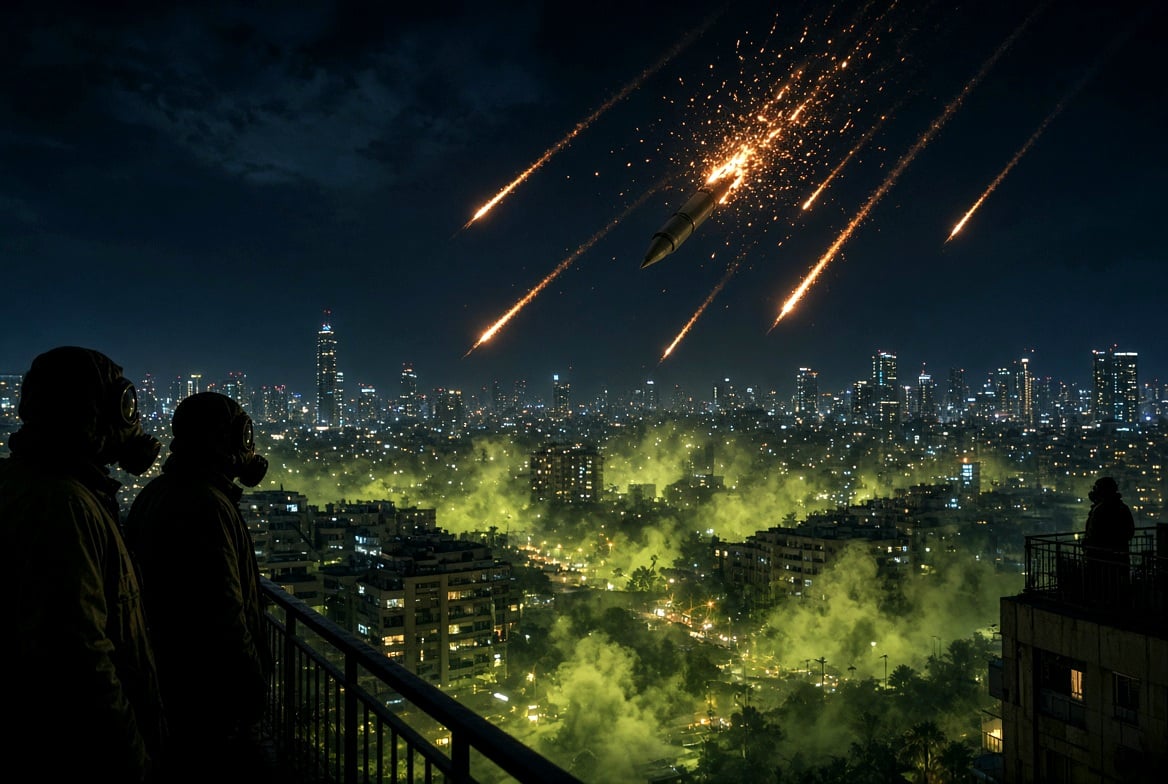
On April 22, 1915, in Ypres, Belgium, the world witnessed the first large-scale chemical attack of modern warfare. Throughout World War I, the use of chemical agents such as chlorine, phosgene and sulfur mustard resulted in approximately 1.3 million casualties, including more than 90,000 deaths, according to the Organisation for the Prohibition of Chemical Weapons (OPCW).
Decades later, Iran itself became a victim of chemical warfare. During the Iran-Iraq War (1980-1988), Iraqi forces repeatedly employed chemical weapons, including sulfur mustard and nerve agents such as sarin and tabun, against Iranian military personnel and civilians. Thousands died, and tens of thousands of survivors suffered long-term medical complications.
Despite the entry into force of the Chemical Weapons Convention in 1997, chemical warfare did not disappear. Between December 2012 and December 2024, the Syrian Network for Human Rights documented 222 chemical attacks in Syria, resulting in 1,514 deaths and more than 11,200 injuries. Among the agents employed were sarin, chlorine and sulfur mustard.
Given the difficulties of documenting casualties during armed conflicts, these figures may underestimate the true magnitude of the human suffering caused by chemical warfare.
Chemical warfare agents differ considerably in their mechanisms of action and the organs they affect.
Chlorine and phosgene primarily damage the respiratory system, potentially causing pulmonary edema and respiratory failure. Nerve agents such as sarin, tabun and VX disrupt normal nervous system function, producing involuntary muscle contractions, excessive respiratory secretions, convulsions and potentially fatal respiratory failure. Cyanide interferes with the ability of cells to utilize oxygen, potentially resulting in neurological deterioration and cardiovascular collapse.
Sulfur mustard damages the skin, eyes, respiratory tract and, in severe cases, bone marrow. Its complications may continue to evolve long after the initial exposure.
A victim of chemical warfare can develop life-threatening respiratory, neurological or cardiovascular failure without having suffered a single traumatic wound.
And surviving the initial exposure does not necessarily mean recovering from it.
In December 2020, a remarkable retrospective cohort study published in JAMA Network Open examined the long-term health outcomes of 60,861 Iranian survivors exposed to sulfur mustard during the Iran-Iraq War. Of these, 7,186 (11.8%) experienced moderate or severe complications. Moderate to severe pulmonary complications affected 6,540 individuals (10.7%), cutaneous complications affected 725 (1.2%), and ophthalmological complications affected 0.6% of the study population.
Particularly concerning was the development of delayed pulmonary complications among individuals who had exhibited no initial signs of respiratory distress.
The ophthalmological consequences of sulfur mustard exposure can also be devastating. Delayed mustard gas keratopathy may develop years after exposure, causing progressive damage to the cornea, recurrent epithelial defects, abnormal vascularization, corneal thinning and potentially irreversible blindness.
For some victims of chemical warfare, the war may end decades before its medical consequences do.
On November 24, Israeli Defense Minister Israel Katz publicly raised concerns about an emerging Iranian chemical weapons program.
Speaking to Israeli reporters, Katz stated that Iran “is in the process of developing chemical weapons” and that Israel “will not allow Iran to attain a chemical weapon.”
According to Katz, the alleged program emerged following the military setbacks Iran suffered during its recent war with Israel and the United States. He suggested that Tehran was seeking an additional deterrent capability. He did not disclose how far the program had progressed. Iran denies developing chemical weapons.
There is, however, another documented aspect of Iran’s military capabilities that deserves attention in the context of civilian preparedness: its use of cluster munitions.
On March 30, 2026, Human Rights Watch published an investigation confirming three separate Iranian attacks involving cluster munitions against populated areas of Israel during the ongoing conflict. The organization documented civilian deaths and injuries associated with these attacks.
This brings us to the hypothetical scenario raised in the title of this article.
What if Iran were to employ chemical weapons in a future missile attack?
Even sophisticated missile defense systems cannot guarantee that every incoming threat will be neutralized. Furthermore, the interception of a missile and the neutralization of a hazardous chemical substance are two fundamentally different problems.
There is no publicly verified evidence that Iran currently possesses the particular combination of weapons contemplated in this article. Nevertheless, chemical emergency preparedness deserves consideration independently of whether such a scenario ever materializes.
The healthcare systems of countries whose authorities identify a credible risk of chemical warfare should review and strengthen their emergency response capabilities in accordance with established international guidelines.
On June 3, 2026, the World Health Organization (WHO) published updated guidance on the initial clinical management of patients exposed to weaponized chemicals. The document addresses the identification of contaminated patients, personal protective equipment, decontamination, triage and specific therapeutic interventions.
Hospitals should be prepared to protect their personnel, establish appropriate decontamination procedures, maintain adequate reserves of medications and antidotes, and expand intensive care capacity when necessary. Mechanical ventilators, medical oxygen and trained healthcare professionals would be essential resources.
The availability of specific medications, including atropine and pralidoxime for nerve agent poisoning and hydroxocobalamin for cyanide poisoning, should also be considered within national preparedness plans. Other agents, including sulfur mustard, have no specific antidote.
Another important consideration is secondary contamination. Patients carrying hazardous chemical residues on their clothing or skin could inadvertently expose emergency responders, healthcare workers and other patients. Without appropriate precautions, a hospital receiving chemically contaminated casualties could itself become partially compromised.
But what about the ordinary citizen?
Many people may assume that the surgical masks or N95 respirators they became familiar with during the COVID-19 pandemic would provide adequate protection against chemical warfare agents. They would be mistaken. These masks are not designed to protect against toxic gases and vapors.
Respirators specifically certified for chemical threats require suitable filters, an adequate facial seal and proper training. Their protection has limitations, and they do not protect the entire body.
Governments should provide clear guidance regarding which protective equipment their citizens should acquire, where it can be obtained, how it should be stored and how it must be used. Provision should also be considered for families unable to afford appropriate equipment.
Possessing a gas mask without knowing how to use it can create a false sense of security.
Conventional bomb shelters may not necessarily provide adequate protection against airborne chemical contaminants. Citizens should follow the specific instructions of their civil defense authorities regarding sheltering or evacuation.
When sheltering in place is recommended during a chemical emergency, the US Centers for Disease Control and Prevention (CDC) advises closing windows and doors, shutting down ventilation systems that draw outside air into the building, and sealing openings as instructed.
Individuals who may have been exposed should safely leave the contaminated environment, carefully remove potentially contaminated clothing, avoid exposing others, wash their skin with water and mild soap, and seek medical assistance. Exposed eyes should be irrigated with clean water. Household bleach and other harsh cleaning products should never be applied to the body.
Significant suspected exposure warrants medical assessment even in the absence of immediate symptoms.
Governments that consider chemical warfare a credible threat should launch public education campaigns through television, radio, social media and other mass communication channels. Practical demonstrations and clear instructions in local languages could help millions of people understand how to respond to a chemical emergency without exposing themselves or their families to additional danger.
A population cannot be expected to protect itself against a threat it has never been taught to understand.
Public education must precede the emergency.
A devastating military offensive against the Iranian regime could alter its strategic calculations and increase the risk of escalation beyond conventional warfare. Should chemical weapons ever be employed, even the most sophisticated missile defense systems could not guarantee the safety of civilian populations.
Properly equipped shelters, effective chemical detection systems and a well-informed population could play a fundamental role in preventing a large-scale public health disaster.
A population accustomed to missile alerts may know exactly what to do when the sirens sound. But would that same population know what to do if the authorities announced a chemical attack? Would people know how to protect themselves and their families?
These are questions that should be answered long before such an emergency occurs.
Are you prepared?