
An Aging Jewish Feminist
Dinah’s Rape: The Lessons We Still Haven’t Learned
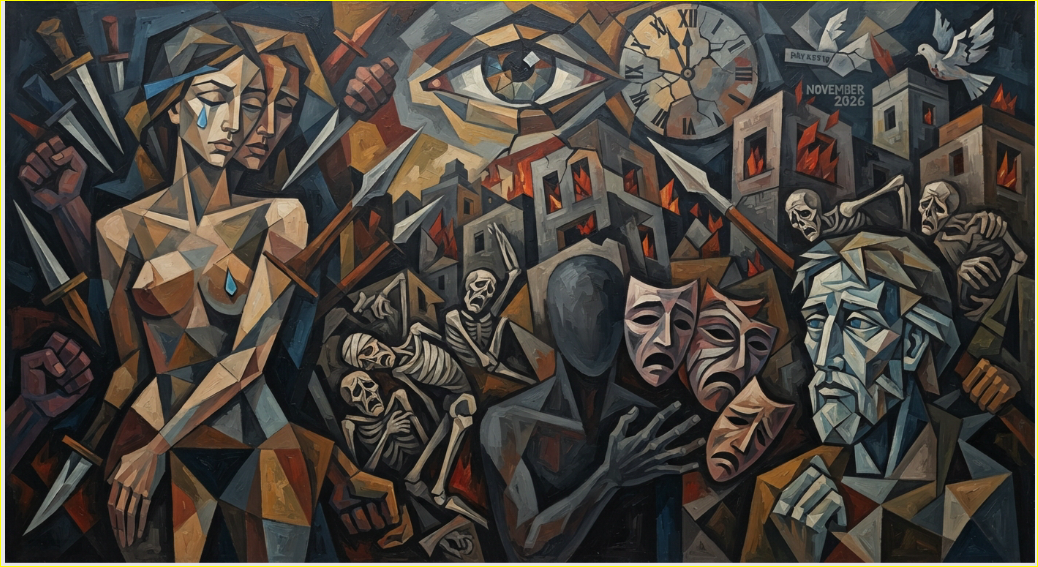
THE WEEK OF DINAH, NOVEMBER 2026
This is the Week of Dinah, an initiative that began with women rabbis of the Reform movement in Israel and has grown into a broad coalition of Jewish communities and organizations here and in the Diaspora. Its purpose is to raise awareness about sexual violence, support survivors, and break the silence that so often surrounds sexual assault.
The initiative has an amazing website, The World of Dinah, with articles, poetry, prayers, sermons, and midrashim in Hebrew and English. I was particularly delighted to discover that it includes a midrash I wrote in 1985, A Daughter in Israel is Raped. It is a personal piece, written when I was going through a difficult time in my academic career and awaiting tenure. I identified with Dinah, who, like me, had been violated by an institution in which she had placed her trust and was expected to remain silent. You can read it here, in Hebrew and English.
I first became interested in Dinah when I was the Torah reader in my synagogue in the early eighties. It was only after discovering feminism and modern midrash during a sabbatical in the United States that I began to appreciate the possibilities of retelling biblical stories from a woman’s perspective. Dinah presented a particular challenge. She is raped, but has no voice. She becomes the excuse for her brothers to invade, murder, pillage and destroy an entire town. Nobody asks her what she wants.
Over the years I have returned to this story several times, but another aspect has increasingly occupied me: the lost opportunity for peace between Jacob’s family and the people of Shechem. After October 7, 2023, and now three years later, I find myself returning to this question with renewed urgency.
DINAH: DAUGHTER, MAIDEN, SISTER
Dinah appears by name in only three places in the Bible: at her birth (Genesis 30:21), in the disturbing story of her rape (Genesis 34), and in the list of Jacob’s descendants who go down to Egypt (Genesis 46:15). In Genesis 34, her name appears six times. Interestingly, the text presents her in three different relationships: first as Leah’s daughter, then as a maiden, and finally as the sister of Jacob’s sons. The story begins:
“Now Dinah, the daughter whom Leah had borne to Jacob, went out to visit the daughters of the land. Shechem son of Hamor the Hivite, chief of the country, saw her, and took her and lay with her by force.”
The Hebrew verb va-ye’aneha – ויענה – has been translated in different ways, but I understand it as rape. The text tells us that Shechem subsequently fell in love with Dinah and wanted to marry her. He asks his father Hamor to arrange the marriage. Although Shechem has committed sexual assault, he also wants to marry Dinah. This is not the usual behavior of a rapist. Hamor approaches Jacob’s family and offers marriage, intermarriage, and financial compensation. He even invites them to settle together in the land.
Jacob says nothing.
It is only when his sons return from the fields that they react. They are distressed and angry because Shechem has violated their sister. Yet instead of negotiating honestly, they devise a plan: they tell Hamor and Shechem that they can agree to the marriage only if all the males of the town undergo circumcision. Hamor and Shechem accept and persuade the townsmen to undergo the operation, apparently anticipating a future in which the two communities will become one.
On the third day, when the men are in pain, Simeon and Levi attack the town. They kill all the males, including Hamor and Shechem. The other sons of Jacob plunder the town, seizing its wealth, livestock, children, and women. Dinah is taken out of Shechem’s house. And that is virtually the end of her story.
WHAT WAS THE ALTERNATIVE?
Whenever I read this story, I am struck by the extraordinary missed opportunity. Let me be clear: Shechem’s rape of Dinah cannot be excused by his subsequent desire to marry her. Nor should we assume that marriage to her rapist would have been a satisfactory outcome for Dinah. The biblical narrative never tells us what she wanted. That is one of its greatest failures.
But there were other possibilities. Hamor offers a way of bringing the two families together. He is prepared to negotiate, pay compensation, and accept the religious demands of Jacob’s sons. The entire town agrees to circumcision. Whether this represents a genuine desire for integration or a practical political calculation, coexistence is clearly on the table.
Instead, Simeon and Levi use the negotiations as a trap. Jacob, who should have been the responsible adult, remains silent. He does not speak up when his daughter is raped, intervene in the negotiations, or stop his sons from carrying out their murderous plan. When he finally speaks, it is not to condemn their cruelty or express concern for the slaughtered people. He fears retaliation:
“You have brought trouble on me, making me odious among the inhabitants of the land, the Canaanites and the Perizzites; my men are few in number, so that if they unite against me and attack me, I and my house will be destroyed.”
His objection is primarily political and practical. The brothers have the last word:
“Should our sister be treated like a whore?”
It is a powerful rhetorical question, but it does not answer the real question: Did the rape of one woman justify the slaughter of an entire community? Only much later, on his deathbed, does Jacob condemn his sons:
“Simeon and Levi are a pair; their weapons are tools of lawlessness” (Genesis 49:5).
The Hebrew expression is klei chamas– כלי חמס. It is hard not to notice the word chamas, associated with violence and lawlessness. Jacob finally recognizes that his sons have acted destructively, but his condemnation comes too late.
THE PERSONAL IS POLITICAL — AND BIBLICAL
My own connection to this story began in 1985, when I was facing professional uncertainty at Ben-Gurion University. I had been teaching there for ten years, but because of a university-wide freeze on tenure, I was given a series of temporary contracts. During my sabbatical in the United States, I discovered feminism and modern midrash. When I returned, I began writing biblical retellings, putting my own feelings and experiences into the characters.
When I reached Dinah, I identified with her predicament. Like her, I felt violated by an institution and expected to remain silent while someone else decided my fate. My midrash gave Dinah a voice that the biblical narrator had denied her. My very first academic article was about Dinah as seen by the sages.
But over the years I became increasingly interested in another aspect of the story: the relationship between personal injury, collective anger, and political decisions. The feminist slogan “the personal is political” had never seemed more relevant. After October 7, the atrocities committed against Israelis, including sexual violence, murders, abductions, and the suffering of families, were not abstract political events. They were personal tragedies affecting individuals and an entire society. The discussion of sexual violence after October 7 also brought back the story of Dinah. Her silence, the difficulty of giving testimony, and the tendency to scrutinize victims rather than perpetrators have remained painfully relevant.
It became important to speak clearly about sexual violence without allowing women’s suffering to become an instrument for justifying unlimited revenge. The Week of Dinah is important precisely because we need to listen to survivors, give them a voice, and build communities that take responsibility for preventing sexual violence.
THE LOST OPPORTUNITY STILL REVERBERATES
I first explored the political dimension of Dinah’s story in a workshop I conducted in 1987 about peace between Jews and Palestinians. I asked participants to identify with different characters in Genesis 34 and imagine how the story might have unfolded differently.
I suggested that Hamor, who speaks on behalf of peace and integration, could be compared to an Arab statesman making a peace overture. I thought of Anwar Sadat. Jacob could represent an Israeli leader reluctant to make peace and needing persuasion. Simeon and Levi represented extremists who would destroy an opportunity for peace rather than compromise.
What would have happened had there been a Simeon and Levi in our midst when Sadat came to Jerusalem in 1977? Fortunately, the peace agreement with Egypt was signed. Menachem Begin, despite his past as a leader of the Irgun, proved capable of making peace. Later, the Oslo process was sabotaged by another act of extremist violence: the assassination of Yitzhak Rabin by Yigal Amir. The biblical story seemed to repeat itself in its underlying political dilemma.
Peace initiatives are fragile. They can be destroyed by those who believe violence and revenge are preferable to compromise.
Three years after October 7, I now return to the same question, although the circumstances are vastly different. I do not want to equate the biblical people of Shechem with Hamas or pretend that Israel’s security threats are imaginary. October 7 demonstrated with horrifying clarity that Israel faces enemies prepared to murder and abduct innocent people.
But recognizing these threats does not absolve us of the responsibility to think politically and morally about the future. The question is not whether we should defend ourselves. Of course we must. The question is whether military force alone can provide a future, and whether we can recognize opportunities for a different relationship with our neighbors.
The tragedy of Genesis 34 is not simply that Simeon and Levi committed a massacre. It is that nobody with authority tried to prevent it. Jacob could have intervened, consulted Dinah, negotiated with Hamor, and sought a solution that addressed the crime without destroying an entire community. He could have been a father. He could have been a statesman. Instead, he allowed his sons to act in his place. His silence became their permission.
WHAT CAN WE LEARN FROM DINAH?
Many rabbinic midrashim about Dinah are unfortunately not particularly sympathetic to her. Some blame Jacob for what happened, but many blame Dinah herself for going out and visiting the daughters of the land. Her willingness to leave the protected space of home is treated as a contributing factor to her rape. Other midrashim attempt to give Dinah a future. One well-known tradition makes her the mother of Asenath, who later marries Joseph (Genesis 41:45). It is an imaginative attempt to restore Dinah to the family narrative and give her a life beyond the tragedy of Shechem.
The Zohar offers another interesting interpretation. It connects the three days during which Simeon and Levi waited before attacking Shechem with the three days Joseph later makes his brothers wait in Egypt (Genesis 42:17–18). Joseph, unlike his brothers, does not treat them as they had treated the people of Shechem. He chooses a different course. The implication is profound: violence does not end with the original act. Its consequences reverberate through generations. But so can restraint and mercy. Joseph demonstrates that we are not condemned to repeat the behavior of those who came before us. We can choose differently.
We cannot undo what happened to Dinah or resurrect the people of Shechem. What we can do is to refuse to accept that violence and revenge are the only possible responses to violence. We can refuse to turn historical suffering into a permanent justification for inflicting suffering on others.
The Week of Dinah, which every year coincides with parshat va-yishlach, asks us to restore the voice of a woman silenced in the biblical text. I would add another challenge: we must also learn to hear those who call for restraint, negotiation, and peace, even when anger and fear make their voices difficult to hear. This is not a call for naïveté or for ignoring genuine dangers. When there are conflicting claims, both of which may be legitimate, there are no easy solutions. But the absence of an easy solution is no excuse for doing nothing or perpetuating the cycle of violence.
What is needed is political courage: someone willing to make the first move, challenge conventional wisdom, risk criticism, and take a leap of faith in the possibility of a different future. In 1987, I called this a leap of faith in humanity. I still believe that our tradition obliges us to make that leap.
FEAR, RACISM, AND THE POSSIBILITY OF ANOTHER FUTURE
November 27 is the date of my husband’s passing in 2024. Michael was born on March 4, 1940, exactly seven years after Franklin D. Roosevelt delivered his First Inaugural Address, in which he famously declared: “The only thing we have to fear is fear itself.” Michael loved to quote those words, and even used them in his bar mitzvah talk. Fear has become one of the most powerful forces shaping our political reality. We are afraid to imagine alternatives, challenge the assumptions of our own political camps, make concessions, or risk having compromise interpreted as weakness or betrayal.
I think there is an interesting connection with the story of Dinah. Perhaps Simeon and Levi’s response was motivated not only by outrage at the violation of their sister, but also by fear of the other: fear of intermarriage, assimilation, and losing the distinctiveness of their family and community. Their insistence that Shechem’s men undergo circumcision before the proposed marriage may be read as an attempt to impose their community’s boundaries on the other. Their subsequent massacre suggests that violence, rather than coexistence, was the solution they had already chosen.
We cannot know whether fear of assimilation was their actual motivation. But it is worth asking whether the language of protecting the family and defending its honor sometimes conceals a deeper anxiety: what happens when the other is no longer quite so other?
This brings me to contemporary Israeli politics. An article by the journalist Pinhas Inbari in Zman Yisrael, which I have translated from Hebrew, captures something I have been trying to express. Inbari argues that racism and fear of Arab-Jewish integration have become central to Israeli political life. He points to the reluctance of even those seeking political change to cooperate with Arab parties. As he sees it, the objection is not necessarily to particular political positions, but to the very possibility of Arabs participating as equal partners in Israeli society and government.
Inbari draws attention to those targeted by what he calls the “poison machine”: Lucy Aharish, the Bedouins serving in the IDF, and Yoseph Haddad. These are Arabs who represent integration into Israeli society. Their presence challenges the idea that Jewish and Arab identities must remain separate and incompatible. Inbari suggests that it is precisely the possibility of an Israeli Arab-Jewish society that frightens those who want to push Israel in a more religious-nationalist direction.
Whether or not one accepts all of Inbari’s political analysis, his central question deserves attention. Why should the possibility of living together be regarded as a threat? Why should Arab participation in Israeli society be seen as something to fear rather than an opportunity to build a shared future?
The connection with Dinah is not that the biblical story and contemporary Israeli politics are identical. Rather, both raise questions about how fear of the other becomes entangled with identity, belonging, marriage, and the preservation of communal boundaries. In Dinah’s story, the possibility of intermarriage becomes the occasion for a violent assertion of separation. Today, the possibility of Arab-Jewish partnership is similarly treated by some as a danger to Jewish identity.
How do we know that peace with our neighbors is impossible if we never seriously try? How can we expect a different future if our leaders refuse to think beyond familiar formulas? Our elected officials seem trapped in fear and political calculation. We need not only different people in positions of power, but a different way of thinking about power and responsibility.
Dinah deserves to be remembered not only as the victim of sexual violence, but as the woman whose story exposes the terrible price of silence, vengeance, and lost opportunities. Simeon and Levi believed violence was the only possible response to injustice. Joseph, in his encounters with the other, showed that another response was possible. He lived among Egyptians, developed relationships with them, and ultimately saved both his family and the population of Egypt. Difference need not lead to destruction.
My husband’s quotation reminds me that fear should alert us to danger, not imprison us within it. Courage is not the absence of fear. It is the willingness to act despite it.
May this Week of Dinah help us do more than remember her. May it help us build a society in which women are heard, violence is confronted, and the possibility of peace is never abandoned. May we find the courage to challenge our own certainties, take political and personal risks, and make that leap of faith in humanity that Michael believed in, and that I still believe our tradition demands of us.
Related Topics
Related Posts