Journalist
What Iran’s protests are really about
Pexels
Western coverage of the current protests in Iran has settled quickly on a familiar script: inflation, currency collapse, economic distress. Prices rise, frustration spills into the streets, and governments promise dialogue. It is a comforting framework because it suggests a solvable problem.
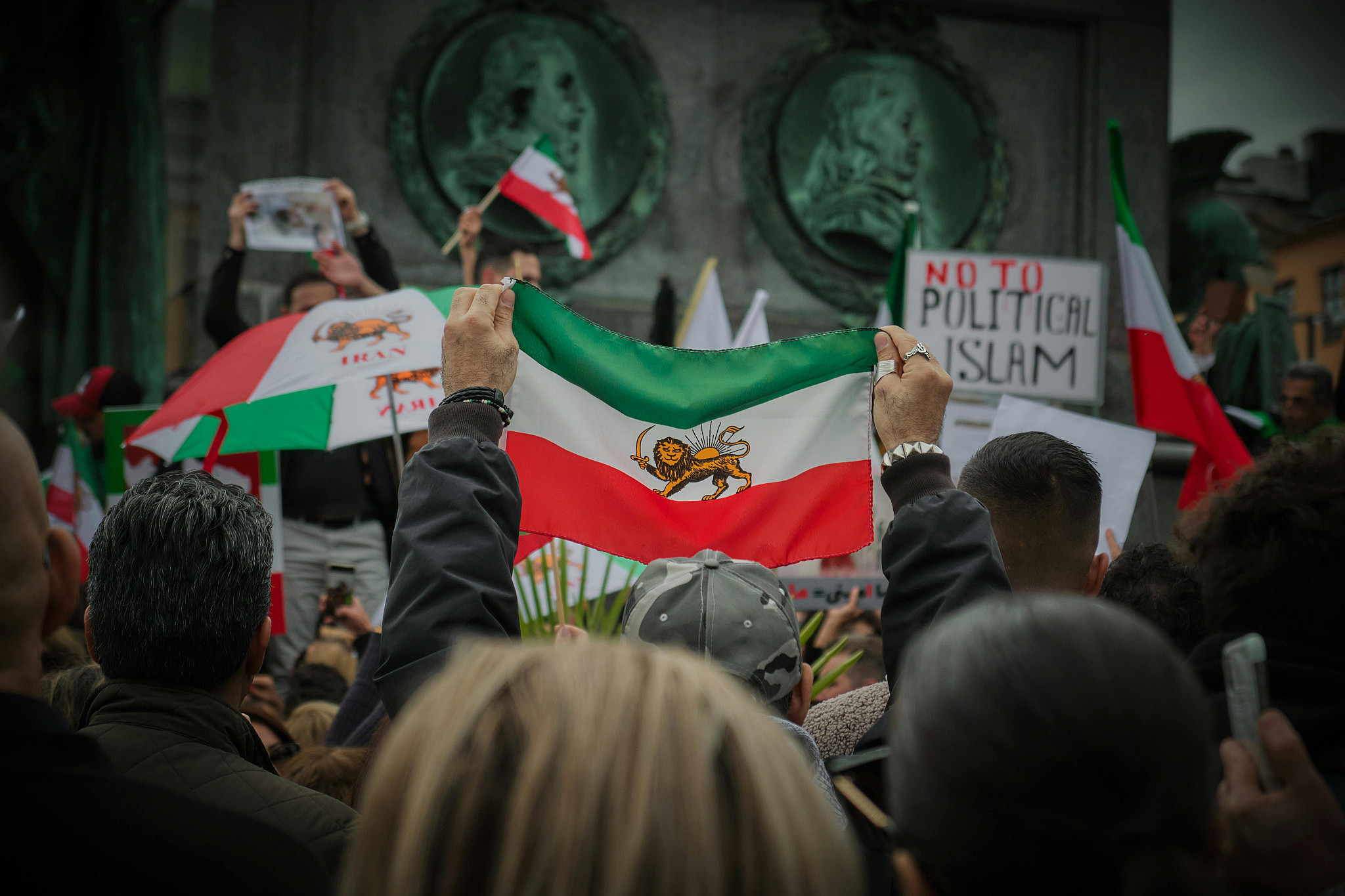
What is unfolding in Iran is not only a protest about the economy. The currency collapse is the spark; the anger is about legitimacy. It is a revolt revealed by the economy. The collapse of the rial is not the cause of public fury; it is the proof of a system that has exhausted every remaining claim to legitimacy.
In the Islamic Republic, economics is ideology by other means. Scarcity is not merely an accident. Inflation is not just mismanagement, and poverty is not just collateral damage. In a patronage state, deprivation becomes a tool: it disciplines society and insulates the loyal.
For more than four decades, the regime in Tehran has substituted coercion for consent and ideology for accountability. It has built a state in which loyalty is rewarded, dissent is punished, and survival itself becomes conditional. The result is an economy designed not to prosper, but to control, dominated by regime-linked foundations, the Revolutionary Guards, and a clerical elite insulated from the consequences imposed on everyone else.
When such a system begins to collapse financially, it does not produce a budget crisis. It produces a truth crisis.
That is why protesters are no longer chanting for reform. They are chanting against the theocracy itself. That is why demonstrations that begin in bazaars and universities spread rapidly to provincial towns and rural areas. And that is why the regime’s response follows a pattern as old as the Islamic Republic: brief rhetorical conciliation, followed by force.
Much Western reporting still treats statements from Iranian officials, promises of talks, acknowledgments of “mistakes,” and calls for unity as evidence of flexibility. They are nothing of the sort. Iranian presidents do not control the state’s coercive apparatus. They do not command the Revolutionary Guards. They do not restrain the Basij. Their function, especially in moments of crisis, is to absorb pressure while the real levers of power prepare renewed repression.
This theater has played out repeatedly: in 2009, 2017, 2019, and 2022, after the death of Mahsa Amini. Each time, dialogue was invoked, and each time, it ultimately gave way to violence.
What frightens the regime today is not the size of the protests alone, but their meaning. Economic pain can be endured. Sanctions can be bypassed. Airstrikes can be absorbed and answered. What cannot be repaired is a society that no longer believes the system has a moral right to rule.
This matters beyond Iran’s borders, particularly for Israel.
For years, Western debate about Iran has revolved around nuclear enrichment percentages, missile ranges, and regional proxies. These are real threats, and Israel has treated them accordingly. But the protests expose something equally important: a regime that must increasingly rely on force and deprivation to survive is strategically brittle, no matter how loudly it postures abroad.
This is why Israeli policymakers should resist two temptations.
The first is romanticism. Popular uprisings do not automatically lead to freedom. Many fail. Some are crushed brutally. Israel should not assume, or publicly suggest, that regime collapse is imminent or inevitable.
The second temptation is appropriation. Iranian protesters are not acting on behalf of Washington, Jerusalem, or any foreign capital. Loud declarations of “rescue” or intervention may satisfy domestic audiences elsewhere, but they hand the regime exactly what it wants: proof for its claim that dissent is foreign-engineered.
Iran’s rulers fear internal delegitimization far more than external threats. That fear should be understood, not exploited theatrically.
Moral clarity does not require militarized rhetoric. It requires accuracy.
The Islamic Republic is not facing unrest because of a bad exchange rate. It is facing unrest because it has hollowed out the social contract entirely. It has asked its people to sacrifice indefinitely, for revolution, for resistance, for regional ambition, while offering nothing but repression in return.
That bargain is collapsing.
The protests may be suppressed, as others were. Many demonstrators may be jailed or killed. But legitimacy, once lost, does not regenerate. Each uprising leaves behind a residue of disbelief that no amount of propaganda can erase.
A regime that must starve and terrorize its population to endure is already weaker than it appears. The question is not whether Iran can survive this moment. It may. The question is whether the world will finally describe the crisis honestly, not as an economic disturbance, not as a geopolitical sideshow, but as what it is:
A society rejecting a system that has run out of justifications.
Related Topics
Related Posts