What Is Your Name?
──────────────────────────────
Dedicated in loving memory of my Safta, Sara bat Chana, who gave me my name and whose strength and kindness continue to guide me.
With thanks to my Aunt Chana, whose thoughtful insights helped shape this D’var Torah into being.
──────────────────────────────
The beit midrash buzzed with learning — voices rising and falling, pages turning. Our rebbe walked in, scanned the room, and fixed his eyes on one of the top students.
“What is your name?”
“Dovid,” the student replied, straightening.
“And you?” the rebbe asked another. “What is your name?”
“Moshe,” he said, uncertain.
One by one, he asked the question, his voice calm but piercing. Something in the room tightened. This was no test of memory.
Finally, the rebbe paused, looked around the room, and said:
“No. Not one of you has spoken your name. You may know how to say it. But you are not living it — not feeling it, not becoming it.”
He thumped the table once and left. Silence followed, heavy and still.
That moment — a question asked and unanswered — was the beginning. My chavruta, Jimmy, later Yaakov, and I began exploring what a name truly is. As we delved into the meaning of our names, we uncovered something deeper.
Names were not labels.
Names were worlds.
Our sages teach that every Hebrew letter channels spiritual energy; that a name spoken in its fullness draws blessing and shapes personality and mazal. The mystics describe a name as a spiritual map — a coded guide for the soul’s journey.
At some point, we realized something else: whenever someone calls your name, they are calling the deepest part of you — the place where your purpose resides. A name is not only who you are; it whispers who you are meant to become.
Gradually, it became clear to us that a name is nothing less than the soul’s signature.
This truth unfolds powerfully in the life of Yaakov Avinu.
He stands alone in the night. He has spent his life running — from a brother’s fury, from a father-in-law’s deception, and often from the consequences of his own choices. He has dreamt of angels climbing ladders, built a family in exile, and gathered wealth. Now he heads toward a homeland he has not seen in twenty-two years.
Word reaches him: Esav is approaching with four hundred men. Fear overwhelms him.
He divides the camp, sends gifts ahead, prepares for battle — and remains by the riverbank, alone. In the darkness, something seizes him. The Torah leaves the opponent unnamed: a man, an angel, a messenger, or perhaps the embodiment of his own fear. They wrestle through the night, refusing to yield. The struggle is physical, but equally inward — a confrontation with everything he has been until this moment.
As dawn breaks, Yaakov clings with relentless resolve. His adversary demands release. Yaakov refuses until he receives a blessing.
Then comes the question:
What is your name?
מַה־שְּׁמֶךָ?
(Bereshit 32:28)
As our sages teach, the angel’s question is not to learn something new, but to compel a declaration: Yaakov must name who he has been — the one who grasps from behind, who reacts rather than leads.
Only then does he receive a new identity:
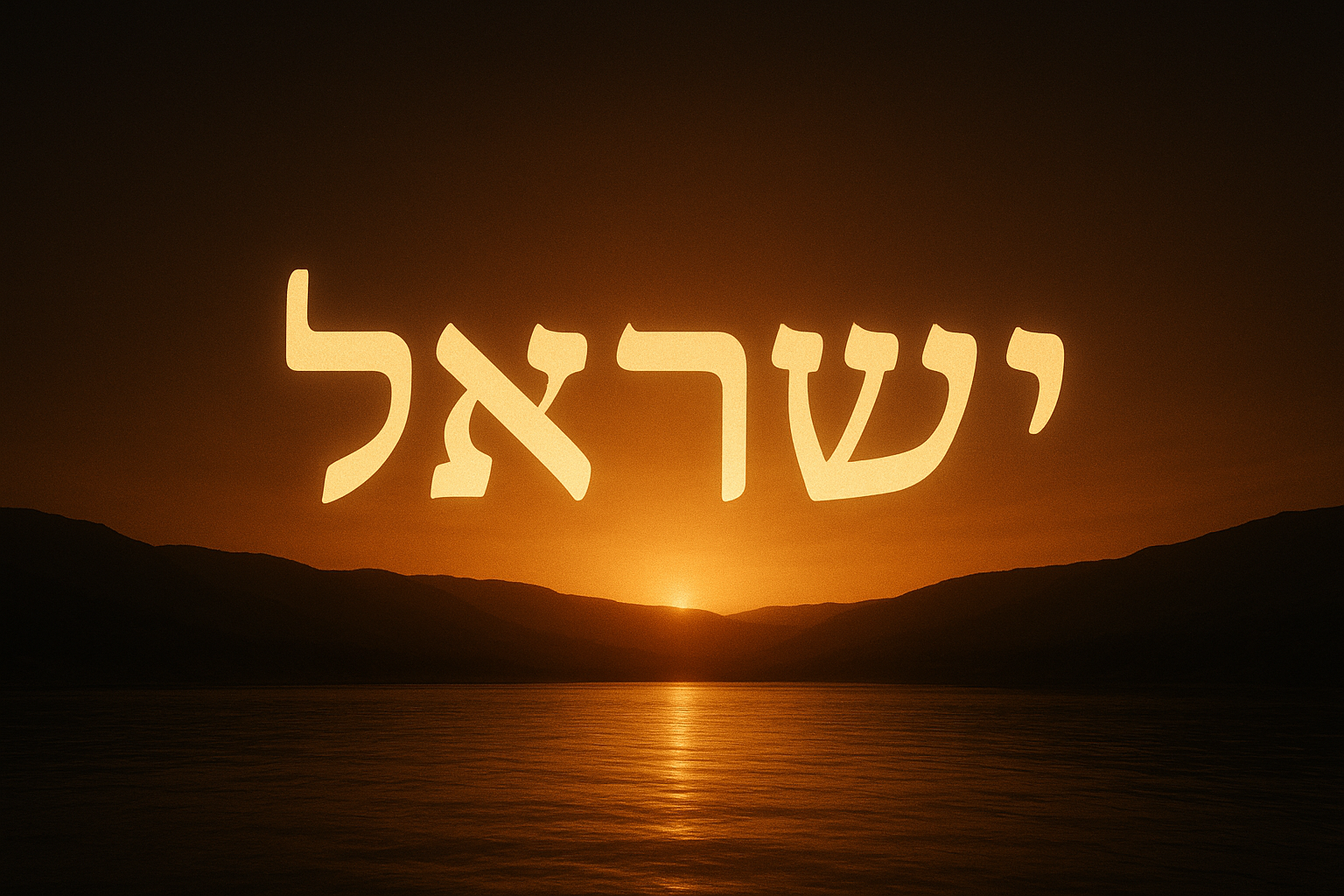
Yisrael
— one who struggles, endures, and prevails.
He rises limping, yet somehow whole.
Long before that riverbank, someone else sensed the unfolding of this destiny. Both parents named the firstborn Esav. But only Yitzchak named the younger child Yaakov. Rivka never calls him Yaakov by name. Not once. She calls him beni (בני) — my son. She sensed that “Yaakov” did not yet express the fullness of who he was. She sensed the deeper potential, the destiny waiting beneath the surface. She knew he would one day wrestle his way into himself.
Ramban teaches that when G-d changes a person’s name, it signals a transformation of destiny. The old identity gives way; the new one emerges. Rivka intuited that truth long before the angel gave it voice.
Identity, however, is not only an individual journey. Nations wrestle with it, too.
Years later, at Hebrew University, an atheist historian — a professor specializing in ancient cultures — startled an entire lecture hall. Reflecting on Jewish continuity, he said the moment that moved him most in all his studies was seeing:
“a Jew eating falafel on the streets of Jaffa.”
“How can it be,” he continued,
“that three thousand years later, the same people live in the same land, speaking the same language?”
“It sends shivers down my spine.”
His astonishment revealed something profound: the survival of the Jewish people is inseparable from the survival of its name.
Israel is the only nation in history named not for geography, empire, or ethnicity — but for a spiritual encounter, a moment of wrestling, a blessing earned through struggle.
Across much of the Western world, mass migration and demographic upheavals blur national identity. Cultures struggle to define themselves, and collective memory thins. Tradition loosens. Continuity fades.
But the Jewish story moves in the opposite direction.
Exile pushes outward; history draws inward. Empires rise and fall; the Jewish people return. And with every return, the name becomes increasingly clear.
It is as if dawn continues rising over us — the same dawn that shone upon Yaakov as he stepped from the river bearing a new name.
The very name Yisrael carries within it those who walked before us. Our sages note that the letters of Yisrael form the initials of all our patriarchs and matriarchs. It is as though G-d wove their strengths, hopes, and prayers into the very name that became ours.
When we speak the name Yisrael, we carry their courage.
When we stumble, we rise with their resilience.
When we doubt, they steady us with their faith.
And when the final ingathering completes its journey home,
the dawn will give way to a light by which the nations will come to know our name:
ישראל
שבת שלום
שמואל