
What Israel’s Wartime Election Can Teach Ukraine
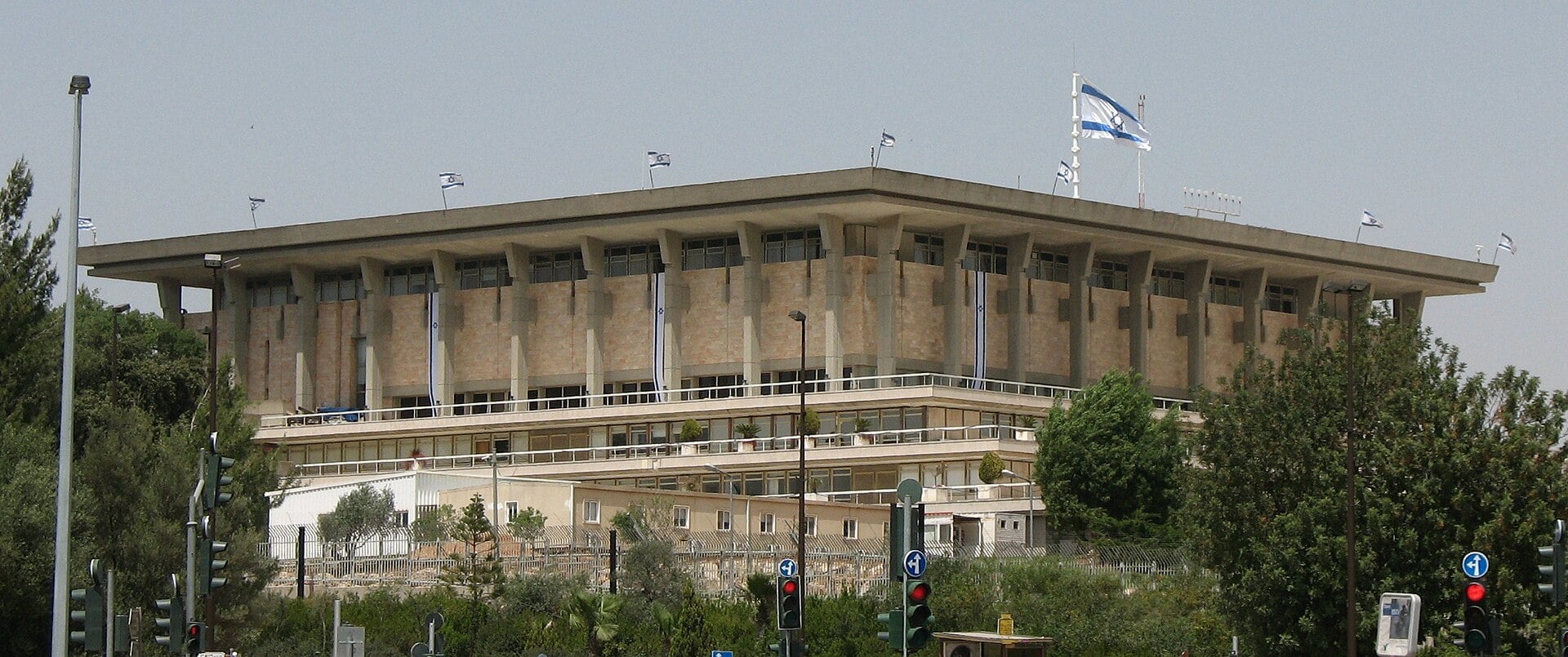
Israel is voting today in its first parliamentary election since the October 7, 2023 attack and the war that followed. More than 7.3 million Israelis are eligible to vote, and turnout in the first hours of voting reached levels not seen in decades. By noon, turnout had reached 31.5 percent — the highest for that point in the day since 1973.
For Ukraine, this election is being watched closely. But the most important lesson is not simply that Israel is holding an election during wartime while Ukraine is not. The deeper question is what allows a democracy to remain resilient when war places extraordinary pressure on its institutions, political system and society.
Israel and Ukraine have chosen different approaches because their constitutional systems, military circumstances and legal frameworks are different. Yet both countries demonstrate an important principle: democratic resilience cannot be measured only by whether citizens are able to vote.
Israel shows that elections can remain possible during war
Israel’s political system is designed to maintain electoral competition even in periods of serious national crisis. The Knesset consists of 120 members, elected through nationwide proportional representation. Voters choose party lists rather than individual candidates, and parties must pass a 3.25 percent electoral threshold to receive seats. A government requires the support of at least 61 members of the Knesset to command a parliamentary majority.
This system creates political fragmentation and makes coalition-building unavoidable. But it also means that political competition remains institutionalized. Citizens can use an election to reward, punish or replace political leaders without waiting for the end of a national emergency.
That matters particularly after October 7.
The 2026 election is the first parliamentary vote since the Hamas attack and the beginning of the subsequent war. It therefore provides Israeli voters with an opportunity to evaluate not only the government’s conduct during the war, but also questions of security, accountability, leadership and the future direction of the country.
Israel’s experience also shows that holding elections during war is not automatic. Israeli law allows elections to be postponed under special circumstances, including war, but doing so requires a law supported by at least 80 members of the Knesset. In fact, national elections have been postponed because of war only once in Israel’s history – during the Yom Kippur War in 1973.
That history is important. It demonstrates that democratic continuity does not mean blindly following an electoral calendar regardless of circumstances. It means having clear rules for both holding elections and, in exceptional cases, postponing them.
Ukraine has made a different choice.
Ukraine is currently under martial law and has not held national elections during the full-scale war. This is not simply a political decision by the government. Ukraine’s legal framework places restrictions on holding national elections under martial law, while the practical conditions of war create enormous additional challenges: millions of Ukrainians live abroad, millions more are internally displaced, parts of the country are occupied or affected by hostilities, and critical infrastructure can be attacked.
The Ukrainian debate therefore has not been about whether elections are important. It has been about whether elections conducted under conditions that prevent millions of citizens from participating safely and equally could genuinely strengthen democracy.
This distinction is essential.
A democracy is not strengthened simply because a ballot box is opened. Elections must be competitive, secure, inclusive and credible. International experience with elections in conflict and post-conflict environments shows that rushing an election can create its own legitimacy problems.
Ukraine’s experience during the war also offers another lesson: democratic resilience can exist outside the electoral process.
Russia’s full-scale invasion did not eliminate Ukraine’s democratic culture. In some respects, it pushed parts of Ukrainian civil society into unprecedented levels of activity.
Ukraine has thousands of civil society, charitable and volunteer organizations. According to the Institute of Civil Society, by January 2023 there were more than 99,000 registered public organizations and more than 26,000 charitable organizations. Since the beginning of the full-scale invasion, many of them have redirected their work toward supporting the military, displaced people, veterans and communities affected by the war.
This is more than humanitarian activism. It is a form of democratic resilience.
Volunteers, local governments, independent media, charities, civic initiatives and professional associations have helped maintain social connections and accountability while the state has operated under extraordinary pressure.
The war has therefore demonstrated that democracy does not disappear when elections are temporarily suspended. It becomes dependent on other institutions and social practices: public debate, civic participation, local decision-making, independent journalism, volunteerism and the ability of citizens to organize themselves.
Perhaps the most important evidence is what Ukrainians themselves say.
A November 2025 survey by the Razumkov Centre found that 87 percent of respondents considered a democratic political system good for Ukraine. At the same time, 55.5 percent said democracy was the most desirable form of government for the country. The same research found that although support for military rule had increased during the war, 60 percent still considered such a system a bad form of government. Importantly, many respondents who supported a stronger role for the military also continued to support democracy, suggesting that wartime demands for strong leadership do not necessarily represent a rejection of democratic principles.
Research by the Kyiv International Institute of Sociology offers another important insight. In January 2026, Ukrainians were asked whether there was too much or too little democracy in the country given the war and martial law. Thirty-six percent said there was about as much democracy as there should be under the circumstances, 16 percent said there was too much, and 35 percent said there was too little. Among those who felt democracy was insufficient, the most common concerns were restrictions on criticism of the authorities and freedom of speech, problems related to mobilization, weak protection of citizens’ interests, abuse of power and corruption. Only 1 percent specifically cited the absence of elections.
This finding deserves attention beyond Ukraine.
It suggests that citizens do not define democracy only as the periodic opportunity to vote. They also judge it through everyday accountability: Can citizens criticize those in power? Are institutions constrained by law? Are people treated fairly? Can civil society operate? Can local communities influence decisions?
This is where the Israeli and Ukrainian experiences meet.
Israel demonstrates the importance of institutional continuity. Even during a prolonged national crisis, the political system has retained a mechanism through which citizens can directly reshape parliamentary power.
Ukraine demonstrates something different: democratic resilience can be sustained through civic institutions even when normal electoral procedures cannot operate.
Neither model is perfect.
Holding elections during war creates risks of unequal campaigning, security threats, voter displacement and the political dominance of military issues. Israel’s experience in 1973 demonstrated that war can fundamentally change the electoral environment even when voting itself takes place.
But postponing elections also creates risks. Emergency powers can become normalized, political competition can weaken, and citizens can gradually lose mechanisms for holding leaders accountable.
The real challenge for a democracy under war is therefore not simply choosing between “elections” and “no elections.” It is building safeguards that prevent temporary wartime measures from becoming permanent political arrangements.
For Israel, that means protecting institutional checks and balances, maintaining meaningful political competition and ensuring that security concerns do not eliminate democratic accountability.
For Ukraine, it means preserving the conditions necessary for credible elections while strengthening the institutions that make democracy meaningful in the meantime.
The two countries can learn from each other precisely because their circumstances are different.
Israel can look to Ukraine’s extraordinary experience of civic mobilization, local resilience and citizen-led support for the state during an existential war.
Ukraine can look to Israel’s long experience of maintaining political competition and electoral institutions despite repeated security crises.
The lesson is not that one country is “more democratic” than the other.
It is that democracy during war has two dimensions: institutional resilience and civic resilience.
Elections matter. But so do independent institutions, public accountability, civil society, free expression and citizens’ willingness to remain politically engaged.
A democracy is resilient when war does not permanently change the rules of political life.
And perhaps that is the most important lesson Israel and Ukraine can offer each other – and other democracies facing prolonged crises around the world.