
What outweighs the need to destroy Hamas?
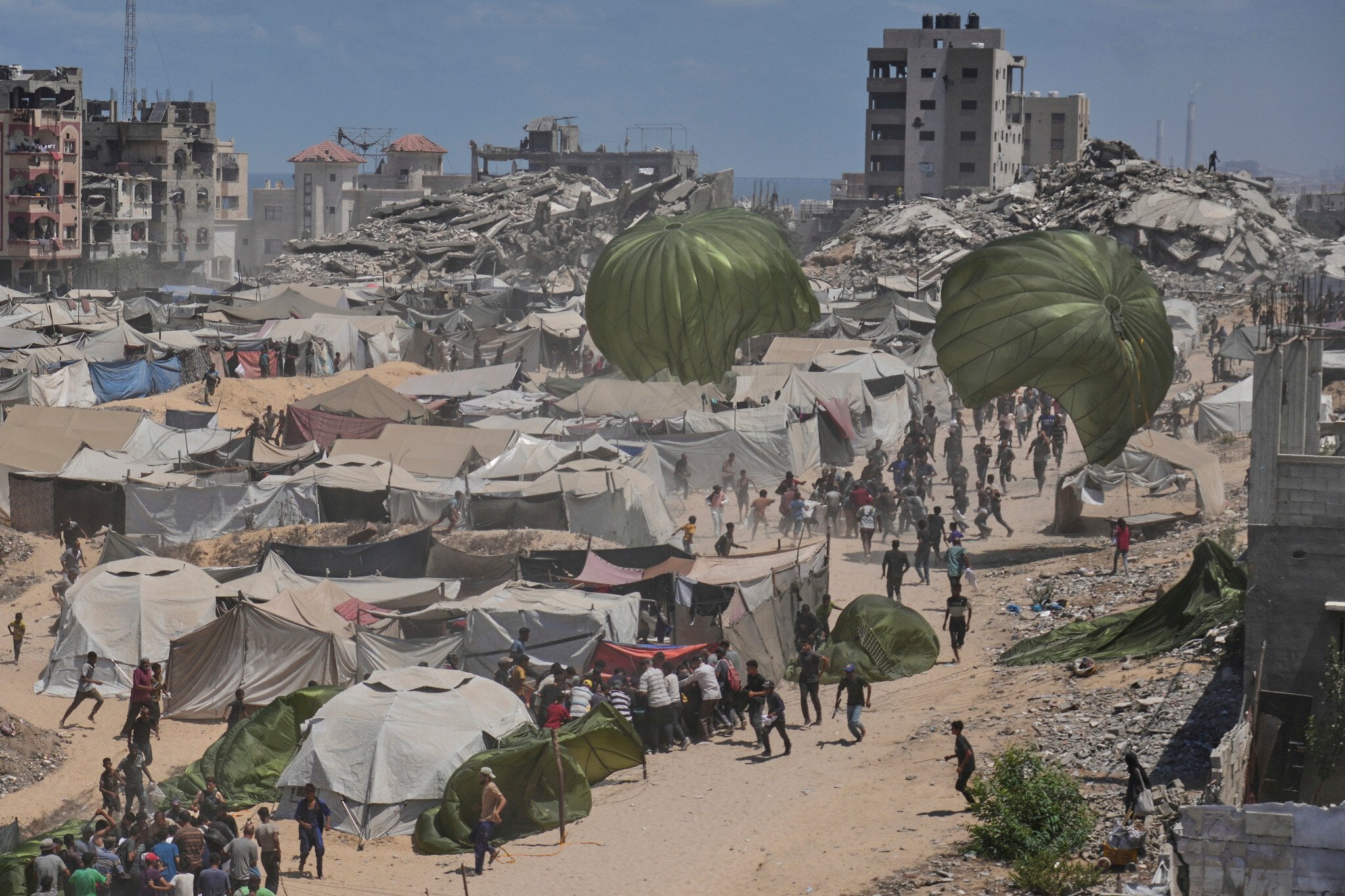
Hamas is an evil organization. Its attack against Israel on October 7, 2023, was exceptional in its cruelty. Moreover, Hamas has consistently shown that it does not care about how its acts of terror affect the well-being, or even survival, of the people of Gaza. Hamas’s abdication of responsibility for the resident Gazans – and worse, the way it implicitly harms so many Gazans, using them as human shields and the like – makes it easy to blame the terror organization for all of the destruction wrought in its wake. But does Hamas’s ultimate responsibility excuse Israel from any and all responsibility for how it conducts the war? That is the moral question that cannot be ignored.
Some people maintain that those who voted Hamas into power, with a plurality, in the one Gaza election 18 years ago, are tantamount to the members of Hamas themselves. If that is the case, then that population in Gaza is a legitimate target for the IDF. A more complicated view allows that not all Gazans are Israel’s enemy, but because Hamas intersperses itself within the general population, any building sheltering its members is a justified target, even if non-Hamas members suffer the consequences of their proximity.
That same ultimate blame of Hamas implies that Israel has no moral obligation to help those whom Hamas hurts. For example, the fact that the terror organization steals humanitarian aid removes any responsibility from Israel to allow the aid trucks into the Strip. But is that really the case?
More extremely, if all Gazans are evaluated on the same plane as Hamas members, and the Palestinian Authority and the Palestinians in the West Bank are similarly equivalent to Hamas, then any Jewish action taken against those populations is justified. By definition, then, there is no possibility of Jewish terrorism in these locales. But that really is not the case, for Israel has military control of Judea and Samaria, and thereby the moral charge for attacks by Jews against Palestinian civilians.
It is one thing to postulate that every war has its so-called collateral damage, and quite another to imply that there is no limit to hurting non-combatants. That is, the circumstances of war may force an army to endanger civilians, especially when they are being used as human shields, but the distinction between soldiers and civilians still matters. That distinction matters even more than it once did at this point in the war, nearly two years in, after the elimination of Hamas’s political and military leadership.
Hamas is still a terrorist organization. It has not been eliminated, and its raison d’etre, including destroying the State of Israel and its people, beats fiercely in the hearts of its members. But its ability to threaten Israel, at least for the foreseeable future, is negligible. The need to destroy Hamas fully is also not the same as it once was. And we must ask: what about that need to destroy Hamas currently, immediately, justifies destroying the ability of Gaza’s civilians to function minimally, without suffering from extreme hunger, for example? How do we determine when the actions Israel takes to destroy Hamas justify the harm to Gaza residents, and when do their needs outweigh that battle against terror?
Alternatively, consider Israel’s responsibility to the people of Gaza not in comparison to the need to rid the world of Hamas, but in relation to the way the Jewish state has destroyed the housing, food, medical supplies, and more that would otherwise have been available to the residents of Gaza. By virtue of the IDF’s actions against Hamas, it would seem to bear responsibility for the humanitarian aid to those who are not Hamas members – if only to sustain some measure of their survival.
The trauma resulting from Hamas’s horrific massacre has led many Jews to call out for vengeance, and perhaps, initially, that was understandable, at the very least. The war against Hamas began as just, righteous, and necessary. But after almost two years, Israel’s response to Hamas, and indeed its actions in Gaza, warrant evaluation. The Jewish state must ensure that it adheres to its own moral standards.
—
In this analysis, I have not written about how Israel’s perceived indifference, at best, to the suffering by Palestinians has made an impression on Israelis and Diaspora Jewry alike. I must note, however, that Jewish law takes into consideration how one’s actions are perceived by others.