

What should we teach our children when Israel is challenged?
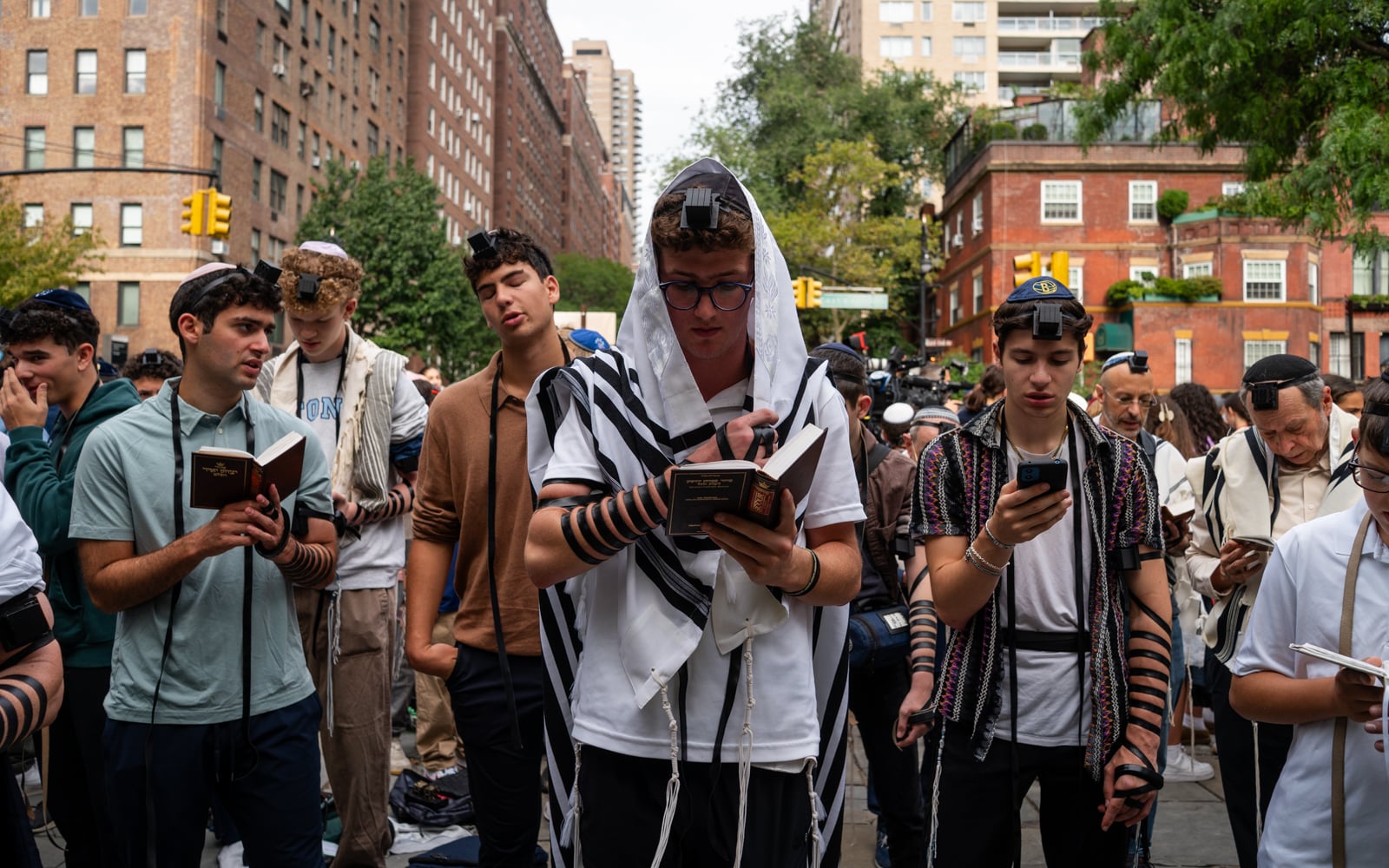
Rabbi Binyamin Krauss, principal of SAR Academy, recently explained in a TOI piece why students from SAR, Ramaz and other Jewish schools gathered outside Gracie Mansion for prayer on the Friday before Yom Kippur.
I want to respond to Rabbi Krauss because I am deeply grateful for the education my daughters received at SAR. I was also fortunate to volunteer my time and expertise as an architect to help fulfill Rabbi Krauss’s promise that all students would be back in the classroom in September 2020 despite the COVID pandemic. My response therefore comes from a place of care and a sense of responsibility.
Rabbi Krauss described the gathering as a response to rising antisemitism and to the fear many Jewish students are experiencing. He also acknowledged that the location was intentional: many Jewish New Yorkers, he wrote, have interpreted Mayor Zohran Mamdani’s criticism of Israel as threatening.
Antisemitism is a serious cause of fear for our children, and we must fight it. But this rally was not only about antisemitism; it was also a response to a mayor whose views about Israel, Netanyahu and the Gaza war many in our community find deeply troubling. But is criticism of Israel, even profoundly unsettling criticism, itself a threat to Jewish safety? Can we pose hard questions about the actions of the State of Israel without being seen as antisemitic?
I do not want to discredit the real rise in antisemitism we are witnessing. There is evidence to suggest that antisemitic incidents rise during periods of intense Israeli-Palestinian violence. Other causes for the rise in antisemitism include white nationalism, promotion of the Great Replacement Theory, and the demonization of Jews on the far left.
Time for pride or teshuva?
The gathering took place during the Aseret Yemei Teshuva, the Ten Days of Repentance, just before Yom Kippur. These are days devoted to examining our own sins and mistakes. Teshuva asks for introspection, humility and a willingness to question ourselves. It asks us to consider not only where others have wronged us, but where we may have failed others.
Jewish pride, a theme celebrated at the rally, has its place, as do public prayer and protest. But during these particular days, I wish our educational institutions had also asked our students some harder questions: What if some of the mayor’s ideas that make us uncomfortable raise questions we need to confront? How do we respond to these challenges?
Rabbi Krauss writes that SAR seeks to cultivate “intellectual curiosity” and “critical thinking.” Those commitments are particularly important when confronting the Israeli-Palestinian conflict as well as its impact on American and other Diaspora Jews.
I think we should examine one of Mayor Mamdani’s statements that caused considerable anger in the Jewish community, not because Mamdani has the right answers, but because we must have our own. We need to grapple with such statements because our students deserve more than the message that difficult questions about Israel threaten the Jewish community.
What does it mean for Israel to be a Jewish state?
During his mayoral campaign, Mamdani repeatedly affirmed Israel’s right to exist but declined to affirm its right to exist “as a Jewish state.” At a UJA-Federation town hall, he said Israel should exist “with equal rights for all,” and subsequently repeated that position.
For many Jews, including many in our Orthodox community, this is a deeply unsettling statement. Jewish sovereignty after centuries of persecution and the Shoah is not an abstract political idea. Israel represents refuge, peoplehood, history and home. It is the only Jewish state; some see it as a step on the path toward a divine redemptive process.
But Mamdani’s statement also raises a question that cannot simply be dismissed as hostile to Israel or to Jews. Can Jewish sovereignty coexist with Palestinian equality and self-determination?
Approximately seven million Jews and seven million Palestinians live between the Jordan River and the Mediterranean Sea. Two million Palestinians are voting citizens of the State of Israel, while three million Palestinians live in the West Bank under Israeli occupation. There are two million Palestinians in Gaza who are living in devastating conditions after the war Israel waged in response to Hamas’s horrific attack on October 7.
Jews have a profound historical, religious and national connection to this land. Palestinians also have a deep historical and national connection to this land, which they have inhabited as their homeland for centuries.
How do we reconcile the desire for a Jewish state with the existence of a distinct Palestinian people in the same land?
What political future do we teach our children to imagine?
One possibility is a single democratic or binational state in which Jews and Palestinians share citizenship and equal political rights. Versions of this idea were debated within Zionism long before Israel’s establishment. Figures associated with the Brit Shalom movement, including Martin Buber, Henrietta Szold and Gershom Scholem, wrestled with how Jewish national aspirations might coexist with Palestinian Arab national rights.
Many Jews reject this vision, believing that Jewish self-determination requires a Jewish-majority sovereign state and fearing that a binational state would be impractical or lead to further violence. But ruling out the idea of one state for Jews and Palestinians calls on us to articulate another future that provides Palestinians with citizenship and rights.
The most familiar alternative is two states: a Jewish-majority Israeli state alongside an independent Palestinian state, recognizing the national aspirations of both peoples. It raises difficult questions about the future of Jewish settlements in the West Bank, as well as borders, Jerusalem, refugees and security. A third possibility is confederation. The Israeli-Palestinian movement, A Land for All, proposes two sovereign states with freedom of movement and residence and shared institutions for cross-border issues. This model attempts to recognize both peoples’ connection to the entire land while preserving their distinct national identities.
These three visions differ profoundly and present possibilities, questions and risks. None of them should be seen as antisemitic or illegitimate.
Unfortunately, we also hear proposals that deny meaningful political equality to either Jews or Palestinians, and seek the removal of one group from the land. These proposals should be condemned whether they come from pro-Palestinian activists or racist Jewish Knesset members. Jewish educators must teach that Judaism places limits on Jewish power.
These are questions that our students should be allowed to discuss.
If we tell them that Israel must remain Jewish, we must be prepared to explain how Palestinian equality and self-determination fit within that vision.
These are not just political questions; they are also the most pressing Jewish ethical questions we face. Rabbi David Hartman said in 1979, “The most serious religious question that the Jews are facing today is how to govern a minority.” As far back as 1958, Rabbi Joseph B. Soloveitchik addressed the issue when he was asked about Jewish sovereignty: “Will we [in Israel] act like masters, or will we understand that Judaism doesn’t know the concept of master and slave, victor and vanquished, powerful and weak?”
These difficult questions are not anti-Jewish or anti-Zionist questions; they are pressing Jewish and ethical questions at the heart of a Zionist and Jewish education.
The educational opportunity we are missing
Rabbi Krauss compares last week’s gathering to the rallies for Soviet Jewry that many of us remember from our childhoods, but the analogy is misleading. The moral question confronting Soviet Jewry was straightforward: Jews were denied the right to emigrate and the freedom to practice Judaism, and American Jews demanded those rights.
We all agree that antisemitism should be condemned. But the question of Israel-Palestine confronts us, and our children, with something much more difficult. It asks us to hold Jewish history, Jewish suffering and Jewish self-determination alongside Palestinian history, Palestinian suffering and Palestinian self-determination.
There are no simple slogans that will resolve this tension. And perhaps that is precisely what our schools need to be able to teach.
Imagine if, during the Aseret Yemei Teshuva, our students had been asked to study Mamdani’s statements alongside serious Zionist responses to these questions. Imagine if they had been asked to debate the one-state, two-state and confederation proposals. Or perhaps they could have examined the boundaries of acceptable speech and applied these tools to statements about Jews and Muslims. Imagine if they had been asked what Jewish sovereignty demands and what obligations Jewish power creates.
Grappling with these questions does not require agreeing with Mayor Mamdani, but it demands that we understand them and offer alternative, moral and religious answers to the Israeli-Palestinian question.
The lesson I hope our schools teach is not simply that Jews must stand proudly when challenged. I hope we also teach that Jewish strength includes a commitment to self-examination and to teshuva when we need to change course.