What Takes Root Beyond Destruction
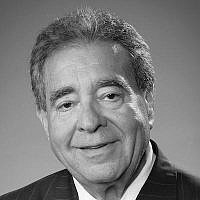
Lucien Lazare died in Jerusalem on September 22, aged 101. His passing, shortly before the third anniversary of October 7, brings a particular generation into view: people for whom Jewish existence had meant the immediate responsibility of helping someone survive, finding shelter, organizing a departure, and subsequently rebuilding a life. A member of the Éclaireurs israélites de France, a fighter in the Jewish Resistance, an educator and historian, Lazare carried these responsibilities from France to Israel. At Yad Vashem, his work concerning the Righteous Among the Nations helped preserve the memory of people who had acted when obedience would have meant abandoning others.
There was something demanding in that attention to particular lives. The history of rescue requires names, circumstances, decisions. Good intentions alone cannot explain how someone escaped arrest or found a door that remained open. Lazare’s work invites a similar precision when discussing Jewish–Christian relations. Who encountered whom? What was understood? What remained beyond the language of goodwill?
His book on Abbé Alexandre Glasberg, published in 1990, offers one way into these questions. Alongside Glasberg stands another priest of Jewish origin, Cardinal (Aron) Jean-Marie Lustiger, whose birth centenary fell this September. They belonged to different generations and carried different experiences into the Catholic Church. Their lives cannot be made interchangeable by describing both as Jewish converts. Nor does that description adequately explain their respective relationships with Zion and Jerusalem.
Paris remains quietly present in this geography. Long before their paths, Eliezer Ben-Yehuda recalled speaking Hebrew with a friend over coffee on boulevard Montmartre. A language associated with study and prayer could become the ordinary means of conversation in a European city, before the speaker reached Jerusalem. The episode unsettles any neat division between an inventive diaspora and a homeland receiving its inventions: renewal travelled through encounters.
Another Parisian passage belonged to the future Lubavitcher Rebbe, Menachem Mendel Schneerson. The movement he subsequently led reached across Ashkenazi and Sephardi communities, including in France. Its prayer tradition drew on the teachings of the Arizal (Rav Itzchak Luria of Tsfat) , while the Rebbe also defended the preservation of Oriental and Sephardi pronunciations. Unity could accommodate differences of sound and inherited custom. These distinctions mattered because people entered a common Jewish world through particular family histories.
“Jewishness” gives room to consider this breadth: religious observance, language, family memory, secular commitments, humour, and the recognition that sometimes precedes explanation. Its continuities can survive profound changes; they can also be interrupted. No single biography encompasses them. Jerusalem enters these lives through prayer, migration, political responsibility, imagination, and daily habitation – connections that overlap without becoming identical.
Glasberg, born in Zhytomyr in 1902, brought the experience of Eastern European displacement into his French priesthood. During the occupation, he participated in rescue and Resistance networks. His subsequent work with refugees extended the practical concern that had shaped those wartime commitments. For him, the person needing help could not be reduced to an administrative category, even when changing that category on a document might save a life.
His involvement in Jewish migration to Palestine, including assistance connected with the Exodus, made his attachment concrete.
His substantial role in helping Iraqi Jews reach Israel also deserves remembrance. He travelled to Iran and helped organize routes through which Jews could leave Iraq and continue towards Israel. His concern extended beyond the European catastrophe to Jewish communities facing insecurity in the Middle East. The gathering of dispersed Jews involved different languages, histories, and immediate dangers.
Israel concerned people seeking somewhere to live after persecution and destruction. His hopes also included social cooperation and a different future for relations between Jews and Arabs. Later disappointment and criticism belonged to that involvement. They should be examined in their circumstances, without retrospectively turning him into a prophet of what followed over the decades.
The coherence visible in Glasberg was a continuity between familiarity and action. His Jewish background, his priesthood, and his concern for displaced people could meet in practical undertakings without requiring a complete public explanation of his interior life. It suggests that belonging could remain recognizable in the way someone approached another person.
Lustiger’s trajectory posed the question differently. Born in Paris to Jewish parents from Poland, he received an essentially French education and became one of the most influential figures of French Catholicism. His parents’ attachment to the socialist ideals of the Bund complicates the familiar portrait of an exclusively conservative prelate. Yet political inheritance does not mechanically explain religious conviction or a manner of exercising authority.
His insistence that baptism had not erased his Jewish belonging disturbed established expectations. Within the Church, it challenged the assumption that a convert’s origins should disappear into a completed Christian identity. His public presence and work against antisemitism mattered. He helped make the continuing existence of the Jewish people a question Catholics could not comfortably consign to the biblical past.
Nevertheless, an affirmation of belonging does not confer knowledge of Judaism. An intense theological conviction cannot substitute for familiarity with Jewish learning, observance, languages, or ordinary communal life. Nor can the murder of a parent at Auschwitz supply that knowledge. Such a loss deserves unconditional remembrance; it cannot settle an argument about the meaning of Jewish existence. The distinction is painful but necessary precisely because the history carries such weight.
I knew both Glasberg and Lustiger. Glasberg spoke Yiddish openly; with him, a shared cultural familiarity could enter conversation without explanation. During the years I knew Lustiger before his appointment as bishop, he did not speak openly of his Jewish origins. His later public affirmation therefore marked a considerable change. Years of collaboration with him, including work on prayer and the Jewish sources of Christian readings, also made apparent to me the distance between the symbolic significance of his position and his familiarity with lived Judaism. This does not cancel his contribution.
His understanding of Christianity as the fulfilment of his Jewish belonging remained a Christian interpretation. Jews were not obliged to recognize themselves within it. Here lies an enduring difficulty: Christians may affirm Israel’s continuing election while expecting Jewish existence eventually to confirm a Christian account of its purpose. Dialogue becomes more demanding when Jews retain the authority to describe their own lives, including their disagreement with that expectation.
This difficulty was already present in the confidential prayer group Lustiger initiated in Paris in October 1977. He asked me to lead its prayer. Among those gatherings were people of Jewish background whose baptisms, family histories, and experiences of persecution had left them with questions they could scarcely express within ordinary parish life. The initiative acknowledged a pastoral need that had long lacked a place.
The prayers drew on Jewish texts and Eastern Christian traditions, including Syriac and Byzantine sources. Hebrew and Aramaic could awaken recognition, but also estrangement. A familiar sound might return without the feeling and knowledge needed to explain it. Another pronunciation could unsettle someone who associated Hebrew exclusively with contemporary Israel. At such moments, Jewishness raised Unbehagen, unease, as well as relief, curiosity, and sometimes the gentle humor of discovering what one did not know but could relate to some deep-seated roots
The collection that emerged, Le Sacrifice de louange, fruit des lèvres qui célèbrent Dieu, was published by Peeters in 1989 with Lustiger’s agreement, the imprimatur of the Catholic Church, and a preface by the Dominican Bernard Dupuy. A specialist in Eastern rites of the Churches and Judaism, Dupuy described the aspiration to approach the earliest common sources of Christian prayer while acknowledging the undertaking’s partly unrealizable character. His attention to the East Syriac tradition gave substance to the search: languages and forms of prayer preserved relationships that later divisions had obscured.
That observation remains pertinent. Recovering sources does not automatically restore an interrupted transmission. Singing Hebrew cannot by itself recreate a Jewish childhood, and borrowing a prayer does not confer ownership of the community that transmits it. Nevertheless, study and prayer may open a relationship when approached with patience and a willingness to learn.
From an Orthodox perspective in Jerusalem, the Eastern Christian dimension is indispensable. Byzantine and Syriac traditions preserve biblical rhythms, expressions, and memories often unfamiliar to Western Christians. Their proximity to Jewish sources also requires scrutiny of the anti-Jewish language their own histories contain. Antiquity does not exempt a tradition from examining how it addresses its living neighbors.
For Lazare, Jerusalem became a place of education, historical inquiry, and responsibility after his move to Israel in 1968. His work at Yad Vashem brought the remembrance of European rescue into the life of the country where he had settled. Here, remembering and inhabiting belonged to the same biography.
For Glasberg, attachment to Israel involved helping people reach it and considering the society they would build. For Lustiger, Jerusalem entered a theological understanding of Israel shaped by Rome and the Western traditions of the Church. These emphases do not exhaust their lives. They reveal why speaking of a shared attachment leaves so much to explain. Zion can be invoked with conviction while the actual circumstances of those living there remain insufficiently heard.
As October 7 approaches, that distance becomes particularly difficult to evade. The Hamas-led attacks of 2023, the murders and abductions, and the suffering that followed confront Jewish–Christian relations with questions no commemoration can answer in advance. What does solidarity require when Jewish vulnerability becomes immediate? Can theological esteem sustain attention to fear, grief, and the determination to continue living?
Jewish existence must remain intelligible beyond catastrophe. It includes schools, arguments, songs, religious study, unbelief, family celebrations, and the ordinary impatience of daily life. A relationship that encounters Jews chiefly as biblical ancestors or murdered victims leaves little room for their present agency. The people who speak Hebrew in Jerusalem are entitled to more than recognition as an illustration of someone else’s sacred history.
Their political disagreements also belong to that agency. Recognizing Jewish suffering does not require endorsing every decision of an Israeli government. Concern for Palestinian lives must be expressed with equal human seriousness, without making it a preliminary condition for acknowledging murdered or abducted Israelis. Grief cannot become a test in which one population must disappear before another can be seen.
Lazare’s work offers a demanding measure here. The rescuers whose actions he studied did not resolve every religious or political disagreement before recognizing a person in danger. Their decisions were particular, imperfect, and consequential. Remembering them calls for care in present judgments, rather than the easy transfer of wartime roles onto every contemporary conflict.
His passing leaves the task of transmission with others. Between Glasberg and Lustiger, gratitude and criticism can remain in the same account. The recovery of Jewish roots still has to become an encounter with living Jewishness. Before this October 7, 2026, Jerusalem asks whether the languages of remembrance and faith can make room for people whose lives continue beyond our explanations.