
What to do with the Lulav and Etrog?
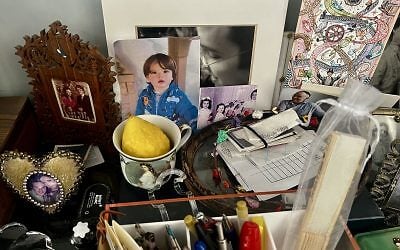
Every year, as we approach the final day of Sukkot, shake the lulav in all directions and inhale the exquisite fragrance of the etrog one last time, I already know where I will place these sacred items.
I refer to them as sacred because I cannot forget a story my father z”l recounted so many times, usually around the time of the Chagim.
During those dark years of World War II, when Polish Jews were already being deported while the Jews of Hungary had not yet faced mass deportation, lulavim and etrogim were scarce and difficult to obtain.
It was during that time that my grandfather z”l traveled from Cluj to Oradea to attend services, accompanied by my father, who was then a young man of about seventeen.
The Rebbe delivered a powerful drasha (speech) while holding the precious lulav and etrog in his hands.
“My dear daughter,” my father would tell me, “the Rebbe spoke of the horrendous events taking place in the East, of the murder of our Jewish brothers and sisters. And all of a sudden, please believe me, the lulav began to shed tears. I witnessed it with my own eyes!”
Each time my father told this story, I listened with the same fascination, imagining the Rebbe standing before his congregation, holding the lulav as tears seemed to flow from its leaves.
My father is now in Shamayim, but his stories remain with me forever.
Perhaps that is why I feel such a strong attachment to these beautiful ritual objects, which are so often casually discarded once the holiday has passed.
I am aware of what treasures they represented during those dark years, when obtaining even the simplest items needed to fulfill a mitzvah was almost impossible. Today, we are fortunate to possess what previous generations could only dream of.
So what do I do?
Every year, I carefully place my husband’s lulav in a corner of a room, while the etrog receives a place of honor on my large desk.
As the months pass, the etrog shrinks, its skin hardens, and its exquisite fragrance slowly fades.
But in my eyes, it never loses its beauty or significance.
It remains a treasure until the following Sukkot, when I replace it with a fresh one.
And perhaps, each time I look at that aging etrog, I am reminded not only of the mitzvah we performed, but also of my father’s voice, his unforgettable stories, and a generation that understood the true value of what we so easily take for granted.