Hadassah Educators Council, Hadassah Writers' Circle
What Would Hadassah Founder Henrietta Szold Have to Say About Book Banning?
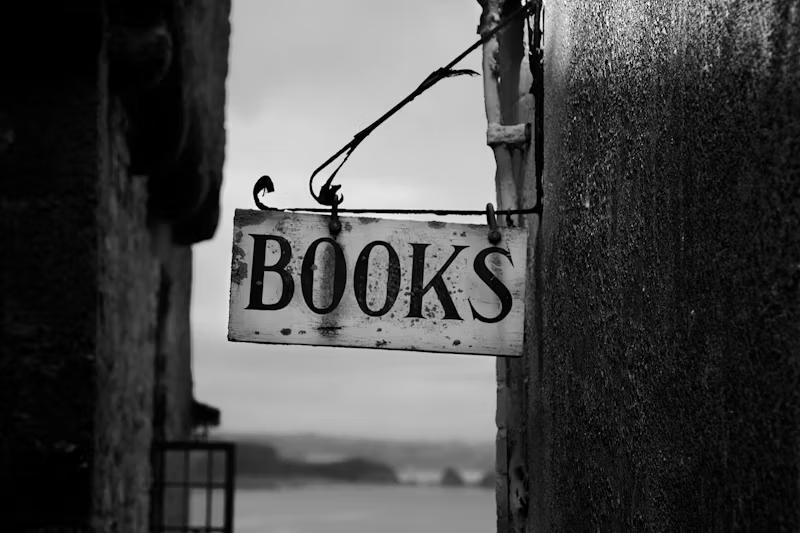
Photo: Jeremy Bishop for Unsplash
This is Part One of a two-part series on book banning.
What would Henrietta Szold, the mother of Hadassah, have to say about books being banned? What would she say to the librarians whose lives have been threatened, have been the target of curse words, and lost their jobs and even their health because of people’s perspectives about written words?
A Queen to the Rescue: The Story of Henrietta Szold, Founder of Hadassah is based on the premise that Queen Esther, heroine of the Purim story, was Henrietta’s inspiration. Hadassah is Esther’s Hebrew name and the name of the global volunteer women’s organization inextricably linked with Henrietta Szold.
Recently, through an interlibrary loan, I borrowed this book by Nancy Churnin, who chronicles key events is Szold’s life. Following the story, there are four pages with more facts about Henrietta’s life, information about Purim and a timeline.
For me, the book connected Hadassah’s founder to the inspiring panelists I heard during a recent Hadassah Educators Council program about book banning. Their actions reflect a line in A Queen to the Rescue: “Whenever Henrietta saw a need, she organized and worked until she made a difference.”
The panel discussion included a call for action, so I did a bit of reading about Hadassah, Szold, Queen Esther and book challenges and bans.
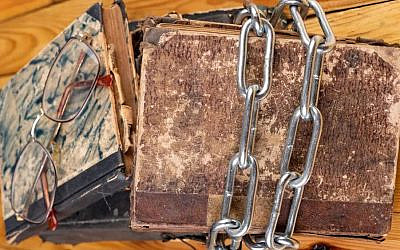
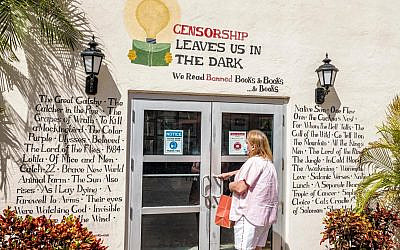
 Image courtesy of Hadassah.
Szold, the oldest child in her family, never married or bore her own biological children. I’ll posit, though, that Szold bore written words, writing in her early teens under the pseudonym Shulamith and, later on, publishing her writings extensively in various publications, as well as editing and translating books for the Jewish Publication Society.
It occurred to me that her writings and books she edited might very well have been banned in some school districts today! After all, those books included naked figures (Adam and Eve) and contributions by Mark Twain (a very controversial author, both in his era and today). In fact, Twain’s Adventures of Huckleberry Finn was the first book to be banned in this country.
Undertaking a Google search about controversial, challenged and banned books is one way to bridge the past to the present. Reading an article that appeared in Forbes Magazine’s, “21 Banned Books That Have Sparked Controversy Over the Years,” and adding that to my experiences as an author, school district administrator, teacher in a yeshiva (Jewish day school) and a parent, I continue to wonder about the expansive list of reasons books are challenged or banned.
According to USA Today, commonly censored books portray themes of race, sexuality, gender identity, substance abuse, suicide, depression and other mental health issues.
It is not a far stretch to envision some of those topics in the books translated and edited by Szold. Would Szold’s voice have been among the suppressed?
In an effort to keep the public informed, the American Library Association (ALA), though it does not ban books, compiles a list of challenged books. (A challenge is a step towards a ban.)
According to the ALA, thousands of challenges and attempts to ban books have been made “to suppress anything that conflicts with or anyone who disagrees with their own beliefs.” My own exploration of Jewish authors revealed that André Aciman, Lois Lowry, Sarah J. Maas, Christopher Noxon, J.D. Salinger and Elie Wiesel have all been banned!
While a school district administrator who oversaw three departments, I was part of a dip into a book challenge. The book was Bodega Dreams by Ernesto Quiñone, which deals with systemic racism among other themes. It had been taken out of the English Department’s canon and a few staff members wanted it reinstated. I read it for myself and, after enjoying it and seeing how it could appeal to teens, I formulated my pitch to the superintendent. What did she do? She read it for herself. The outcome: the book was reinstated. That was a professional win!
Yet, when I transitioned from three decades in the public school system to an administrative role in a yeshiva, I had a different experience with a different outcome. While the children were eating up the stories I incorporated into my classes, my choices were challenged by some of the parents. At that time, I was both a head teacher and an administrator.
Alice in Wonderland by Lewis Carroll, for example, drew me into meetings with the principal and a group of parents. Yet, for the middle schoolers, it led to making chess boards, choosing to hold a lunchtime chess tournament, and writing their versions of Jabberwocky in Hebrew.
Unfortunately, being viewed as too liberal and making such literature-based choices eventually led to my demotion and removal from my post. (I will write about this life-changing incident in Part Two of this column.)
Does quieting the adult result in quieting the curiosity and interests of the youth? I wonder, but I will never know. Do you?
What I do know is that, based on the research I have done for this article, (a) There are multiple banned-book lists; (b) Different groups have different rationales for banning books; (c) There is a lot to be read on the topic; and (d) I cannot fathom how busy my office would be if, today, I was still the district supervisor for English and Language Arts.
As we have done over thousands of years — reading the Torah and then rewinding it back to the beginning to read it again — let us go back to the beginning of this article. Whether writing as Shulamith or as Szold, Esther or Hadassah, what do you believe Henrietta Szold’s position would be about book challenges and book bans? I invite you to share your thoughts with me and I will be pass them along to the Hadassah Educators Council.
Related Topics
Related Posts