
When a cigar is just a cigar
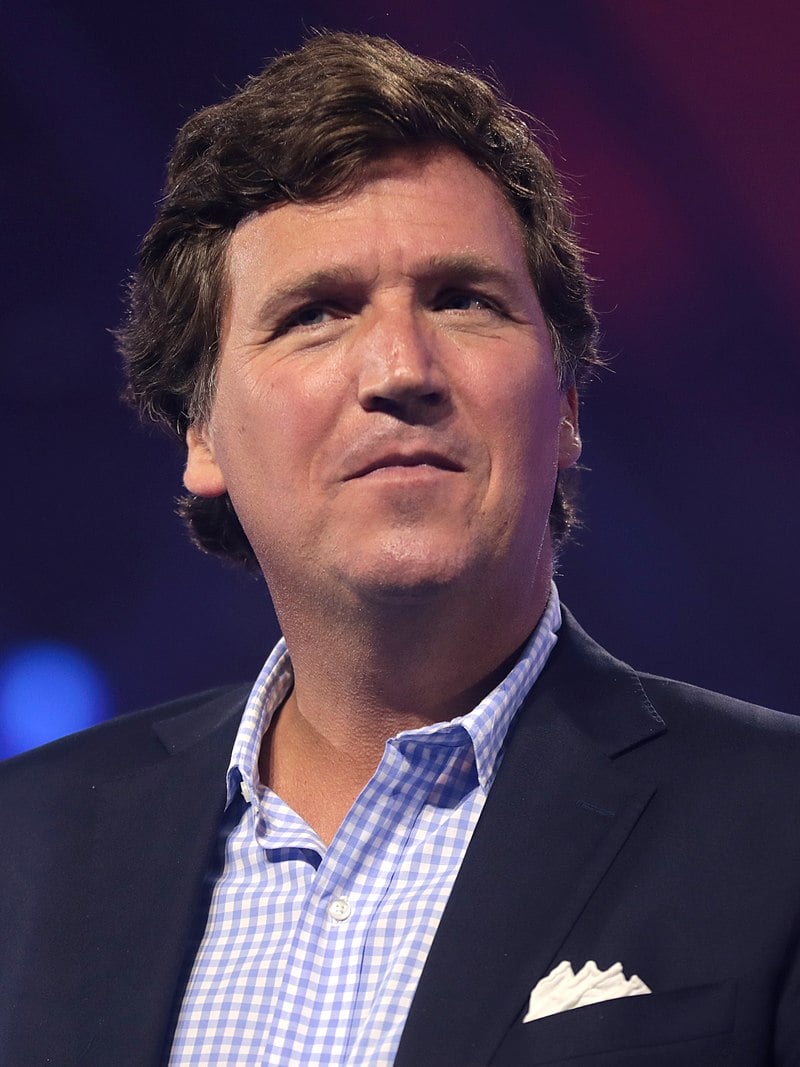
At a recent Turning Point USA event, Tucker Carlson stunned his audience by claiming that Jeffrey Epstein worked for Israeli intelligence. The allegation, unsupported by evidence but loudly applauded, has reignited conspiracy theories that blend geopolitics, antisemitism, and elite scandal—raising troubling questions not just about Epstein’s legacy, but about America’s eagerness to blame outsiders for homegrown rot.
At a recent Turning Point USA (TPUSA) event, TV personality and former Washington insider-turned-conspiracy theorist Tucker Carlson claimed that the late sex trafficker Jeffrey Epstein worked for Israel’s intelligence agency, Mossad. The audience erupted in approval. Carlson’s suggestion, while unsubstantiated and denied by former Israeli Prime Minister Naftali Bennett, has quickly gone viral, dominating headlines and fuelling a new wave of speculation in U.S. media.
At the heart of this theory is more than just espionage; it’s a pointed, often anti-Israel subtext. The underlying insinuation is that Donald Trump, whose name appears in some of the Epstein-related court documents, is being blackmailed by the Israeli government. This theory posits that this alleged leverage explains Trump’s reluctance to expose the full extent of Epstein’s connections and his support for Israel’s stance on Iran. It sounds like the plot of a geopolitical telenovela, but many are taking it seriously.
What’s more, the American public is highly engaged with the Epstein case. A Rasmussen Reports poll conducted from May 6–8, 2025, found that 67% of likely voters believe it’s important to release all secret records tied to Epstein, with 36% calling it “very important.” A Democracy Institute poll from July 11–13 showed that 67% of Trump voters opposed keeping the client list hidden. That sentiment was shared by 72% of working-class voters and 52% of middle-class voters. Another Rasmussen poll from July 2025 revealed that 56% of respondents do not believe the Department of Justice’s claim that there is no Epstein client list. Opinions on Epstein’s death remain split—47% believe he was murdered, while 31% accept the official narrative of suicide.
The intense interest in the Epstein story stems from its explosive combination of elite privilege, sex crimes, and government cover-ups. In the United States, few issues provoke stronger emotions than child abuse, especially when it appears protected by wealth and power. But when the narrative adds an antisemitic twist, it becomes even more combustible.
Jeffrey Epstein was Jewish. He was closely connected to Ghislaine Maxwell, the daughter of Robert Maxwell, an Israeli asset. Former Israeli Prime Minister Ehud Barak was also known to have stayed at Epstein’s properties. These facts are frequently cited, sometimes selectively, to suggest deeper, more sinister ties, despite a lack of direct evidence linking Epstein’s crimes to Mossad or any foreign intelligence operation.
As with many conspiracy theories, the danger lies not only in what is said, but in what is implied. The focus on Israel serves to distract from a more uncomfortable reality: that Epstein was a product of Western elites and their insular, unaccountable networks, not a foreign plot. But as long as questions remain unanswered and transparency is withheld, speculation will continue to flourish, whether grounded in facts or not.
Jeffrey Epstein and the Illusion of Conspiracy
Jeffrey Epstein was not merely a sex trafficker; he was above all an influence trafficker. He operated within a system where the most valuable currency was access: to power, prestige, and protection. Epstein moved fluidly through elite social and scientific circles, hosting gatherings that attracted some of the most prominent names in academia and politics. Among them was physicist Lawrence Krauss, who later acknowledged attending Epstein’s events. These associations were no accident; Epstein curated his guest lists carefully, always seeking to position himself closer to individuals whose status could elevate his own. Could he have worked for Israel and Israeli interests? Most likely, as much as he did for Mexican interests or Botswanan interests, if they paid.
His interests were transactional. Proximity to power, whether through billionaires, royals, or celebrated intellectuals, was Epstein’s strategy for survival and advancement. As noted in legal filings by Epstein’s lawyer Alan Dershowitz, the New York billionaire had a vested interest in controlling the narrative around his associations. He reportedly considered releasing his “client list” as leverage, not as part of any noble reckoning, but to protect himself. Notably, those filings make no reference to intelligence agencies, Israeli or otherwise.
These allegations of associating Epstein with the Mossad function as a kind of psychological sleight of hand. To suggest Epstein was a foreign agent, particularly for Israel, serves to externalize blame, shifting the focus away from the systemic failures that allowed his abuse to flourish in plain sight. As Freud once observed, sometimes a cigar is just a cigar.
In a society where money ceased to be the most important value to become everything, Epstein’s story reveals that money, in fact, rules nearly all. He is not an aberration, but a symptom, a byproduct of a system that rewards wealth and punishes transparency. His rise and protection were made possible not by foreign agents, but by domestic complacency, complicity, and greed.
The existence of a sex trafficking ring among billionaires and royalty is no longer speculative; it is now a matter of public record. The real scandal is not espionage; it is how institutions, from academia to finance to media, bent toward Epstein’s gravity without meaningful resistance. He did not operate in shadows; he operated in the full light of a system designed to shield the powerful.
To fixate on foreign plots is to avoid confronting the rot at home. And that is what Carlson and the anti-Israel conspiracy theorists want to avoid: the uncomfortable truth that Epstein did not exploit a loophole in the American elite’s moral framework. He was the framework, exposed.
Sometimes, as Freud might remind us, a cigar really is just a cigar.