Cali born, Israel based interior designer
When a Community Has to Be Built Again: Designing Homes for Beeri
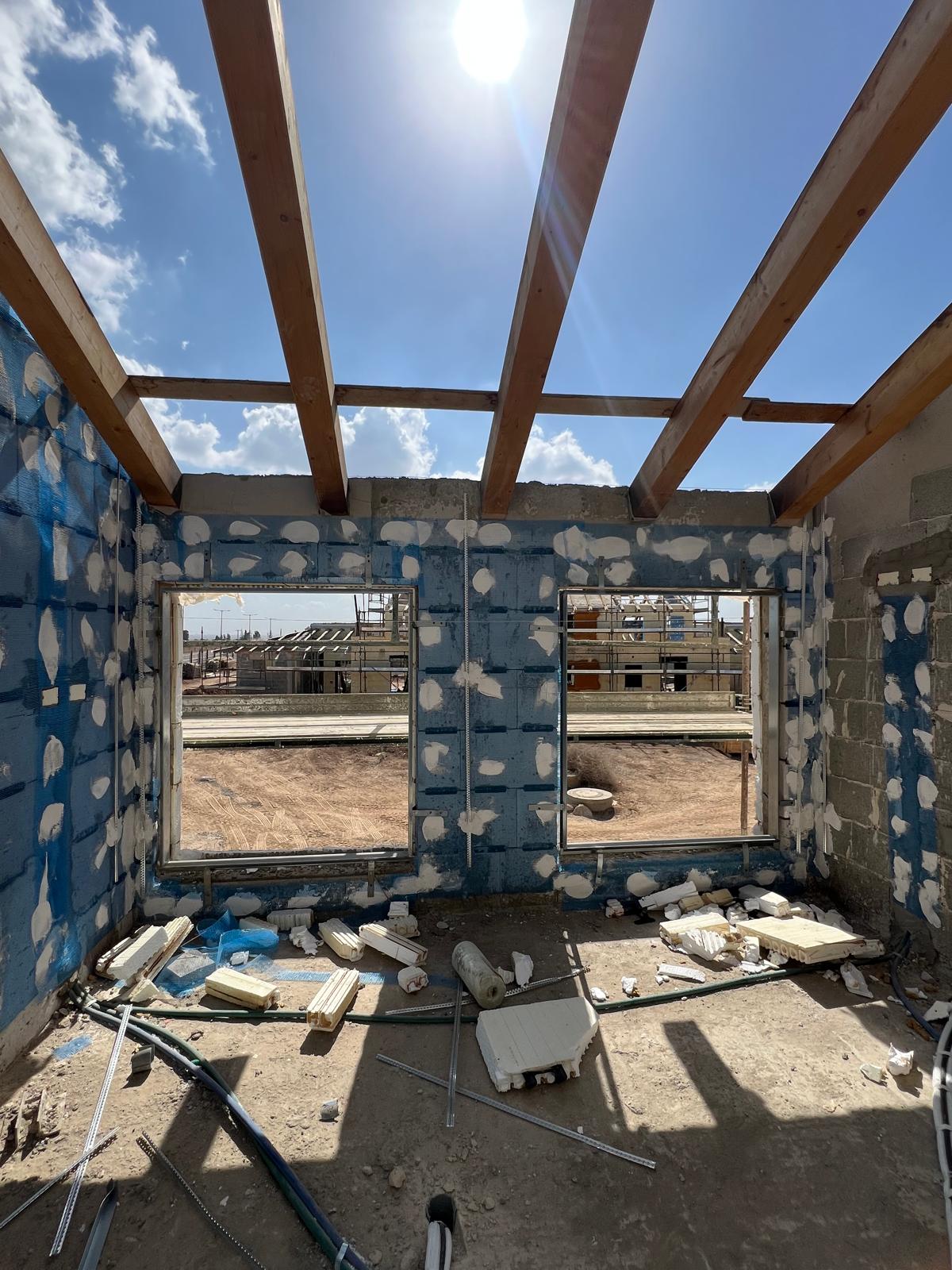
Helping to rebuild the Beeri Community (Photo by Ariella Weiss)
Every once in a while, one project comes along that shifts everything. This is the Beeri project.
In November 2023 just a month after October 7, I got on a plane with a few hundred evacuated residents from the towns on the Gaza border area – the ones that had been hit hardest, lost loved ones, and were displaced from their homes. While their lives and homes were totally shattered, a generous donor chartered a plane to fly them to Budapest for a few days to watch the Israel national soccer team compete.

I was lucky and blessed to staff this mission of incredible people, and there I connected with them, and immediately after, I created a team of interior designers like myself to work on their destroyed homes pro bono.
A Community That Was Planning a Future
Before October 7th, Kibbutz Beeri was already looking ahead. New neighborhoods were being marketed, land was being plotted, families were signing on. Like most kibbutzim in Israel, Beeri had that particular quality of life that’s hard to describe if you didn’t grow up with it — pastoral, quiet, fields that stretch out in every direction, the kind of place where kids ride bikes until dark and everyone feels like cousins. The new neighborhood was supposed to be an expansion of all of that. More families, more life, more future.
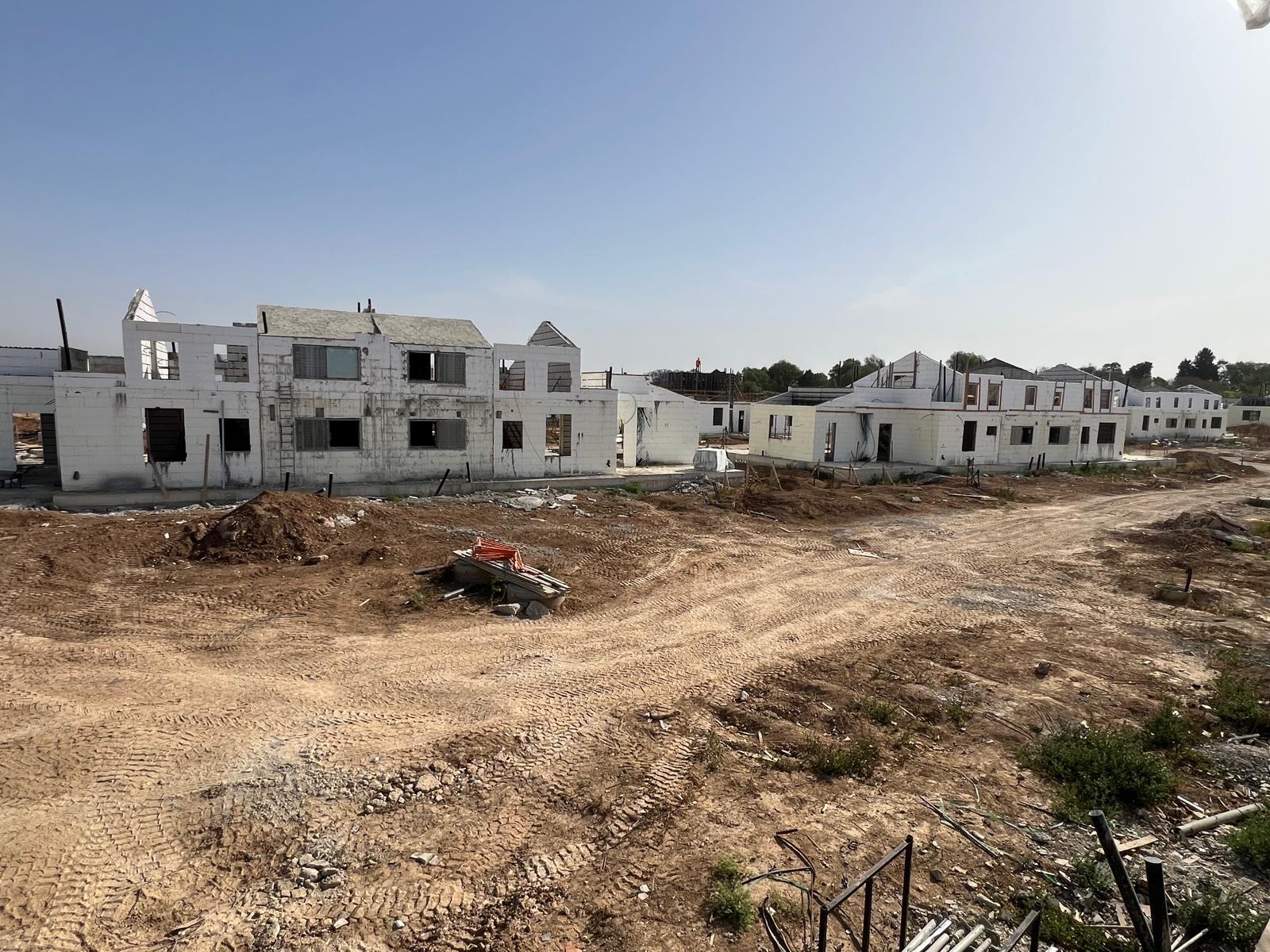
So many families were already living in temporary caravans, waiting for the build to begin.
Then October 7th happened.
You already know what happened at Beeri. It was one of the hardest-hit communities in the massacre. 132 murdered lives, homes terrorized and burned to the ground, a community that had been a living, breathing heartbeat for decades was torn apart in hours. Barely getting out alive, families were evacuated first to the Dead Sea area, then moved again, and again, eventually settling temporarily. Multiple displacements. Multiple times packing up whatever you could carry and starting over somewhere unfamiliar.
And then, in the middle of all of that grief and uncertainty, Beeri made an announcement: the building is moving forward. Ready or not.
A Decision That Felt Impossible
The project moved forward like any other building-on-paper project in Israel: take the standard package, or customize the interior layout and design.
The decision-making process was close to impossible for so many of the families. Choosing between bathroom tile options and refrigerator models felt absurd and disconnected.
Why would it matter what the shower looks like when the world you knew no longer exists? When so many people you loved were brutally murdered or kidnapped and are now gone? The cognitive and emotional distance between “which door handle do you prefer” and “I am surviving what happened to me” is so vast that it is not even fathomable. And most people in the design and construction industry don’t account for that.
I had to account for it.
The Family
The family I worked with was building a private duplex-style home.
Two parents and four kids ranging in age from 4 to 14.
The father’s mother (Ofra Keidar z”l) was brutally murdered on October 7th while out on her morning walk, and her body was taken hostage to Gaza, to be returned only in June 2025. When we started the planning process of the home, her body had still not been brought home to Israel. The family celebrated a beautiful and moving bar mitzvah on Kibbutz Beeri, without the grandmother whose body was still hostage in Gaza, and while they themselves were still displaced from Kibbutz Beeri.
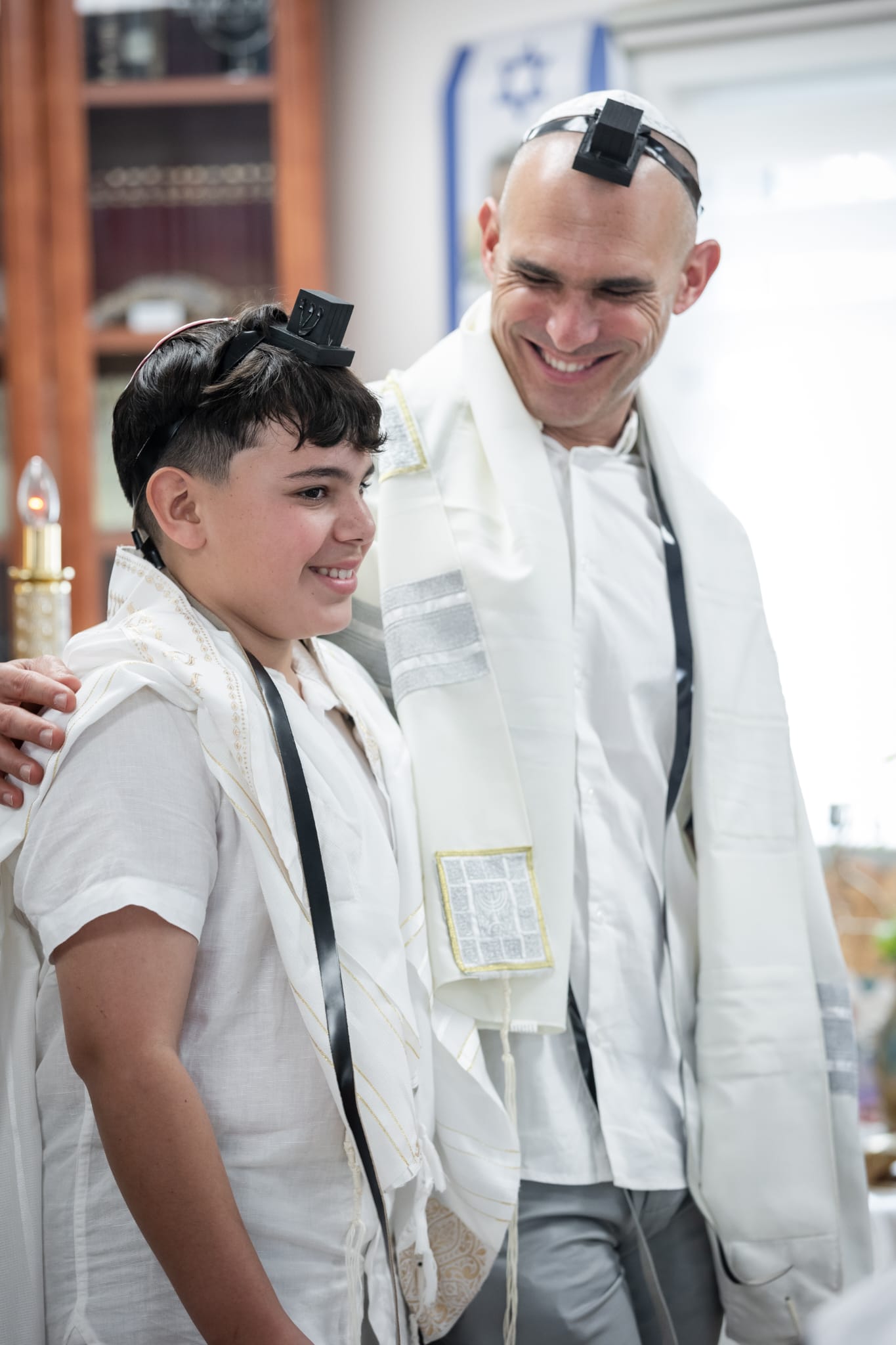
So now, are we really supposed to talk about floor plans?
This family, alongside every other family who was building in the new neighborhood, carried this, while mourning their beloved ones and their shattered lives, was being asked to design their next home. While their community was scattered across the country. While their kids were processing something no child should ever have to process. Every decision point in the construction and interior design process — and there are hundreds of them — required them to engage with a future they weren’t sure they believed in yet.
Rethinking the Brief: Safety Is a Design Element
One of the first things that I do on any project is sit down with my architect and team and reassess the interior layout. We consider the small Israeli shower sizes and the placements of coat closets and decide what changes should be made. There is almost always room to move things around, reimagine the flow, make the space work better for the people living in it. This project was no different in that sense.
But the brief had parameters I’d never worked with before.
In Israel, mamadim — reinforced safe rooms — are standard in new construction, required by law. Typically, the placement of the safe room is a non-conversation. Every home has one safe room with thicker walls reinforced by concrete and steel. On this project, having a mamad accessible on each floor wasn’t a nice-to-have. It was a non-negotiable. Because in Beeri as in other Gaza border communities, you have exactly 15 seconds of warning when a rocket or missile is fired at you. Fifteen seconds to get yourself and your children to safety. So the layout had to account for that. The flow of the home, the placement of bedrooms, the way you move through the space at night — all of it was looked at through the lens of: can this family get to safety in just a few seconds?
That is a design constraint unlike anything you deal with on a renovation project in Jerusalem, Tel Aviv or Ra’anana.
And it’s not just the mamad. The family asked questions that most clients never think to ask. If we’re on the terrace having a BBQ, can someone on the main road see us? What’s the visibility from the street? The property is close to a main road — the same road that was used during the October 7th attack to enter the kibbutz. That road is a trigger. So the orientation of outdoor spaces, where you place a pergola, how you landscape the garden — all of it matters in a way that goes well beyond aesthetics.
The side kitchen door: can it be broken into easily? What kind of lock? What material will the door be made from?
These are the real questions. And answering them while still creating a home that feels warm, liveable, and beautiful is the challenge.
The Design Itself: Modern, Safe, and Still Theirs
My job and passion, on every project I take on (the part I love most and find most meaningful) is translating emotions into physical spaces. That sounds abstract, but it’s incredibly concrete in practice. It means sitting with a family, observing their dynamic, listening carefully to what they’re afraid of and what they hope for, and then making design decisions that address both.
This family needed to feel safe in their home. They also needed to feel like themselves again, in the Beeri way of life that’s deeply connected to the land with its big open skies and fields. The resilient Beeri residents held on to that identity and fought for their lives for it to never disappear. Even after all of the hells they went through. It lives in the people. And a home must reflect the people who live in it.
So despite everything — despite the security considerations, despite the weight of the brief — this home has big windows. It has a garden. It has light and openness and views of green. Shutting all of that out would have been its own kind of loss, and this family had already lost enough.
In Israeli renovation and construction, this kind of coordination between interior design decisions and architectural-structural requirements is where a lot of projects fail, especially when you’re working within a communal build framework like Beeri’s, where there are layers of approvals and contractors. Project management here requires patience, relationships, and the ability to advocate clearly for your client.
The Hardest Question in Interior Design
At a certain point in the project, the family hit a wall.
Why invest? Why put your heart into choosing finishes and fixtures and furniture for a home, when a home can be taken from you? When it can be brutally savagely vandalized and then burned to ash? When everything you built can be taken from you along with your soul?
This is the question underneath every design decision when you’re working with people who have been through what this community has been through. It’s not really about the tiles. It’s about whether the future is worth betting on.
The answer is clearly, loudly: yes. Always yes. I want to pray and believe that October 7 will never happen again. But because a home is not just four walls and a refrigerator. It’s where you exhale. It’s where your kids feel safe enough to be loud and messy and themselves. It’s where you cook and argue and laugh and heal. A home is where life actually happens, and life is worth that investment. Every time.
Returning to Beeri, returning to a community where so many people were brutally murdered, where neighbors will never return, where the landscape itself holds memory, is not a simple thing. Some members of the community aren’t coming back. Returning to Beeri means confronting all of that every day.
And yet, the community is rebuilding. The new neighborhood is going up. Families are making decisions about flooring and cabinetry even when it hurts, even when it feels disconnected, because somewhere underneath the grief, there is still the basic human need to have a home. To return to their roots at their beloved Kibbutz Beeri, the place they belong. Together they heal.
Part of my role on this project was gently, consistently holding that belief on behalf of the family until they could hold it themselves. That’s not something they teach in design school. It’s something innate about living in Israel and understanding that designing homes here is inseparable from the always complicated and sometimes bleeding reality.
The shift happened gradually. As the home and neighborhood started taking shape, something changed. The family began to engage. Began to invest emotionally, not just structurally. They could imagine themselves in the space — cooking in that kitchen, sitting by the fireplace in the winter.
That’s the moment I live for. Never trying to erase what happened, but rather building something bright and beautiful that holds the broken past while making room for the future.
Design is an Act of Care
I’ve worked on a lot of renovations and new builds since moving to Israel 20 years ago. I am constantly navigating the gap between American design expectations and Israeli construction culture more times than I can count — the difference in how materials are sourced, how contractors communicate, how timelines work, how decisions get made. I’ve learned to advocate for clients who didn’t grow up here and don’t know what questions to ask.
But Beeri taught me something different. It reminded me that interior design is an act of care and emotion. It’s the belief that the space you live in matters, that it shapes how you feel, how you heal, how you move through the world. And sometimes the most important thing I can do in my profession is show up for someone who doesn’t yet believe that their future is worth designing for.
This family’s home is being built. It will have warm light through big windows, a garden for the kids, a kitchen where someone will make Shabbat dinner, rooms where those four children will grow up and become whoever they are going to be.
That’s what it’s all about.
Related Topics