CEO of Time to Stand Up for Israel
When Allies Become Unreliable
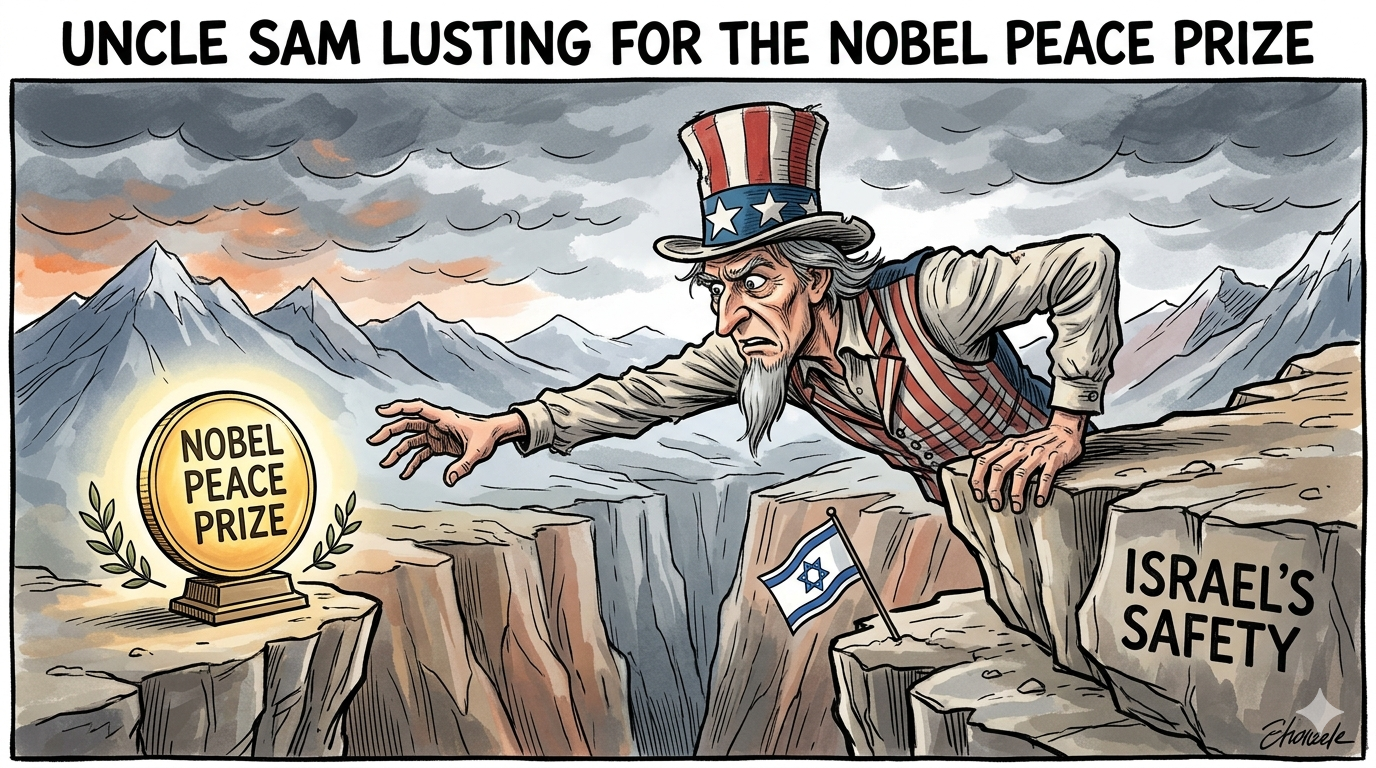
Photo Credits: Sabine Sterk ( AI)
When Allies Become Unreliable
For decades, Israel has viewed the United States as its strongest ally. The relationship has survived wars, political disagreements, changing administrations, and shifting global realities. Yet there are moments when even close allies find themselves looking at each other with growing concern. The current American approach toward Iran is one of those moments.
It is not difficult to understand the motivation behind Donald Trump’s pursuit of a deal with Iran, the world’s leading state sponsor of terrorism. Many observers believe that one of Trump’s greatest ambitions has always been to secure a place in history as a peacemaker and even receive the Nobel Peace Prize. For a man who has spent a lifetime seeking recognition and legacy, such an award would represent the ultimate achievement.
The problem is that history is filled with leaders who believed they could negotiate with dangerous regimes and fundamentally change their nature. Too often, reality proved otherwise.
From an Israeli perspective, the prospect of making major concessions to the Iranian regime is alarming. Iran is not simply another country with whom the West has disagreements. It is a regime that openly calls for the destruction of Israel, finances and arms terrorist organizations across the Middle East, and has spent decades destabilizing the region.
While diplomats in Western capitals discuss peace agreements and diplomatic breakthroughs, Israeli citizens must live with the consequences of those decisions. They understand that Iranian support has empowered organizations such as Hamas and Hezbollah, groups that have repeatedly targeted Israeli civilians. To many Israelis, the idea that Iran can suddenly become a reliable partner through diplomatic agreements is detached from reality.
The Ayatollahs undoubtedly understand how Western politics works. They know that Western leaders often seek diplomatic victories that can be presented as historic achievements. They know how to make promises, issue statements, and create the appearance of moderation when it serves their interests. Whether those promises translate into genuine change is another matter entirely.
This brings us to the Nobel Peace Prize itself, an institution that has often been surrounded by controversy.
The Nobel Peace Prize is perhaps the most politically disputed award in the world. While many recipients have unquestionably deserved international recognition, others have generated outrage and disbelief.
Henry Kissinger’s 1973 award remains one of the most controversial decisions ever made by the Nobel Committee. He received the prize for the Paris Peace Accords intended to end the Vietnam War, yet fighting continued after the award was announced. The controversy was so severe that members of the Nobel Committee resigned, while North Vietnamese negotiator Lê Đức Thọ refused the prize altogether.
Barack Obama received the award less than a year after entering office. Even many supporters questioned whether aspirations and promises should be rewarded before tangible achievements had occurred.
The European Union was awarded the prize in 2012, a decision that many critics viewed as political rather than based on traditional peace making.
Yet from a pro Israel perspective, one award stands above all others in controversy.
In 1994, Yasser Arafat received the Nobel Peace Prize alongside Yitzhak Rabin and Shimon Peres for the Oslo Accords. For many Israelis and supporters of Israel around the world, this decision remains one of the most shocking moments in the history of the prize.
Arafat was not merely a politician engaged in negotiations. He was the long time leader of the PLO, an organization associated with numerous attacks against civilians. Countless victims suffered directly or indirectly because of campaigns conducted under his leadership. The idea that someone connected to decades of violence could receive the world’s most prestigious peace award struck many observers as morally incomprehensible.
A terrorist should never receive a Nobel Peace Prize.
Even more troubling is what followed. The Oslo process was presented as a pathway to lasting peace. Instead, it was followed by waves of violence, terrorism, suicide bombings, and ultimately a collapse of trust between Israelis and Palestinians.
The uncomfortable truth is that genuine peace requires both sides to want peace. Many supporters of Israel argue that significant elements within Hamas and other Palestinian organizations have never abandoned the goal of eliminating the Jewish state. Their leaders frequently make statements that leave little room for ambiguity. They glorify violence, celebrate attacks against civilians, and openly discuss future confrontations.
The massacre of October 7 demonstrated the consequences of taking such threats lightly. It showed what happens when genocidal rhetoric is dismissed as mere political theater. When people openly declare their intentions, it is wise to believe them.
This is why many Israelis view negotiations with Iran and its proxies with deep skepticism. They fear that diplomatic agreements may create temporary headlines while leaving the underlying threats intact.
At the same time, this debate raises broader questions about the American political system itself. The United States remains the most powerful nation on Earth, yet immense authority is concentrated in the hands of a single president. With only two dominant political parties, dramatic shifts in foreign policy can occur whenever administrations change.
For allies who depend on consistency and reliability, that reality can be unsettling.
Israel has always valued its relationship with America, and the contributions of the United States to Israel’s security cannot be overstated. But alliances must be built on trust, shared interests, and a clear understanding of threats.
If future American leaders choose prestige over security, symbolism over reality, or diplomatic theater over strategic clarity, Israel may increasingly find itself looking elsewhere for dependable partnerships.
The lesson of history is simple. Peace is not achieved by awarding prizes. Peace is not created by signing documents. Peace emerges when those who seek war abandon their ambitions.
Until that happens, Israel has every right to remain cautious, vigilant, and prepared to defend itself, regardless of what accolades world leaders may pursue.
Related Topics