
Leadership With Heart
When Beautiful Music Becomes a Mantra of Hate
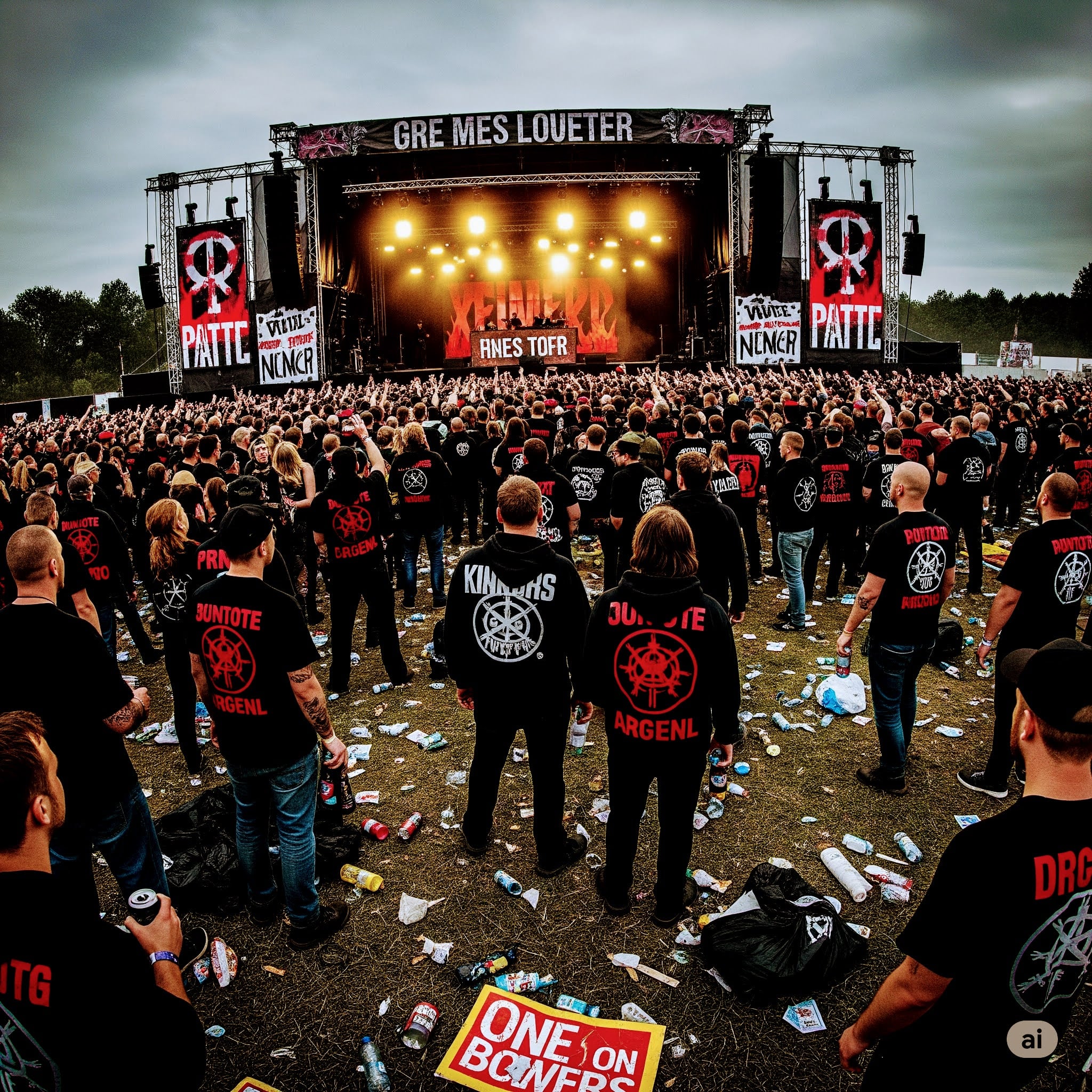
AI generated image via Gemini
Music festivals and concerts have long been celebrated as spaces of unity and creativity. Yet, in recent years, these platforms are increasingly not just being hijacked for hate but are a vehicle for it. What should be a universal language of hope and togetherness is, alarmingly, becoming a drumbeat of divisive rhetoric and support of terrorism.
This troubling trend was on full display at Glastonbury, where English punk rocker Bobby Vylan used his stage—and the BBC’s global broadcast—to incite violence by chanting responsively with the audience “Death, death to the IDF,” while leading the crowd in “Free, Free Palestine” and “From the river to the sea, Palestine will be free” while many waved Palestinian flags.
Bob Vylan is far from alone in turning music into a megaphone for hate. Here are numerous other vile examples:
- Roger Waters, formerly of Pink Floyd, has been widely criticized for his onstage antisemitism, including one notorious example where Waters performed on stage wearing a Nazi-style uniform.
- At Coachella, Irish rap group Kneecap displayed slogans like “F*** Israel, Free Palestine.”
- Imagine Dragons drew backlash after lead singer Dan Reynolds came out on stage waving the Palestinian flag and then wrapping himself in it at a May 2025 concert in Milan.
- The artist formerly known as Kanye West, now Ye, shocked the world by releasing a song called “Heil Hitler,” which quotes and glorifies him.
- New York’s recent Democratic Party primary winner for mayor, Zohran Mamdani, released a rap song in 2017 called “Salaam” in which he sang of his “love” for the “Holy Land Five,” who were convicted of funneling $12 million to Hamas. Mamdani is also known for amplifying divisive slogans like “globalize the intifada,” a phrase many view as a call for violence against Jews and the annihilation of Israel.
It is deeply troubling that the BBC, with its vast global audience, chose not to intervene or cut the broadcast during these moments of incitement at Glastonbury. This lack of action raises serious questions about the responsibility of media organizations to prevent the spread of hate and violence.
At a certain point, it becomes clear that musicians who repeatedly express antisemitic or anti-Israel rhetoric are not acting by accident. Many seek to be seen as edgy or cool, aligning themselves with the cause of the moment, regardless of the consequences. At the same time, they strive to influence young audiences, aiming to promote what they perceive as social justice—even if their message is distorted or one-sided. This matters immensely because music is a powerful vehicle for shaping youth culture and values. When artists use their platforms to condone or glamorize hate and terror, they send a dangerous signal to young listeners that such sentiments are acceptable, increasing the risk that impressionable minds will adopt these harmful beliefs and perhaps even act on them.
What an irony: Glastonbury, a festival meant to bring people together through music, became a stage for calls targeting the very people who endured the horrors of the Nova Music Festival massacre—also a large and welcoming musical event, which became a brutal killing ground. We can never put out of our minds how horrifically the terrorists took innocent lives in one of the most devastating, violent attacks in recent memory. The world watched on social media as Hamas live-streamed themselves attacking everyone from children to women, men, and families. Today, even entertainment platforms such as music are being used to glorify the perpetrators and vilify their victims.
The context for what is happening at what should be innocent music festivals is a flood of propaganda from our world’s mainstream institutions and personalities. Biased and one-sided declarations from influential bodies such as the United Nations, prominent world leaders, mainstream media, and other public figures dangerously contribute to normalizing Jew- and Israel-hatred. When such voices single out Israel with disproportionate criticism while ignoring or excusing the actions of its adversaries, they create an environment where hatred against Jews and Israel becomes socially acceptable—when, in reality, it should be unequivocally condemned. This selective narrative distorts the truth, fuels division, emboldens extremists and undermines universal principles of justice and human rights.
While war is always tragic and peace must remain the ultimate goal, it never justifies calling for the death of Jews or the destruction of Israel. The suffering of conflict can never excuse hate-filled rhetoric or incitement to violence against any people or nation. Hate, racism, and incitement to violence must never be tolerated against Jews or any other group. The world’s failure to stand firmly against such rhetoric or to treat antisemitism as an exception undermines our shared commitment to justice and human dignity. We must hold ourselves and our institutions to a higher standard, ensuring that “never again” means never again for anyone and that the fight against hate, racism, and violence is absolute and without exception.
For many of us, music is a refuge from the constant negativity, stress, and racism we see unfolding around us in the world. We must never allow it to become a platform for hatred and bigotry. Festivals and concerts should be sanctuaries of creativity, connection, and peace—places where people from all backgrounds come together to celebrate the power of music to inspire, heal, and unite. By standing up against all forms of bigotry and refusing to normalize hate in any venue, we can reclaim music’s role as a universal language of hope and understanding, ensuring these gatherings remain true to their spirit of unity and respect for all.
Related Topics
Related Posts