Solicitor & foreign policy adviser
When darkness answers the festival of lights
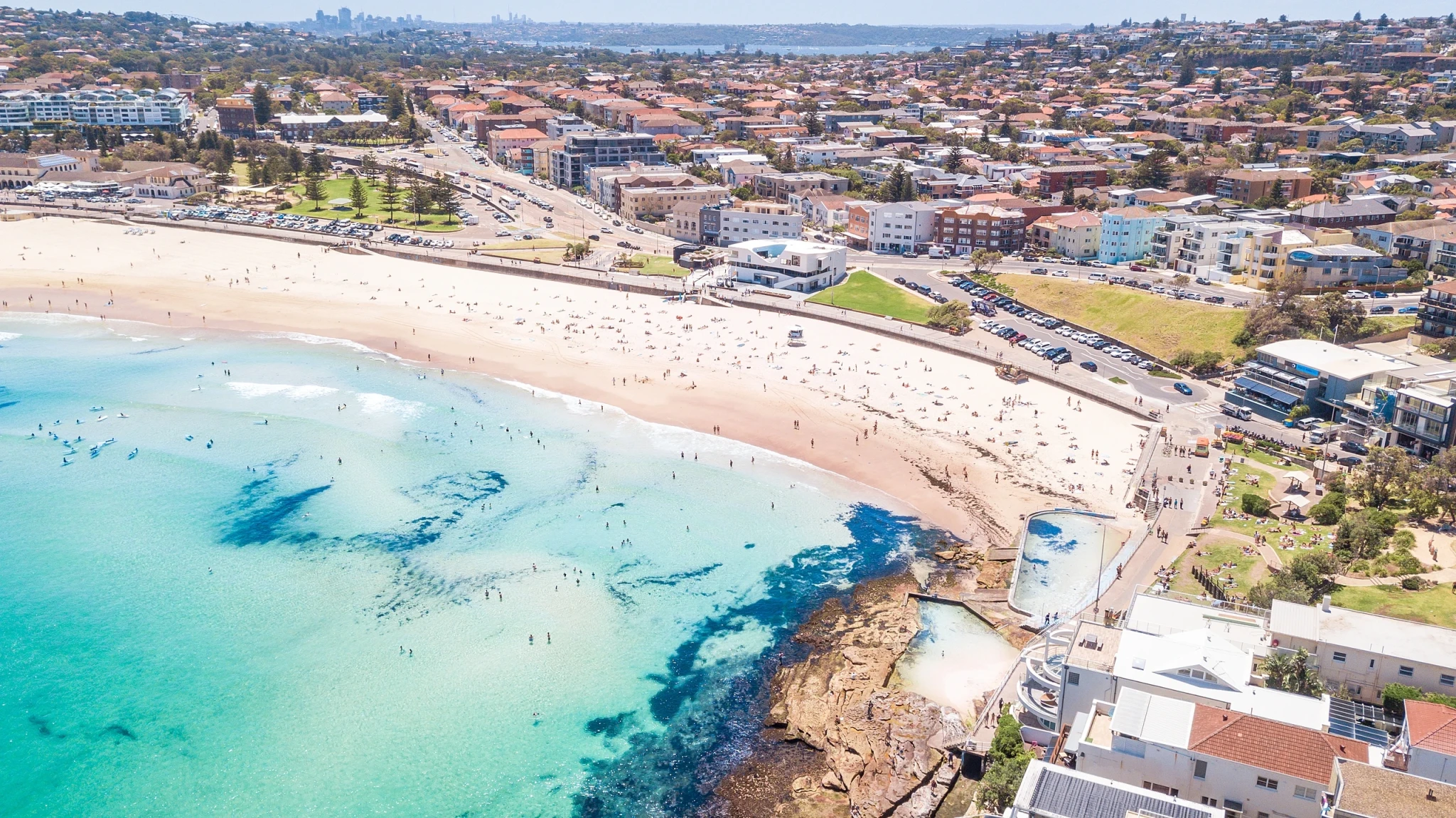
Bondi Beach (Photo by Nick Ang - Wikipedia Commons)
They came to kindle the first flame of Hanukkah on the golden sands of Bondi Beach. They left in body bags.
On Sunday evening, December 14, a father-and-son duo opened fire on approximately 1,000 Jews celebrating “Hanukkah by the Sea.” The attack killed at least fifteen people, including Rabbi Eli Schlanger, who had served the community for eighteen years; Alex Kleytman, a Holocaust survivor who escaped Hitler’s ovens only to die at a beach barbecue; and a twelve-year-old girl whose crime was believing that Australia was safe.
Australian Prime Minister Anthony Albanese called it “an act of pure evil.” Yet his initial statement spoke of “every person affected”—a curious circumlocution when the target was self-evidently Jews at a Jewish event on the holiest night of a Jewish holiday. The shooters, Sajid Akram, 50, and his son Naveed, 24, were Pakistani nationals who pledged allegiance to Islamic State. Two ISIS flags were found in their vehicle, along with improvised explosive devices.
The Failure That Was Foretold
Here is what makes Bondi Beach not merely a tragedy but an indictment. Naveed Akram was known to the Australian Security Intelligence Organisation. ASIO examined him in 2019 for his close ties to a Sydney-based Islamic State cell, yet concluded he posed “no immediate threat.” Six years later, despite remaining on a watchlist, both father and son legally acquired six firearms under Australia’s supposedly stringent gun laws. The elder held a recreational hunting license and belonged to a gun club. What exactly does “stringent” mean when known ISIS sympathizers can amass an arsenal?
The attack capped two years of escalating antisemitic violence. The Executive Council of Australian Jewry documented 1,654 anti-Jewish incidents in the year ending September 2025—five times the pre-October 7 average. In October 2024, a kosher restaurant in Bondi Beach was firebombed. In December, Melbourne’s Adass Israel Synagogue was set ablaze while congregants studied inside. Iran was eventually blamed for at least two major attacks, prompting Australia to expel Tehran’s ambassador.
Yet throughout this crescendo of hatred, the Albanese government remained focused on a different priority: legitimizing the very ideology that fuels the violence.
Rewarding Terror
On September 21, 2025, less than three months before the Bondi Beach massacre, Australia formally recognized the State of Palestine. The recognition came despite Hamas’s continued control of Gaza, despite hostages still rotting in tunnels beneath Rafah, and despite the Palestinian Authority’s failure to hold elections since 2006.
Israeli Prime Minister Benjamin Netanyahu had warned Albanese in August that recognition would “pour fuel on the antisemitic fire.” Alex Ryvchin cautioned that it “removes any incentive or diplomatic pressure for the Palestinians to do the things that have always stood in the way of ending the conflict.” Both were ignored. Hamas still rules Gaza. The Palestinian Authority still pays salaries to terrorists. And the message to extremists worldwide was unmistakable: murder enough Jews, and the international community will reward your cause.
Consider the timeline. On October 9, 2023—two days after the October 7 massacre and before Israel had responded at all—roughly 1,000 protesters gathered at the Sydney Opera House, which had been illuminated in solidarity with Israel. Police advised Jews to stay away. Protesters chanted “F–k the Jews” and “Where’s the Jews?” as if hunting for Jews is materially less menacing than advocating their gassing. That was when moral clarity was required. Instead, Albanese’s government spent two years equivocating, lecturing Israel about “proportionality,” and ultimately granting diplomatic recognition to an entity whose founding charter calls for the destruction of the Jewish state.
The Price of Moral Cowardice
“For over a year we have seen racist mobs impeding on the rights and freedoms of ordinary Australians,” Ryvchin wrote last December. “We have been locked out of parts of our cities because the police could not ensure our safety. Students have been told to stay away from campuses. We have been locked down in synagogues.”
Arsen Ostrovsky, the human rights lawyer grazed by a bullet at Bondi Beach, had moved to Australia just two weeks earlier to raise alarms about rising antisemitism. On December 1, after graffiti reading “F–k Zionist Israel” appeared overnight on the town’s boardwalk, he spoke out publicly. Two weeks later, he was dodging bullets at a menorah lighting.
The Australian Jewish Association posted after the attack: “How many times did we warn the Government? We never felt once that they listened.”
They did not listen because listening would have required acknowledging that the same ideology celebrated in diplomatic recognitions produces the gunmen who target children at Hanukkah celebrations.
Ahmed al-Ahmed, a local fruit shop owner, tackled one of the gunmen and wrestled away his rifle—likely saving dozens of lives. It took a shopkeeper to do what Australia’s security apparatus could not. There is your symbol of national failure: a civilian charging an armed terrorist while the state busied itself with diplomatic gestures.
“Antisemitism is a cancer,” Netanyahu wrote to Albanese. “It spreads when leaders stay silent.” The Albanese government was not silent; it was eloquent—about humanitarian catastrophes and two-state solutions. It spoke of everything except the hatred metastasizing on Australian streets.
Albanese says there is no place for antisemitism in Australia. The bodies at Bondi Beach suggest antisemitism has found its place just fine.
Related Topics
Related Posts