
99.6% Ashkenazi + .4% Viking = 100% Zionist
When History Whispers, We’d Better Listen
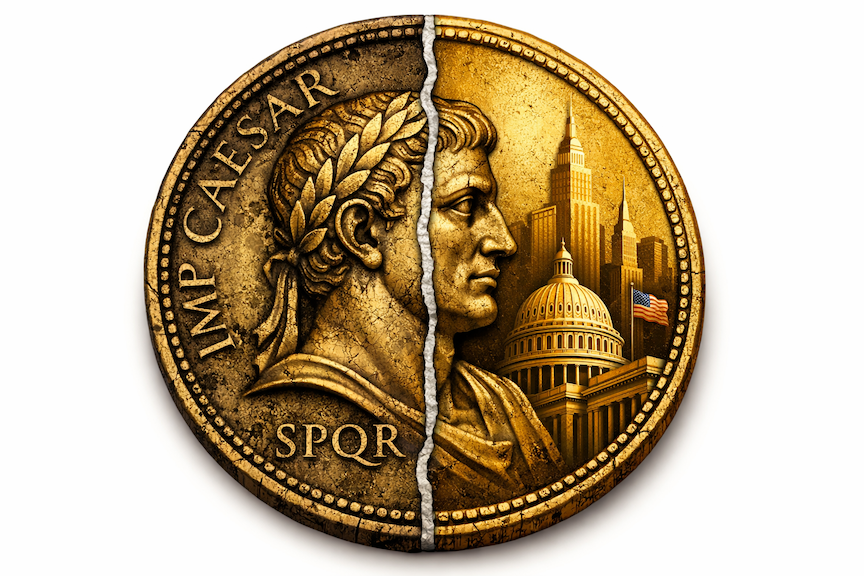
When History Whispers (AI-generated image)
I once read a historian say that empires never march in with a smile — they slip in on a hand extended in friendship. There’s a reason that insight has traveled through centuries: it is, time and again, the quiet force in great geopolitical shifts.
We’re living through one of those moments now.
Donald Trump’s newly unveiled Board of Peace — a $1 billion a-seat international body to oversee Gaza’s post-war future — is being sold as an innovative peacebuilding structure. On paper, it’s framed as a “nimble” alternative to bureaucratic multilateral institutions. In practice, it repositions global power in a dramatically centralized way, with Trump himself wielding outsized authority over membership, vetoes, and even succession.
For most readers, that might sound like the usual geopolitics — loud declarations, opaque deals, ego in big print. But for those with an eye on deep history, there’s something eerily familiar about the pattern: internal actors invite a dominant external force into a contentious arena, believing it will stabilize things, only to discover control has shifted in ways never intended.
In the late Hasmonean period, Judea fractured under the weight of its internal divisions. Brothers Hyrcanus and Aristobulus battled for power, and one turned to a rising Mediterranean power — Rome — hoping for a decisive ally. Rome obliged, and then never left. Over time Judean autonomy faded, precedent by precedent, until the world of Jewish self-rule was altered forever. That decision didn’t instantly topple the Second Temple. The consequences unfolded slowly, quietly embedding foreign leverage at every level of governance.
Fast-forward two millennia, and we see a different cast but strikingly similar rhythm. Israel, a sovereign state confronting a deeply entrenched and tragic conflict next door, finds itself watching as an external power attempts to assemble a global governance mechanism around that conflict — with some of Israel’s most outspoken adversaries in key seats. Qatar and Turkey — nations whose policies and rhetoric toward Israel have often been openly hostile — are slated to serve on influential panels of this new structure. Netanyahu and his advisers are openly uncomfortable, and not without reason.
This isn’t a claim about motive or good faith. Diplomacy is messy. Yet it is reasonable — even necessary — to question a process that asks nations to pay unprecedented sums for influence, under the leadership of a single figurehead, on a conflict that has uniquely local stakes for one of the principal parties.
We tell ourselves that modern alliances are voluntary, multilateral, transparent, democratic. And they often are. But the deeper lesson of history is that power isn’t just who shows up, it’s who decides the terms of the table.
If a small kingdom’s invite to an imperial power two thousand years ago reshaped the future of its people, we should at least ask: What does it mean when a superpower asks to orchestrate the peace of others — under its own terms and price tag?
That question isn’t cynicism; it’s curiosity sharpened by experience. History whispers not to scare us, but to remind us that peace and influence are rarely bought at bargain prices — and never without strings. We ignore that whisper at our peril.
Related Topics
Related Posts