
When Holocaust Remembrance Becomes Suspect
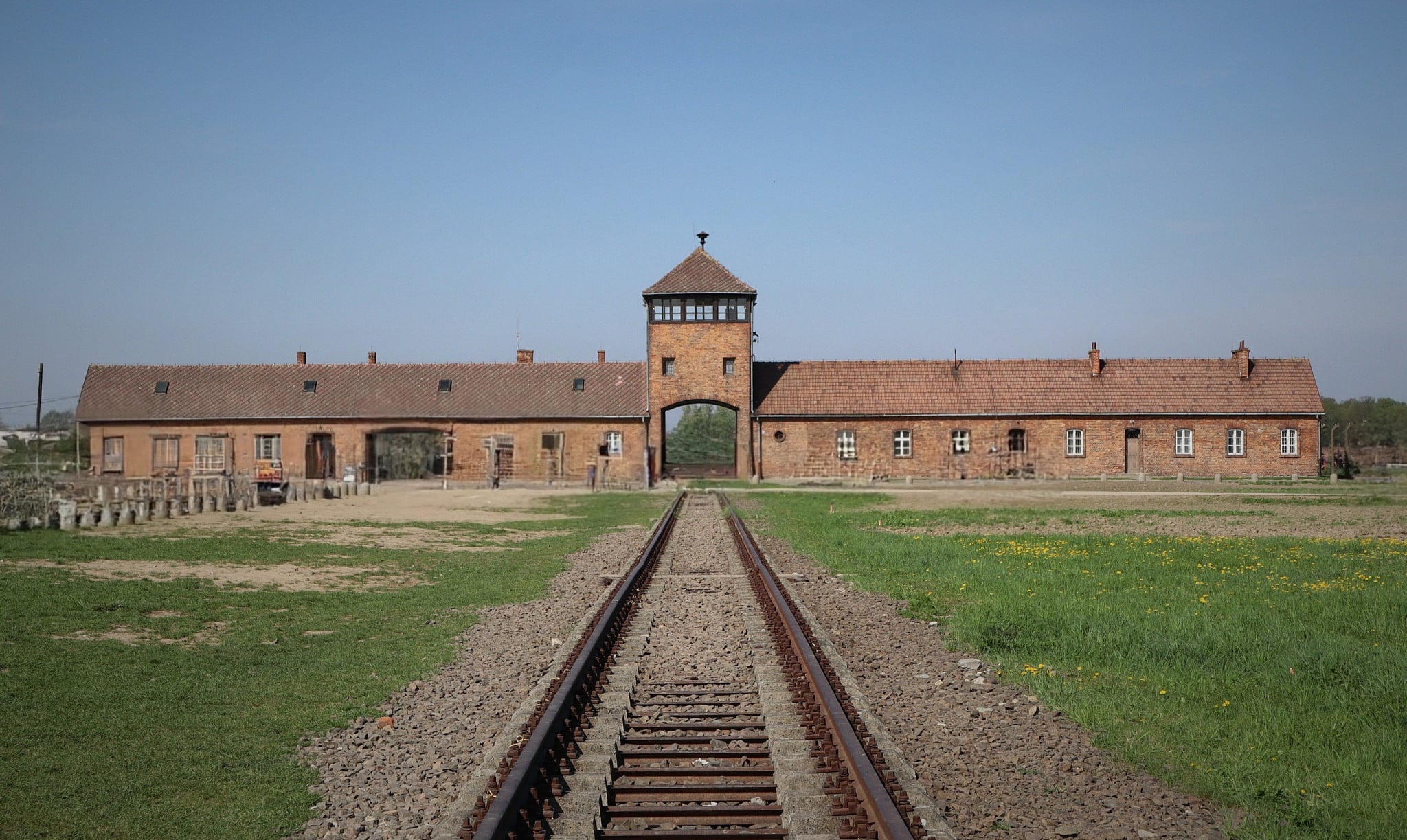
International Holocaust Remembrance Day, observed each January, has traditionally been understood as a universal opportunity to pause and reflect on one of the most profound ruptures in human history. Yet in recent years, and with particular intensity since the war in Gaza, memory itself has become suspect.
Invoking the Holocaust, marking the day, or insisting on its historical singularity is, in some spaces, perceived as politically problematic: not as a basic human act of remembrance, but as an ideological statement identified with the State of Israel and its current policies. This erosion takes three distinct forms: the avoidance of Holocaust remembrance out of political discomfort, the fabrication of Holocaust imagery through artificial intelligence, and the use of Nazi analogies as rhetorical weapons.
This sense does not remain at the level of discourse alone. In recent weeks, Britain has offered a telling example, with a significant decline in the number of secondary schools marking International Holocaust Remembrance Day. Many schools are reportedly avoiding the day out of concern over political confrontation, criticism from parents and students, or the automatic identification of commemoration with a political position regarding the war in Gaza. What was intended as a non-political day of remembrance has, in practice, become a volatile one.
This is a deep distortion: the Holocaust is no longer perceived as an event of the annihilation of the Jewish people in the twentieth century. It is transformed into a political symbol that “belongs” to one side of a contemporary struggle. As a result, some view identification with Holocaust memory as a betrayal of solidarity with Palestinians, or at the very least as a position that requires distancing. Instead of serving as a universal moral point of departure, memory becomes another ideological currency in a struggle over legitimacy.
The detachment between memory and the historical event it signifies does not occur only at the rhetorical level. It also finds tangible expression in digital visual culture. Over the past year, social media platforms have been flooded with images that appear documentary in nature, depicting Holocaust scenes: smiling prisoners, intimate moments between victims and their captors, situations that never occurred. These images are not historical photographs but products of artificial intelligence systems, generating an aesthetic of documentation without historical accountability.
This is not merely a technological question, but a moral and cultural one. When the boundary between documentation and fabrication is blurred, the atrocity itself undergoes a process of softening, and at times even romanticization. It is therefore no coincidence that major memorial institutions in Germany recently published an open letter warning against the growing use of such images, defining them as a violation of the memory of the victims and a form of rewriting history.
Beyond fabrication, a third manifestation of this erosion appears in comparisons between Israel and Nazi Germany. In the United States, protest signs on university campuses already during the first month of the Gaza war portrayed Israel as ‘the new Nazis.’ Not all historical analogies are inherently illegitimate; they can, in some contexts, serve as moral warnings when used with care and precision. But these comparisons are not cautious analogies; they are rhetorical shortcuts that flatten historical specificity into universal metaphor. When every conflict is imagined as a ‘Holocaust,’ the Holocaust itself loses its meaning and becomes an empty analogy.
This is not an argument against identifying with Palestinian suffering, nor against harsh criticism of Israeli policy. On the contrary: genuine moral discourse requires the capacity to recognize the suffering of others. But it does not require, nor does it justify, the erasure of another historical suffering, or the instrumentalization of the memory of genocide as a rhetorical weapon in a contemporary political struggle. Solidarity is not a zero-sum game. Acknowledging the pain of one people does not require denying the humanity of another.
Here, a profound moral inversion emerges: a condition in which antisemitism, or at least the repudiation of Jewish memory, is presented as a liberatory stance, as something demanded in the name of resistance to the oppression of others. In such a context, seeing Jews as human beings, and honoring the memory of the Holocaust, is no longer perceived as a basic moral principle, but as an ideological obstacle to be removed whose erasure is framed as moral progress.
It is also true that Holocaust memory has, at times, been mobilized instrumentally within Israeli political discourse itself. Acknowledging this does not justify the politicization or erasure of Holocaust remembrance elsewhere, nor its dismissal in the name of contemporary solidarities. Rather, it underscores how easily memory, once treated as a political resource, becomes vulnerable to distortion from multiple directions.
International Holocaust Remembrance Day cannot repair this erosion on its own. But it can still mark a line that must not be crossed.
The moment the memory of the Holocaust becomes conditional, negotiable, or repurposed to fit contemporary political alignments, it ceases to function as memory in its moral sense. Remembrance loses its ethical force, and with it, our capacity to speak meaningfully about justice, suffering, and responsibility.