
When Humanitarian Brands Become Strategic Liabilities
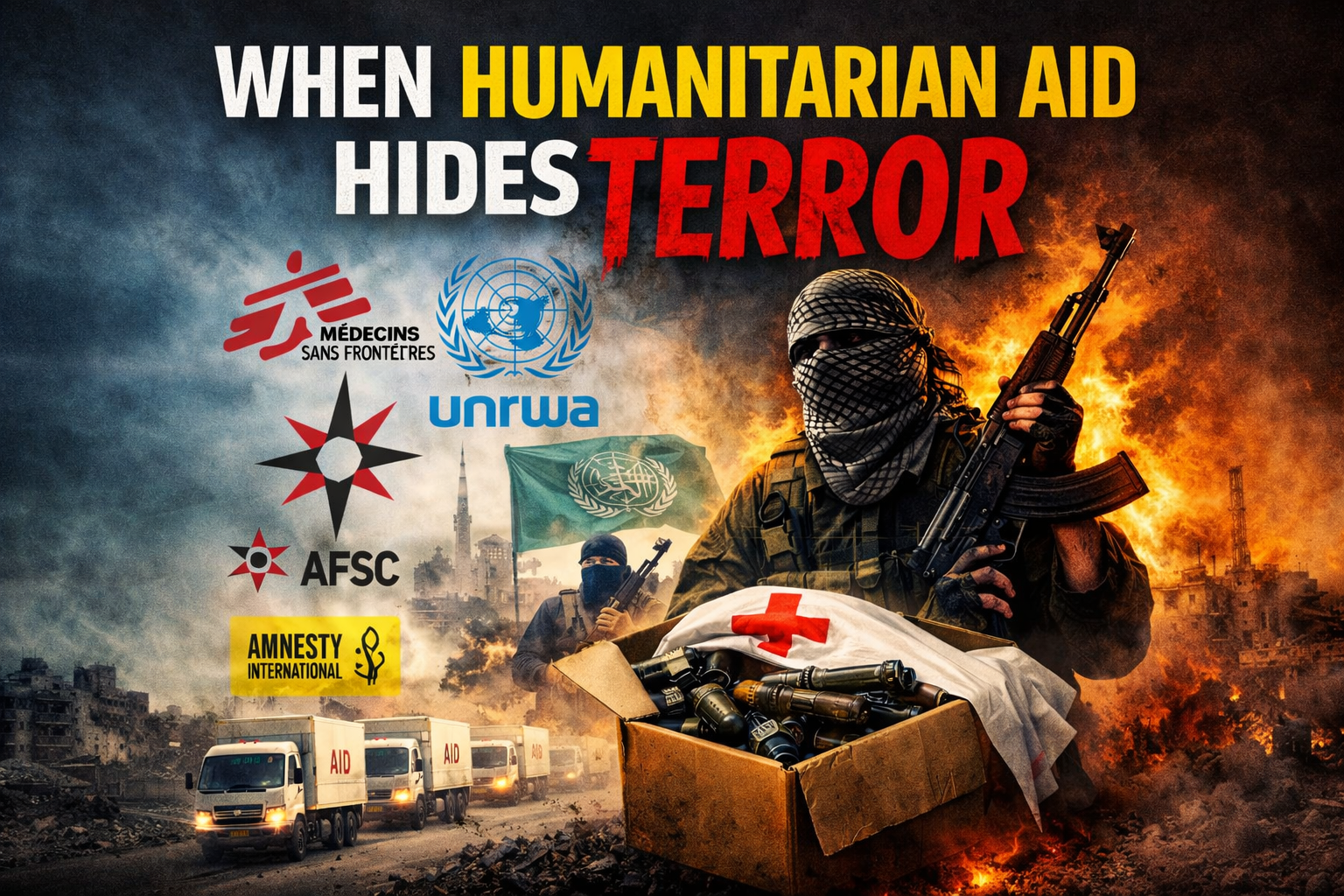
Israel’s decision to tighten registration and security vetting for NGOs operating in Gaza is not an attack on humanitarianism. It is an overdue recognition of reality: Gaza is not a neutral disaster zone. It is an active combat theater governed by a jihadist organization that deliberately weaponizes civilian space.
A serious state regulates access to such environments. It does not outsource national security to brand reputation or accept “trust us” assurances when the governing authority embeds itself in hospitals, schools, aid convoys, and NGO labor networks.
That distinction matters—because humanitarian access can save lives, but it can also be exploited.
Oversight Is Not Obstruction
Israel has continued to facilitate aid into Gaza throughout the war—under fire, under diplomatic pressure, and under constant international scrutiny. Convoys cross borders. Inspections occur. Approved organizations continue to operate.
What has changed is not Israel’s commitment to humanitarian access, but its refusal to allow unvetted personnel and opaque organizations to operate inside a battlespace controlled by Hamas.
Staff vetting is not bureaucratic cruelty; it is risk management. Hamas has every incentive to penetrate aid ecosystems—through intimidation of local hires, ideological alignment, or quiet leverage over contractors and logistics chains. When aid trucks are looted after crossing the border, or when facilities are later shown to be dual-use, the failure is not Israeli regulation—it is the myth that humanitarian space remains insulated from war.
The Institutional Drift of Legacy NGOs
What makes this moment uncomfortable for many observers is that some of the organizations affected were once considered unimpeachable.
Groups like Médecins Sans Frontières (MSF), UNRWA, American Friends Service Committee (AFSC) and others such as Amnesty International and Human Rights Watch built their reputations on moral clarity, neutrality, and professionalism.
Over time, however, many of these institutions experienced a mission drift—from humanitarian service toward ideological advocacy. In some cases, this drift aligned them with post-colonial, anti-Western, or Islamist-adjacent narratives that increasingly blurred the line between civilian relief and political warfare.
This is not conjecture. UNRWA’s deep entanglement with Hamas-run infrastructure and education systems is now extensively documented. AFSC and similar organizations routinely provide political cover to groups designated as terrorist organizations while framing their advocacy in the language of “human rights.” MSF, while still providing real medical services, has increasingly adopted messaging that denies the operational realities of Hamas governance and rejects even basic security transparency.
Brand equity does not substitute for accountability.
Humanitarian Access Cannot Be a Shield for Armed Strategy
Hamas benefits from confusion. It benefits when Gaza is treated as a natural disaster rather than a governed territory with an armed hierarchy. It benefits when responsibility is diffused across NGOs, international agencies, and sympathetic media ecosystems.
Israel’s regulatory framework draws a clear line: humanitarian work is welcome; humanitarian cover for terror exploitation is not.
That line protects Israeli civilians—but it also protects Gazan civilians by reducing the likelihood that hospitals, clinics, and aid corridors are repurposed into legitimate military targets due to militant embedding.
This Is Governance, Not Punishment
Critics argue that restricting certain NGOs will harm healthcare delivery. That concern should be taken seriously—but it is not a veto over sovereign security decisions. Israel has approved dozens of organizations under the new framework, and aid continues to flow through compliant channels.
A predictable, documented, and professionally administered vetting process strengthens Israel’s credibility abroad. An arbitrary one would weaken it. The solution is not abandonment of oversight, but disciplined execution of it.
The Broader Lesson
The Gaza war has exposed a hard truth many preferred to ignore: humanitarian systems are not immune from capture. When armed Islamist movements explicitly view civilian infrastructure as part of the battlefield, states that fail to adapt their regulatory frameworks invite strategic disaster.
Israel’s policy does not deny compassion. It operationalizes it responsibly.
Humanitarian aid must remain humanitarian—not a parallel logistics network for terror organizations, and not an ideological shield against scrutiny.
In a territory ruled by a terror army, oversight is not cruelty. It is basic statecraft.
Author’s Note
Mordechai Levin is an Associate Fellow of the American Institute of Aeronautics and Astronautics (AIAA) and an Advanced Incident Command Instructor for the U.S. Department of Homeland Security’s Center for Domestic Preparedness. His work focuses on defense systems, resilience, and the intersection of technology, economics, and national security.
#MédecinsSansFrontières #MSF #UNRWA, #AmericanFriendsServiceCommittee #AFSC #AmnestyInternational #HumanRightsWatch #HRW